Trump's $4 Billion Handover to Russia Revives Questions About His Ties to Putin
Key Takeaways
- •Former Mueller prosecutor Andrew Weissmann and Bulwark publisher Sarah Longwell criticized President Trump's $4 billion transfer to Russia on The Bulwark podcast, saying it revives questions about his ties to Vladimir Putin.
- •Weissmann argued the sanctions relief gives Russia billions of dollars in sales in exchange for a trickle of diesel that will not significantly benefit the United States.
- •The 2019 special counsel final report documented Russian interference in the 2016 election and numerous contacts between Trump associates and Russians but did not establish that the campaign conspired with Moscow, leaving the core question open in Weissmann's view.
- •Longwell claimed Trump has always sought a reason to do business with Putin and cited reports of Russians paying for Don Jr.'s wedding.
- •Longwell argued that special envoy Steve Witkoff and former White House adviser Jared Kushner have private financial interests in Ukraine diplomacy, tying this and the privately funded White House ballroom donations into a broader conflict-of-interest critique.
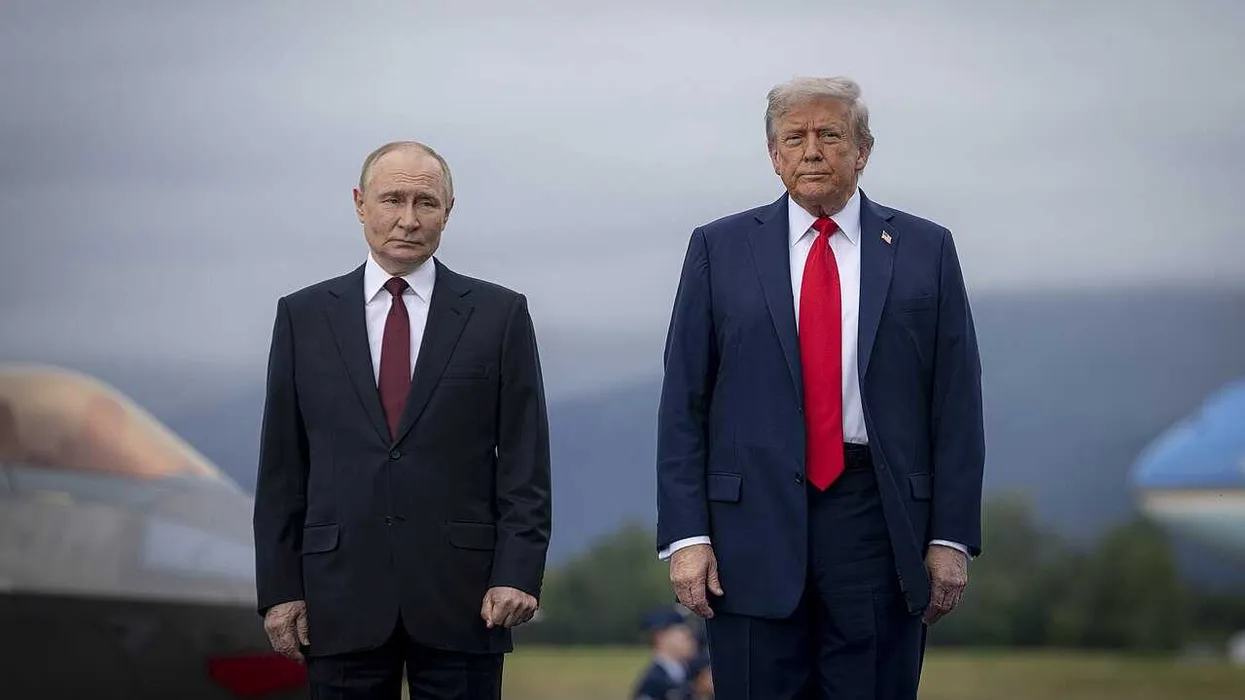
President Donald Trump's recent decision to hand over $4 billion to Russia — despite sanctions that he himself implemented — is reviving questions about his continued relationship with Russian President Vladimir Putin.
The criticism came during an episode of The Bulwark podcast, in which publisher Sarah Longwell — a longtime Republican strategist and co-founder of the anti-Trump conservative outlet — spoke with Andrew Weissmann, a former lawyer on Robert Mueller's special counsel team and one of its lead prosecutors. The exchange was highlighted in an Alternet report. Weissmann called Trump a "freaking moron" for continuing to support Putin over Ukraine.
"So, one: you're supporting authoritarians over democracy. A true national hero over an actual villain of the United States. For what? You've relieved that country of sanctions. You're giving them, you know, billions of dollars of sales, which they weren't supposed to get, for a trickle of diesel that isn't going to make a difference to America in any significant way. You know what would make a difference to America? End the g---amn war!" Weissmann exclaimed (podcast clip).
Longwell agreed, saying with frustration that Putin is aiding Iran in killing Americans, while arguing that "Trump has always been looking for a reason to work and do business with Putin."
Weissmann spent two years of his life researching and investigating the connection between Trump and Russia. An incredulous Longwell said Trump was "using our energy crisis as a pretense to get in bed with Putin, which he clearly always wanted to do or been in. I mean, we've got these weird Russians paying for Don Jr.'s wedding!" She asked whether Weissmann still wants to "get him on this."
"So, he managed to sort of politicize all of that," Weissmann said of the Mueller investigation. "The thing that, just to cut through the chase, is I still don't know the answer to what is the connection between the two of them. But I know that one theory, the innocent explanation, is that Donald Trump just has a fascination with and emulates authoritarians."
But even if that theory is accurate, he added, it does not answer the question. It isn't as if there is a "Russian voter bloc in the United States." The special counsel's final report, issued in 2019, documented Russian interference in the 2016 election and numerous contacts between Trump associates and Russians, but did not establish that the campaign conspired with Moscow — which is why, for Weissmann, the core question remains officially open.
Longwell closed by saying she truly hopes that someday the world can get to the bottom of what was going on between Trump and Russia — whether it reflects an affinity, or simply that Putin is nice to him and pretends to like him and promote him.
"But also, this is where you have Steve Witoff and Jared [Kushner] freelancing on all of these things where they have financial interest," Longwell continued. "I don't know if you saw the story today... Again, we're really derailed here, but a story just came out today that was tracking the ballroom donations and all of the favors that were given to those people who did that. And so, you know, I think some of this is just — we have the most corrupt president in American history." The two men have both figured prominently in the administration's diplomacy on Russia's war in Ukraine — Witkoff as's special envoy and a former real estate developer, Kushner as the president's son-in-law and a former White House adviser — roles Longwell argued are compromised by their private financial interests. The "ballroom" refers to Trump's privately funded White House ballroom project, which recent reporting has examined for the donations it attracted and the favors donors received.
Viewed from the executive branch, Weissmann said, the operation works exactly like Putin and Russia, with "pay-to-play" politics. In the panel's telling, the $4 billion transfer, the envoys' outside financial interests, and the ballroom donor questions all fold into the same conflict-of-interest critique.

