Wlezien: Trump Could Face Backlash if He Tried to Override 2026 Midterm Results
Key Takeaways
- •Trump has floated tactics to influence the 2026 midterms, including deploying law enforcement at polling places, seizing ballots, declaring a national emergency, and pressuring congressional leaders not to accept results favorable to Democrats.
- •Professor Christopher Wlezien says a successful overturning of election results is unlikely because elections are administered at the state and local level, though Trump could theoretically rely on allies to act on his behalf.
- •Courts have blocked some of Trump's election-related efforts, and he appears to have complied with rulings on mail-in voting, over which states retain regulatory authority.
- •Wlezien's research indicates that polling accuracy has not worsened and may have slightly improved, so large gaps between pre-election polls and actual results could serve as signals of potential manipulation.
- •Wlezien estimates Trump's approval at roughly 36-37%, already below Biden's level in 2022, and predicts it would drop to the low 30s if Trump attempted to rig the midterms.
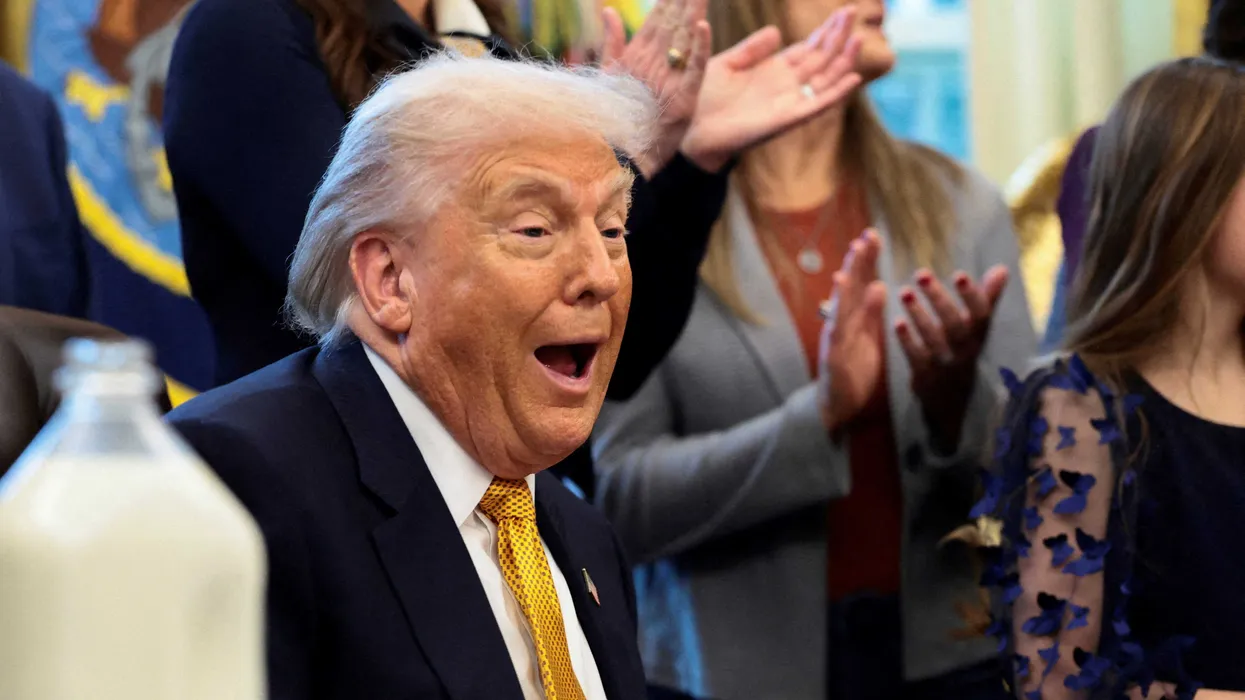
President Donald Trump has indicated that he may pursue a range of measures to prevent Democrats from regaining one or both chambers of Congress in the 2026 midterm elections. Those measures could include sending law enforcement to polling places, seizing ballots, declaring a national emergency and pressuring Congress not to accept results favorable to Democrats.
Trump has already sought to restrict mail-in voting and, in some cases, succeeded in getting states to turn over voter rolls. At the grassroots level, Trump and his MAGA movement have also placed supporters in influential state and local positions who could challenge election results favorable to Democrats.
Rather than relying solely on his governing record to persuade voters to keep Republicans in control, Trump has focused on issues that benefit him personally, despite widespread voter disagreement, according to AlterNet. Those issues include building a White House ballroom, renaming the Kennedy Center after himself, promoting artificial-intelligence data centers, pursuing a trade war with Canada and continuing a war against Iran.
The article argues that Trump appears to believe he can prevail without winning votes legitimately by abusing presidential power to “nationalize elections,” an action the Constitution prohibits. His opponents, meanwhile, can prepare for each potential move and use pre-election polling to identify results that appear inconsistent with expectations.
To examine whether such efforts could succeed, AlterNet spoke with Dr. Christopher Wlezien, a professor of government at the University of Texas at Austin who specializes in public opinion, polling, elections and research methodology. The interview was lightly edited for clarity, context and length.
ROZSA: Based on your understanding of President Trump’s attempts to interfere with the midterm elections — including potentially sending law enforcement to polling places, suppressing mail-in ballots, acquiring voter information from compliant states and filing lawsuits in key House districts and Senate races where he loses — is it plausible that Democrats could win one or both chambers of Congress, only for Trump to take them back for Republicans?
WLEZIEN: There are other elements as well, including redistricting efforts that Trump did not undertake himself but helped stimulate. He is close to having a full list of possible actions.
To me, that suggests he is concerned about losing. He has made progress on some of these efforts, including redistricting, although probably not as much as he wanted. He may not have anticipated the countervailing forces that emerged, and the courts have blocked some of those efforts.
He has lost on other issues. Mail-in voting is the clearest example. At least on the surface, he appears to be following court rulings. When he loses, he becomes upset, posts on Truth Social and takes actions such as those we saw involving the Kennedy Center.
He does not have the same lever over elections, however, because elections are largely administered at the state and local levels. In one sense, that was the issue in the court case: who controls and regulates mail-in voting when Congress has not acted? The authority remains with the states. Whether that will always be the case, I cannot guarantee. [laughs]
ROZSA: More specifically, could Trump succeed in stealing an election through one of the methods I mentioned, or through methods I did not list?
WLEZIEN: I do not foresee that. Ultimately, it depends on what happens with the results in the states — whether they are certified at the state level and whether the elected members are seated in Congress.
There is a possibility, but I do not think it is a strong likelihood. Trump would have to rely on other people to carry it out. I do not see how he could do it directly. But there are death, taxes and everything else, I suppose. [laughs]
ROZSA: My concern is that Trump has put people who believe his “big lie” in positions of power in local and state governments. They could comply with whatever explanations he offers to overturn races he actually lost.
WLEZIEN: We will have to see how that develops. There is clearly a great deal of rhetorical support for him in the White House and among the remaining members of the cabinet. At the state level, many people running in primary elections will support him. How long that support will last, and how extensive it will be, is not clear to me.
When you describe them as “true believers,” I am not sure there is strong evidence of that in most cases. We will have to see how it plays out. I am not trying to be Pollyannish; it would simply be a major step. Major steps can happen, but it would be a major step.
ROZSA: Let’s turn to polling. Polls can help deter cheating by providing experts with a realistic measure of what an election is expected to produce. If the actual result differs substantially from that expectation, it could create a plausible case that something went wrong. But polls can also be wrong. [laughs]
Historical and recent examples include polls that incorrectly predicted Thomas Dewey would defeat Harry Truman, polls that incorrectly predicted Hillary Clinton would defeat Trump, and more recently, polls that incorrectly predicted El-Sayed would defeat Stevens by a large margin when he won by a smaller one. To what extent can polls reliably be used to assess an election’s legitimacy?
WLEZIEN: Some of this is misleading. Most national polls were somewhat inaccurate in the Clinton-Trump contest, but Clinton did win the popular vote, so that part of the polling was correct. The errors were not ideal, but in close elections, such as those we have had recently, even small errors can point people in the wrong direction.
There are other issues in the older examples as well. I am not trying to construct an ad hoc excuse for polling errors. My own research indicates that polling has not become worse. If anything, it may have improved slightly.
Despite changes in response rates, technology and weighting, polls appear to be holding up fairly well. But “polls get it right again” is not a headline, and it is not an attractive lead, so people hear less about successful polling. I used to forecast elections myself and rarely heard about it when I was right, which was almost every time. When things were not quite right, however, people asked, “What happened to you?” [laughs]
The same is true of polling generally. News organizations focus heavily on cases in which polls miss.
Polls have always contained some error, and there is something specific involving Trump supporters. Polling of those voters has improved somewhat, although I cannot say exactly why because I do not know what pollsters are doing behind the scenes. They appear to be using different weighting methods and reaching Trump voters who were previously underrepresented.
Even so, polls continue to fall somewhat short. In 2024, the final polls were essentially a 50-50 contest, while Trump finished slightly ahead on Election Day.
Polling is also used when assessing elections in other countries. In Venezuela, for example, something was clearly wrong. The question is whether the gap between polling and results would be large enough to support a conclusion, and which polls should be used.
Congressional elections involve many races. Should the comparison be with the generic ballot, which asks voters which party they would support in their House race? Most House districts do not have reliable polling, making it difficult to compare generic-ballot numbers with actual results. A 55-45 split in a poll conducted a week before the election is not expected to become a 55-45 result on Election Day.
ROZSA: I want to ask about an assessment from Kyle Kondik, managing editor of the University of Virginia Center for Politics’ nonpartisan polling and elections newsletter, Sabato’s Crystal Ball. I asked him how midterms have historically unfolded under presidents with approval ratings similar to Trump’s, and what that history tells us compared with what people assume it tells us.
He said: “Generally speaking, a president who is this unpopular should see his party lose a lot of ground in Congress. That said, Joe Biden also had poor approval in 2022, but Republicans didn't do all that well — they flipped the House, but not the Senate. However, the Republican lead in the generic ballot was not as large as the Democratic lead is now.” What do you think of that analysis?
WLEZIEN: Kyle and I have both done considerable work in this area and have seen the same data. His assessment is essentially correct.
My reading is that Trump’s approval rating is currently below where Biden’s was. However, elections have become more nationalized, and redistricting has made it harder for many seats to change hands unless there is a very large wave. A wave can eventually reach deeply into a congressional map, but it is not clear that there will be such a wave this time.
In 2022, we had the Dobbs decision. It does not appear that something similar is approaching now or that there will be a comparable event over the summer. That helped reduce the “balancing” effect — the term I use for the tendency we usually see in a midterm election. The hard evidence for that explanation is difficult to identify, but it appears plausible.
We do not seem to have a similar development now, and there are also fewer competitive districts at the margins.
ROZSA: Let’s consider whether the midterms could be rigged through methods beyond those already discussed. Suppose Democrats prevail in the races despite Trump seizing ballot boxes, using law enforcement at polling places, using voter databases to purge voters, appointing election deniers to key grassroots positions and filing frivolous lawsuits. Those are five actions Trump has already suggested. Add a sixth: declaring a national emergency.
Suppose he takes some or all of those actions and Democrats still flip one or both chambers.
ROZSA: Trump could then have Speaker of the House Mike Johnson and Senate Majority Leader John Thune simply refuse to recognize the results. That would be a seventh possibility—
WLEZIEN: I raised that myself earlier, if you remember.
ROZSA: Yes.
WLEZIEN: It is possible, as I said. How would I know? I am not in the room. As with the other scenarios you described, Trump would have to rely on other people to act as his agents. Whether they would do that remains to be seen.
He does tend to push matters as far as he can, but he also often respects court decisions. Regarding mail-in voting, is he going to proceed with that executive action? It appears not. But how can I know for certain whether he will?
ROZSA: As a pollster and an expert in measuring public opinion, to what extent could Trump rig the midterms and get away with it in the court of public opinion?
WLEZIEN: What do you mean by “get away with it in the court of public opinion”?
ROZSA: Would the average American simply accept Republicans retaining control of Congress if Democrats had legitimately won? Or, based on your understanding of polling, would there be a persistent and severe backlash against Trump?
WLEZIEN: My guess is that there would be a backlash. There is already a backlash against what he is doing.
Some people attribute his current difficulties with voters to the war in Iran and oil prices, but his approval rating was already quite low at the end of last year, before those events. Voters were reacting to other actions by that point. If he did this, he should expect an additional backlash.
There is a floor, however. Even Richard Nixon had an approval rating of about 25% when he left office. I would not be surprised if Trump’s approval rating fell but remained around 30%, 32% or 34%. I am not sure exactly where it is now; I would guess somewhere around 36% or 37%.
So yes, it would decline. The problem is that the matter is not really in the electorate’s hands. Voters can express disapproval, and when they next have the opportunity to vote they can punish or reward officials accordingly. In the meantime, there are not many options. People could rise up, but that is messy.
The court of public opinion is already disapproving of what Trump is doing, and that is part of why he is trying to influence what happens in November. He can say whatever he wants about polls and people loving him, but his behavior does not suggest that he takes those statements very seriously. [laughs]
ROZSA: To return to the reliability of polls, how much should Americans trust them?
WLEZIEN: It depends on what you mean. Polls are never perfect, and they are more informative about some matters than others. Are you asking specifically about pre-election polls?
ROZSA: Yes. To what extent should Americans judge the legitimacy of the midterm elections by how closely the results correspond to the polls?
WLEZIEN: That returns us to the earlier problem: what exactly are we comparing with what?
I would be very surprised if Democrats did not win the popular vote in a couple of months. But if they win by a small margin, I am not sure what we should expect based on the polls. If Republicans won 60-40, that would be alarming.
At the same time, some states are administered by Republican, pro-Trump officials and others are not. If we saw what happened in 2024 — arrows pointing in a red direction almost everywhere — there would be less reason for concern. If we instead saw many arrows pointing blue, with some margins larger than others but most moving in the same direction, I would be less concerned.
It is difficult to monitor everything because states, counties, cities and other actors are involved in these elections. The United States is highly federalized and decentralized when it comes to elections. That structure is part of what Trump has encountered when he goes to court seeking to intervene in state election administration.
Source: AlterNet

