Tropical Storm Dolly Could Become the First Major Named Storm of 2026
Key Takeaways
- •Tropical Storm Dolly formed in the mid-Atlantic and is currently tracked on a path that could affect Hispaniola, Cuba and later the United States.
- •Hispaniola’s population, mountainous terrain and Haiti’s deforestation increase the risk of flash flooding and landslides from tropical systems.
- •The storm could become the first big named system of the 2026 hurricane season.
- •The naming overlap with Dolly Parton is coincidental because Atlantic storm names are preselected alphabetically years in advance.
- •The U.S. National Hurricane Center is the authoritative source for updated information on Dolly’s strength and forecast track.
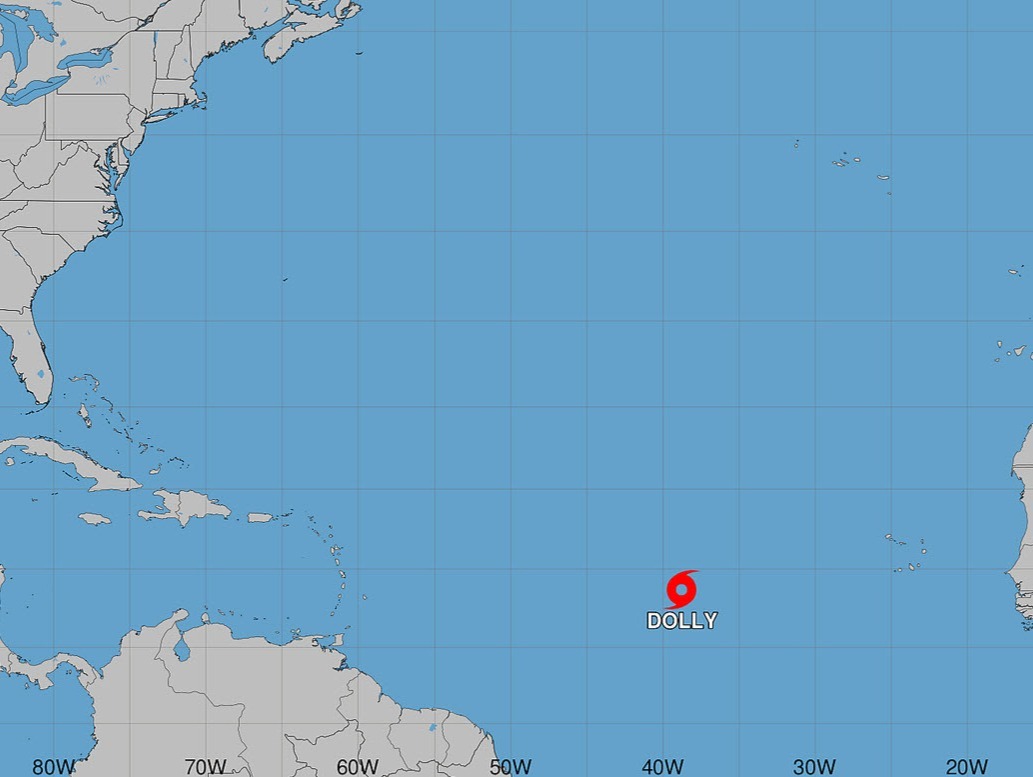
Tropical Storm Dolly has formed in the mid-Atlantic, and its forecast track places it on a dangerous path toward Hispaniola — the Caribbean island shared by Haiti and the Dominican Republic — as well as Cuba and eventually the United States. The system could become the first big named storm of the 2026 hurricane season, InvestingLive reports.
The projected corridor matters beyond wind speed. Hispaniola is home to more than 20 million people, and its mountainous terrain — heavily deforested in Haiti — leaves the island acutely exposed to the flash flooding and landslides that tropical systems typically deliver, as Hurricane Matthew's deadly 2016 strike on Haiti underscored. Cuba, which sits squarely in classic Atlantic hurricane tracks, and the U.S. coastline lie farther along the forecast path.
The timing carries an uncanny coincidence: the storm emerged just days after the death of Dolly Parton. Hurricane names, however, are selected years in advance and descend alphabetically as storms form, making the match entirely coincidental. The current naming list runs through 2031.
Atlantic basin storm names are maintained by the World Meteorological Organization, which rotates its lists on a six-year cycle and retires the names of the most destructive storms. The Atlantic hurricane season officially runs from June 1 to November 30, with activity typically peaking from late August into September — the window in which Dolly has developed.
The author quipped that Parton would no doubt have preferred the storm to take a northwards turn and become a "fish storm" — the colloquial term for a system that stays over open ocean — rather than a devastating hurricane, while stressing that the forecast track is worth keeping an eye on. The item appeared under InvestingLive's oil and commodities coverage, a placement with its own logic: the Gulf of Mexico concentrates most U.S. offshore oil and natural gas production, and past hurricanes — Katrina in 2005, Harvey in 2017 and Ida in 2021 — triggered platform evacuations, production shut-ins and, in Harvey's case, refinery outages along a Gulf Coast that holds roughly half of U.S. refining capacity. That history is why commodities desks begin tracking Atlantic storms long before they near energy infrastructure.
With the system still over the open Atlantic, forecast tracks remain subject to revision, and the U.S. National Hurricane Center's regular advisories are the authoritative source for updates on Dolly's strength and path.
Dolly is the fourth name on this year's alphabetical list:
Arthur, Bertha, Cristobal, Dolly, Edouard, Fay, Gonzalo, Hanna, Isaias, Josephine, Kyle, Leah, Marco, Nana, Omar, Paulette, Rene, Sally, Teddy, Vicky and Wilfred.

