Trezor Discloses ShipMonk Breach Exposing Data on 13,689 Buyers, Including 11,742 Delivery Addresses
Key Takeaways
- •A breach at ShipMonk, Trezor's third-party fulfillment provider, exposed customer data tied to 13,689 Trezor buyers, including 11,742 delivery addresses.
- •The breach does not compromise the wallets themselves, since Trezor devices store private keys offline, but it links owners' identities to their home addresses.
- •Researchers warn the exposure raises real-world targeting risk amid a rise in violent crypto 'wrench attacks,' with a CertiK and Intel3D report finding a 33% surge in physical crypto crime in H1 2026 and losses topping $124 million.
- •The 2020 Ledger breach, which exposed data on roughly 272,000 device buyers and later fueled phishing campaigns and reported threats, is a closely watched precedent for this type of leak.
- •Trezor states it will never ask for a recovery seed, and affected buyers should distrust unsolicited outreach and verify any communication through official channels.
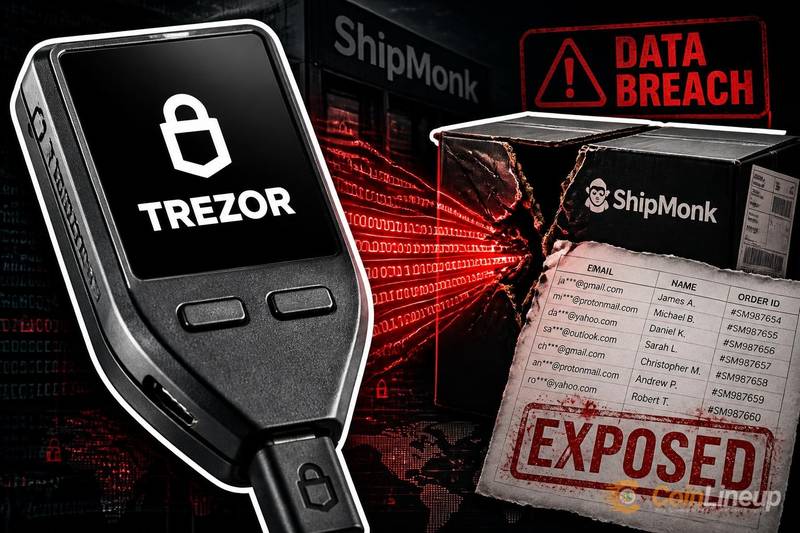
A data breach at ShipMonk, the third-party logistics firm that handles order fulfillment for hardware wallet maker Trezor, exposed information tied to 13,689 Trezor buyers — including 11,742 delivery addresses — putting hardware wallet owners' personal details at risk.
What happened in the ShipMonk breach
Trezor disclosed on X that a breach at ShipMonk exposed customer data belonging to 13,689 Trezor buyers. The incident affected nearly 14,000 customers, according to BleepingComputer's reporting on the disclosure.
ShipMonk operates as an e-commerce fulfillment provider — a major, Fort Lauderdale, Florida-based player in the direct-to-consumer space — warehousing and shipping products on behalf of online brands. Because it ships Trezor devices to customers, it held order records that connected buyers to their physical shipping details. Of the exposed records, 11,742 included delivery addresses.
Trezor devices are made by SatoshiLabs, the Prague-based firm whose original Trezor, launched in 2014, was the first widely available crypto hardware wallet. That history is part of what makes the buyer list sensitive: it functions as a directory of people who plausibly hold self-custodied funds.
Why exposed delivery addresses matter for wallet owners
Delivery addresses are especially sensitive for hardware wallet buyers because they link a real-world home address to a person who likely holds self-custodied crypto. That is a different exposure than a generic e-commerce leak.
The core concern is physical-world privacy rather than the security of funds. A Trezor device secures private keys offline, so the breach does not compromise the wallets themselves, but it can reveal who owns one and where they live.
Security researchers have warned that this kind of exposure raises real-world targeting risk. CryptoSlate noted that a breach exposing thousands of Trezor owners puts physical safety on the line amid a rise in violent crypto home invasions.
That backdrop is not hypothetical. Chainalysis has documented the rise of violent "wrench attacks," in which victims are physically coerced into handing over crypto, in its research on the trend — the name nods to an old security trope, memorably captured in an xkcd comic, that a $5 wrench can defeat any encryption. A separate CertiK and Intel3D report found a 33% surge in physical crypto crime in H1 2026, with estimated losses topping $124 million.
The hardware wallet industry has a closely watched precedent for this kind of leak. In 2020, rival maker Ledger disclosed that its e-commerce database had been breached, exposing names, phone numbers, and mailing addresses tied to roughly 272,000 device buyers; when that database was later dumped on a hacking forum, it fueled months of phishing campaigns and reports of threats aimed at customers. As with the Trezor incident, no wallet keys or payment data were involved — the damage came from the address book itself.
What Trezor buyers should watch for next
Affected buyers should treat unsolicited outreach with suspicion. Exposure of customer identity and address data commonly leads to follow-on phishing emails, fake support messages, and impersonation attempts. Messages that reference the breach — or that arrive unprompted from "Trezor support" — are a particular red flag, since attackers routinely exploit public breach disclosures to appear credible.
Trezor will not ask for a recovery seed, and no legitimate support channel ever needs it. A recovery seed is the backup phrase that controls access to a hardware wallet, and anyone who obtains it can gain control of the funds it protects. Buyers should verify any communication through official channels rather than links sent by email or message.
The breach also underscores a supply-chain trust gap: even when a company's own systems are secure, customer data held by third-party partners like ShipMonk can become the weak point. E-commerce brands routinely hand order data to fulfillment houses, email platforms, and analytics vendors, and each handoff widens the set of systems where a breach can originate.
Disclaimer: This article is for informational purposes only and does not constitute financial or investment advice. Cryptocurrency and digital asset markets carry significant risk. Always do your own research before making decisions.

