Treasury Yields Hit Multi-Decade Highs as 10-Year Rate Tops 5.2%
Key Takeaways
- •The 10-year Treasury yield climbed above 5.2%, its highest level in about 19 years, while the 30-year yield hit its highest point since 2004.
- •The yield rise is driven by inflation worries linked to oil prices amid the Iran conflict, heavier government and AI data center borrowing, and robust US business activity that may prompt additional Fed rate hikes.
- •The average 30-year mortgage rate has climbed to 7% for the first time since early 2025, increasing borrowing costs for homebuyers, businesses, and the federal government.
- •Strategists are pointing investors toward shorter-term Treasuries, mortgage- and asset-backed securities yielding around 4.5%, high-quality corporate bonds, tax-exempt municipal bonds, and emerging market debt such as a fund yielding 5.6%.
- •The yield surge extends globally, with Germany's 10-year yield near 3.60%, its highest since 2008, and Japan's at 3.08%, marking a decisive break from the near-zero rate era.
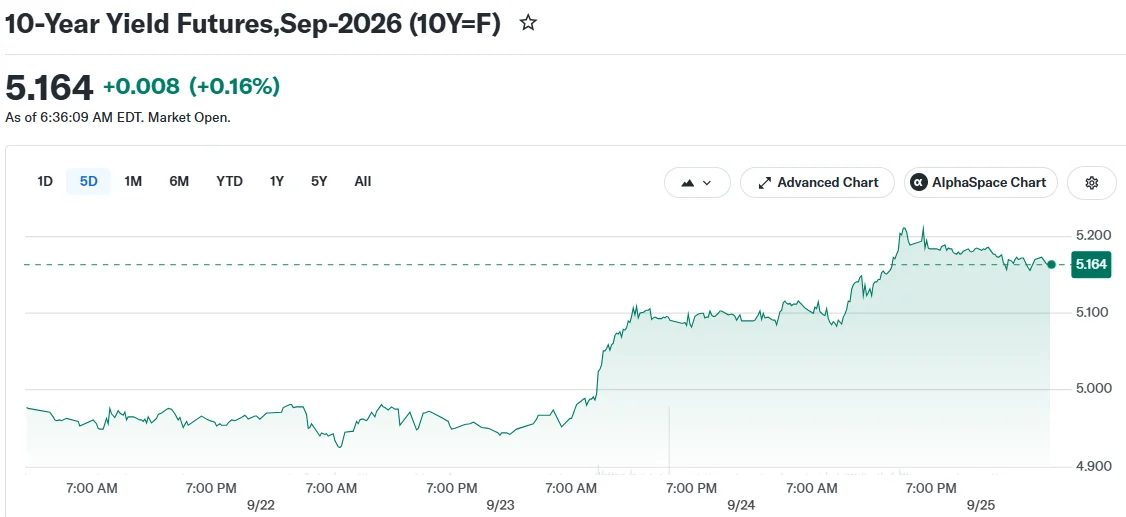
Treasury yields surged this week to levels not seen in roughly twenty years, underscoring a broad repricing across global debt markets. The 10-year Treasury yield climbed above 5.2%, its highest level in about two decades, while the 30-year yield hit its highest point since 2004 as bond prices fell, according to a CoinCentral report published September 25.
Bond prices and yields move in opposite directions: when bond prices fall, yields rise, since buyers receive a bigger return relative to the price they paid.
Financial markets commentary service The Kobeissi highlighted the speed of the move in a post on X on September 24:
Unbelievable. 3 hours later and the 10Y Note Yield is now above 5.20% for the first time in 19 years. The 10Y Note Yield is now up +50 basis points in 30 days and +30 basis points in 2 days. Even more remarkable is that the average American has no idea this is happening. Yet.… pic.twitter.com/p5BOJfVIEy
— The Kobeissi Letter (@KobeissiLetter) September 24, 2026 (X post)
Why Yields Are Climbing
Several factors are driving the increase. Investors are worried about inflation, partly due to higher oil prices tied to the conflict with Iran.
Government borrowing has also increased, and a larger volume of bonds being sold pushes prices down and yields up. Companies building artificial intelligence data centers are issuing large amounts of debt as well, adding further supply to the bond market. The combined issuance means more bonds competing for the same pool of investor demand, reinforcing the same price-down, yield-up dynamic behind the move.
The U.S. economy has additionally shown strength. A report released this week showed business activity grew at its fastest pace in over five years, a reading that could support the case for more Federal Reserve rate hikes. The Fed raised its short-term interest rate last week for the first time since 2023, and traders expect at least one more increase this year. Upcoming Fed decisions and fresh inflation readings are therefore among the reference points market participants are watching as they assess the path of borrowing costs.
Impact on Everyday Borrowers
Rising Treasury yields affect more than just bond investors. The average 30-year mortgage rate has climbed to 7% for the first time since early 2025. Higher yields make it harder for people to afford homes, and they also raise borrowing costs for businesses and the federal government. The connection is mechanical: lenders price 30-year home loans against long-term Treasury yields, so moves in the 10-year rate feed directly into the quotes borrowers see.
For savers, higher yields mean better returns on savings accounts and short-term bonds. The 1-year Treasury bill yield is just under 4.5%.
Stocks have also felt pressure. The S&P 500 had been near an all-time high earlier this week before the bond selloff slowed its momentum. The iShares Core U.S. Aggregate Bond fund has fallen nearly 5% this year, while the S&P 500 remains up close to 13% for the year.
What Investors Are Doing
Investment strategists say shorter-term bonds may offer a better balance right now, as these bonds are less sensitive to interest rate swings than long-term Treasuries.
Mortgage-backed securities and asset-backed securities are also being highlighted as options, with funds tracking these assets currently yielding around 4.5%. High-quality corporate bonds are another area experts point to, noting that many large companies remain financially strong despite the higher rate environment.
Municipal bonds are drawing more attention as well, since their tax-exempt status makes them appealing when combined with higher rates. Emerging market government bonds are also seeing increased demand: one fund tracking short-term debt from countries like Saudi Arabia and Mexico currently yields 5.6%.
A Global Trend
The rise in yields is not limited to the United States. Germany's 10-year yield is near 3.60%, its highest level since 2008. Japan's 10-year yield sits at 3.08%, a marked shift from the negative yields the country recorded as recently as 2020. Taken together, the moves mark a decisive break from the near-zero rate era that shaped much of the past decade, raising the baseline cost of money for governments, companies, and households.
Analysts say the pattern reflects mounting debt levels and inflation concerns across multiple countries, not just the U.S.

