Treasury Yields Jump After Bessent Unveils $6 Billion Bond Buyback Ahead of 10- and 30-Year Auctions
Key Takeaways
- •The Treasury will repurchase up to $6 billion in par value at Thursday's auction, tripling the size of the buyback operations that began under Janet Yellen in April 2024.
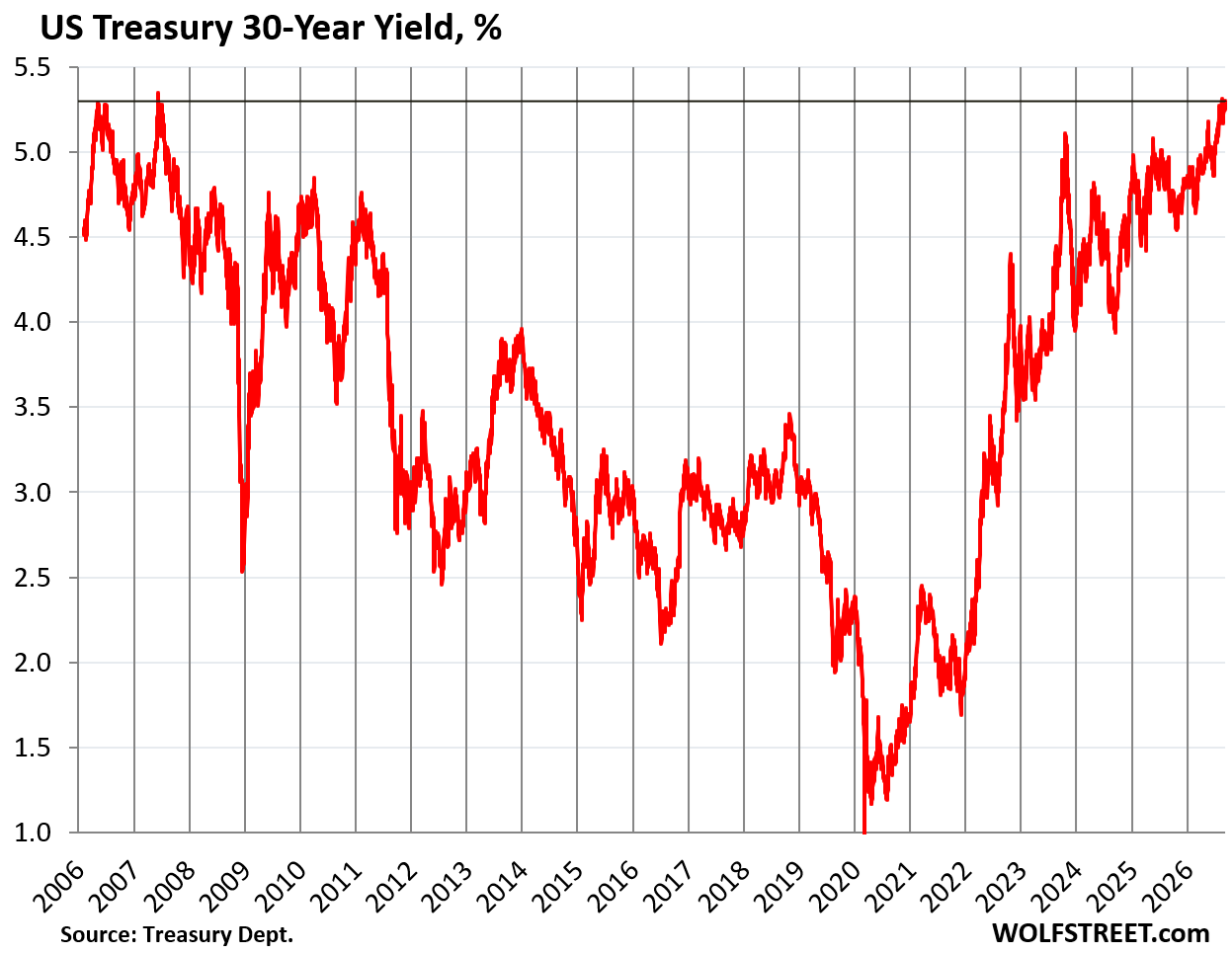
- •After the announcement, the 30-year Treasury yield rose 5 basis points to 5.31% before easing to 5.30%, and the 10-year yield reached 4.85%, its highest level since October 2023.
- •Forty 20- and 30-year bond issues maturing between May 2040 and August 2046 are eligible, and prior operations have repurchased similar bonds at discounts of more than 50% of face value.
- •Treasury Secretary Scott Bessent had signaled the scale-up on August 19, raising the per-auction buyback minimum to at least $4 billion, but the $6 billion cap fell short of traders' hopes for larger or open-ended operations.
- •Because the Treasury cannot print money, buybacks are funded by new debt issuance, replacing low-coupon bonds with smaller par amounts of higher-rate debt and potentially increasing interest payments.
The U.S. Treasury Department announced on Wednesday that it will repurchase a maximum par amount — face value — of $6 billion in Treasury securities at a buyback auction on Thursday, tripling the size of the buyback operations that the Treasury under former Secretary Janet Yellen began in April 2024.
The announcement came just hours before Wednesday's 10-year Treasury auction and one day ahead of Thursday's 30-year auction. Treasury yields spiked initially on the news, with the 30-year yield jumping 5 basis points to 5.31% — briefly matching its prior multi-decade high — before trading at 5.30%. The 10-year yield rose to 4.85%, its highest level since a brief run toward the 5% mark in October 2023.
Traders had hoped for a far larger figure, and some had wanted open-ended buybacks without set limits. The $6 billion cap therefore marked another disappointment in a Treasury market already troubled by the deep long-term fiscal problems of the U.S. government.
The scale-up itself had been flagged in advance. On August 19, Treasury Secretary Scott Bessent announced — as part of a series of market-supporting maneuvers aimed at pushing down long-term Treasury yields despite the tough conditions facing the bond market — that buybacks of 10-year notes and 20-year and 30-year bonds would at least double, from the $2 billion per auction started under Yellen to at least $4 billion. Thursday's operation will be the first buyback auction under the new regime.
Buybacks Expected at Steep Discounts
The buybacks will likely be executed at substantial discounts, as has been the case in prior auctions of this type of debt, because the targeted bonds were issued when yields were much lower. The discounts are arithmetic rather than financial engineering: bonds carrying coupons set in the low-rate era are worth far less than face value when the same maturities yield above 5%, and the buyback price simply reflects that gap. Treasury has been buying back 30-year bonds issued in the second half of 2020 at discounts of more than 50% — effectively paying less than half of face value — and has repurchased 30-year bonds issued in January and February 2021 at discounts of about 47%.
In those auctions, the par value purchased was $2 billion, but the actual amounts paid were considerably less. The same applies to Wednesday's announcement: the par value is capped at $6 billion for Thursday's auction, but the actual outlay will be substantially below that figure.
Wednesday's announcement lists 40 eligible bond issues, all 20-year and 30-year bonds maturing between May 2040 and August 2046.
At the top of the list is a 20-year bond maturing in May 2040 (CUSIP 912810SR0). With about 14 years left to run, it trades like a 14-year bond. The government issued it in May 2020 with a coupon of 1.125%. Its yield spiked 5 basis points on Wednesday to 5.12%, from 5.07% just before the announcement, pushing the price lower still — and widening the potential discount at which the government might buy it back.
Treasury already repurchased $1.95 billion of par value of this same 20-year bond at the February 10 buyback auction, when yields were far lower, paying 64 cents on the dollar. For that $1.95 billion in par value — which covered nearly all of the $2 billion buyback limit that day — it actually paid $1.248 billion. Given the current 5.12% yield, Treasury may buy the bond back at an even bigger discount on Thursday.
Swapping Cheap Debt for Expensive Debt
Because the Treasury cannot print money, every buyback is ultimately funded by new debt issuance — a key distinction from the Federal Reserve's bond purchases, which are financed with newly created money. In effect, the department is retiring low-interest-rate debt at a massive discount and replacing it with smaller par amounts of debt carrying much higher interest rates. This trims total debt outstanding by a tiny amount, but interest payments may end up a little higher than before.
Treasury is also shifting more of its debt into short-term T-bills. T-bill rates are unstable over the long term — they move with the Federal Reserve's policy rates and rise when inflation is high — and will replace the fixed rates on the cheap long-term debt being bought back. How wise that is over the long run is an open question. But the long term matters little at the moment: the operation lands before the midterm elections, which is what may matter most to Bessent.
Spiking bond yields, however, were not the goal. The aim of the buyback program was to drive yields down and bond prices up. On Wednesday, the market moved the other way. The next data points arrive quickly: demand at Wednesday's 10-year and Thursday's 30-year auctions, and — from Thursday's buyback itself — how much of the $6 billion in eligible par value the Treasury actually retires, and at what discounts. Those figures will provide the first concrete measure of how the scaled-up program works in practice.
This article was originally published on Wolf Street by Wolf Richter. Background on the August 19 announcement is available in the earlier Wolf Street report.
