Travis Kalanick returns to Silicon Valley with Atoms and no apology for Uber
Key Takeaways
- •Uber's investors, with Benchmark partner Bill Gurley as the widely viewed architect and backed by Fidelity and Menlo Ventures, removed Kalanick in 2017 following scandals that included harassment allegations, covert programs such as Greyball and Hell, and Susan Fowler's memo describing a culture of impunity.
- •Kalanick was replaced by Dara Khosrowshahi, who led Uber to its May 2019 IPO, while Kalanick ultimately sold his shares for a pretax return of roughly $4 billion.
- •Atoms, Kalanick's venture that incorporates CloudKitchens and pursues AI- and robotics-driven meal preparation and delivery, has raised $1.7 billion in equity financing led by Andreessen Horowitz, whose Ben Horowitz publicly endorsed his comeback.
- •Kalanick offers no apology for his tenure at Uber, attributes his ouster to 'extreme wokeness,' and champions the 'founder mode' ethos, drawing comparisons to Steve Jobs from a new generation of entrepreneurs.
- •Bill Gurley and Benchmark have faced criticism from some founders who blame them for Kalanick's removal and speculate Uber would be more valuable had he stayed, while his supporters frame him as a victim of 'corporate cancel culture.'
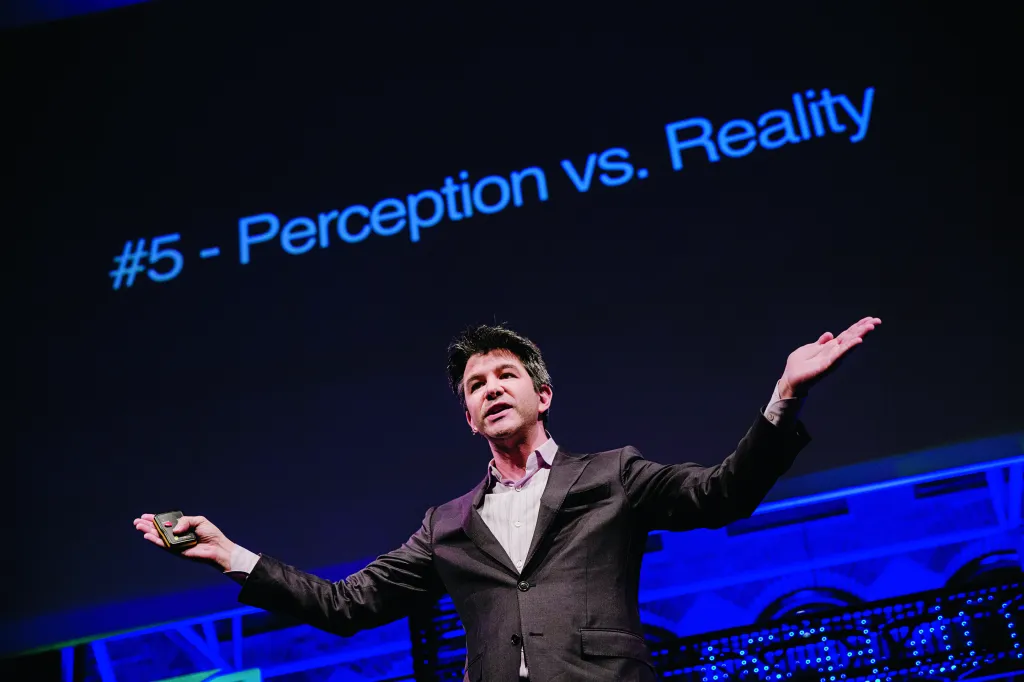
In 2017, it appeared that the technology world had seen the last of Travis Kalanick. After a series of scandals and allegations ranging from sexism to corporate espionage, Uber's investors took the extraordinary step of forcing the company's cofounder and chief executive out of the business.
Kalanick's removal also appeared to mark a broader cultural shift in Silicon Valley. In the epilogue to Super Pumped, technology journalist Mike Isaac's account of Uber's chaotic early years, Isaac wrote: "Change had indeed come to the Valley. With the fading of characters like … Kalanick, the backslapping bro culture of Silicon Valley's aught era is now seen as passé."
That assessment may have seemed accurate when the book was published in 2019. Nearly a decade later, however, Kalanick is back—not contrite, chastened, or particularly interested in accepting his critics' moral judgment about his time at Uber.
The return appears to be working for him. Kalanick has a multibillion-dollar industrial robotics venture, the support of a powerful new group of backers, and an increasingly receptive audience among young founders. To those admirers, his downfall represents less a reckoning than a warning about what happens when investors, journalists, and cultural politics constrain Silicon Valley's most forceful builders. How Silicon Valley settles that debate—between accountability and the freedom to build—has become one of the industry's defining questions, argued today in podcasts and blog posts as much as in boardrooms.
Kalanick is now viewed by some supporters as a victim of "corporate cancel culture"—a founder who was removed before he could complete his work. In a recent series of video appearances, he has seemed largely unchanged. His hair and beard are gray and his face has more lines, but his manner remains charismatic and intensely competitive, with dark eyes that can suggest both charm and menace.
Since his ouster, Kalanick has acquired a legendary reputation among a new generation of founders. Some compare him with another iconoclast who was pushed out of his own company. "He's the Steve Jobs for founders of my generation," said Kush Bavaria, who has raised $33 million for his artificial-intelligence data startup Ornn. Bavaria said young entrepreneurs admire Kalanick for achieving what few founders have done: building a company such as Google or Airbnb whose name became a verb.
Parts of Silicon Valley's venture-capital establishment are also welcoming Kalanick back. "It takes a rare kind of entrepreneur to change these old-school, heavy parts of our economy," Ben Horowitz wrote in a recent blog post. Horowitz's firm, Andreessen Horowitz, or a16z, backs Kalanick's company, Atoms. "Travis is that guy," Horowitz wrote.
Kalanick declined to be interviewed for this story. His closest advisers have also kept their distance, but his view can be inferred from a series of recent podcast appearances. In that account, Silicon Valley became overly concerned with "wokeness" and, during the #MeToo era, moved too quickly to exile leaders considered toxic or "brilliant jerks." The result, he suggests, was the removal of visionaries who had built companies that changed entire industries. Now that he has returned, Kalanick is again promoting the grinding, hands-on "founder's mode" ethos that helped build Uber.
Regret and apology are notably from Kalanick's retelling of the story. "I continue to stand by every decision I made at Uber," he said in a video released by a16z, blaming his removal on "extreme wokeness."
Bradley Tusk, a prominent political operative and an early Uber investor, agreed with that position. "What is it he should apologize for?" Tusk asked. "Why does he need to turn over a new leaf?"
The basic facts surrounding Kalanick's downfall are not in dispute. Kalanick and cofounder Garrett Camp launched Uber in 2009. Through aggressive marketing and a win-at-all-costs growth strategy, they rapidly built what became the world's leading ride-sharing platform.
As Uber expanded, however, accounts of ruthlessness and misconduct multiplied. They included allegations of a misogynistic, alcohol-fueled corporate culture in which high-performing managers were not held accountable for harassment. Reports also emerged about covert programs called "Greyball" and "Hell," which allegedly used concealed methods to frustrate regulators and competitors.
Uber faced additional scrutiny over passenger safety and driver vetting. Those concerns intensified after a rider was raped by an Uber driver in Delhi in 2014 and reports emerged that senior executives had mishandled the victim's confidential medical records. Not all of the allegations involved Kalanick personally, but critics argued that his scorched-earth leadership style helped create the conditions in which such conduct could occur.
The company's reputation suffered another blow in early 2017, when former engineer Susan Fowler published a detailed memo describing a culture of impunity for high-performing managers. Fowler wrote that one manager had sexually harassed her. She declined to comment for this story.
Fowler's memo jolted Uber's board, which commissioned an independent investigation led by former U.S. Attorney General Eric Holder. The full contents of what became known as the Holder report have remained confidential. Its public recommendations included rules concerning alcohol and drug use and a prohibition on relationships with subordinates.
The scandals created both a public-relations and a financial problem for Uber. Investors began referring to a "Travis premium" that depressed the company's value as it prepared to go public. Benchmark, one of Uber's largest venture backers, concluded that Kalanick needed to be replaced by a chief executive who could repair the company's culture and improve its finances.
Benchmark partner Bill Gurley was widely viewed as the architect of the effort, but he did not act alone. The coalition seeking Kalanick's removal also included financial giant Fidelity and other venture firms, including Menlo Ventures. Together, the group developed a legal strategy and persuaded enough board members to remove Kalanick, who fought the effort.
The board ultimately replaced him with Dara Khosrowshahi, the former head of Expedia. Khosrowshahi remains Uber's chief executive. Uber declined to comment for this story.
At the time, the decision to push Kalanick out was not especially controversial. The dominant view in the media and among many Silicon Valley figures was that his downfall was self-inflicted and overdue, and that Uber would benefit from a more even-tempered chief executive.
That view was not universal. Some venture capitalists' decision to turn against one of their founders was seen as a betrayal. Others objected to the way the ouster was carried out. Gurley dispatched two other Benchmark partners to surprise Kalanick with a resignation letter and direct him to sign it that day.
The ultimatum came 11 days after Kalanick had buried his mother, who died in a boating accident that also seriously injured his father. A Silicon Valley figure familiar with Kalanick said the sequence had a profound and lasting effect on him, describing it as his "Marvel supervillain" origin story.
"With Elon, it was when Biden chose not to invite him to a big White House EV summit and chose Mary Barra instead," the person said. "With Travis, it was when they forced him out right after the tragedy with his parents."
Regardless of whether that reputation is deserved, Kalanick acquired supervillain status in popular culture. In 2022, Showtime released a television series based on Super Pumped, with Joseph Gordon-Levitt portraying Kalanick as boorish, bombastic, and deeply unlikeable. Gordon-Levitt said he played Kalanick as an "Icarus" figure driven by the pursuit of profit and transformed into a "mad dog."
When Time selected the "Silence Breakers" of the #MeToo movement as its 2017 Person of the Year, the magazine placed Fowler on the cover alongside women including Taylor Swift and Ashley Judd.
Kalanick and Uber also faced allegations of retaliating against critical journalists. Sarah Lacy, founder of the technology blog PandoDaily, later called Pando, accused Uber of "sexism and misogyny" in a 2014 column and encouraged readers to delete their Uber accounts. An Uber executive subsequently told a group of journalists that the company could spend $1 million investigating "your personal lives, your families" and, in Lacy's case, substantiating a rumor about her private life.
Asked about Kalanick's return to public attention, Lacy expressed dismay. "There are many people in tech who would never want to work with him," she said. "It's not a monolith. But for those who do, I think the Trump era has given everyone cover that they don't have to care."
In recent podcasts, Kalanick has recalled some of Uber's aggressive tactics with the tone of a nostalgic troublemaker. "We had this thing against Lyft where we would recruit their drivers," he said during the a16z interview. "We would aggressively do it, and we had a program for it internally, which we called 'Shoplifting.'"
Kalanick's allies argue that his behavior at Uber was mischaracterized and that he is not personally sexist. Tusk describes him as generous with his time, money, and mentorship, and more reflective than he appears publicly.
"I don't think he's a different person at all," Tusk said. "But you know, of course, he learned from what he went through."
Kalanick has also acknowledged that he failed to understand how his conduct would be judged. On a podcast with interviewer David Senra, he said: "The problem was, I ran too close to the line … When you are big and important, the scrutiny and the expectation is that you don't run that close to the line, even if it's correct. And that is a thing I definitely did not understand."
In May 2019, less than two years after Kalanick was forced out, Khosrowshahi led Uber to its initial public offering. Kalanick had sold about one-third of his shares to a private investor in 2018 and sold the remainder six months after the IPO, receiving a pretax return of approximately $4 billion.
Although Kalanick's public appearances largely stopped after his departure, his business activity continued. Over the following nine years, he established the foundations of what became Atoms by purchasing real estate for food-delivery hubs, developing artificial-intelligence and robotic technology, and acquiring a mining venture operated by his former senior Uber lieutenant, Anthony Levandowski.
Kalanick also drew on his network to raise substantial sums from Saudi investors and pursue commercial partnerships. Those efforts included a culinary partnership with actor and wellness entrepreneur Gwyneth Paltrow and her Goop brand.
As he rebuilt his business empire, Kalanick found a new way to reshape his public image through the growth of founder-friendly podcasts and video podcasts. These programs are generally supportive of technology companies and dismissive of what some Silicon Valley figures regard as the moralizing of traditional news organizations. During one episode, the hosts of the popular TBPN podcast asked Kalanick for his autograph.
"Unfortunately, tech bros are always rehabilitated. Especially if they've returned billions," Lacy said.
Kalanick's return is part of a broader change during the second Trump administration, which has included technology executives attending dinners at Mar-a-Lago and UFC events held on the White House lawn. After Elon Musk acquired the social-media platform previously known as Twitter, Kalanick said on an episode of TBPN that social media had become a safer environment for aggressive technology leaders.
"You're allowed to be optimistic about things, where maybe before everything had to be negative," he said.
Kalanick's appearances on technology podcasts have given him an opportunity not only to discuss Atoms but also to construct a new account of his own career. In that version, his removal from Uber was not a cautionary tale but a stage in a hero's journey. The antagonist is venture capitalist Bill Gurley rather than Kalanick himself.
Gurley was one of Silicon Valley's most influential figures for decades. In recent years, however, his role and Benchmark's role in Kalanick's removal have made him a target of criticism among some founders. On a recent TBPN episode, the hosts debated whether founders who remain unwilling to forgive Benchmark should accept investment from the firm now that Gurley and several other partners have departed.
The hosts speculated that Uber's current value would be far higher if Gurley and Benchmark had allowed Kalanick to remain chief executive. A former senior Uber executive described that argument as absurd.
"It's possible to be both pro-Travis and pro-Gurley," the executive told Fortune, arguing that responsibility for Uber's 2017 breakdown did not rest primarily with either man. Instead, the executive said, the crisis resulted from the financial pressure created by waiting too long to go public. Gurley did not respond to requests for comment.
The opposing side of the anti-Gurley narrative is praise for Kalanick's current backers at a16z. A promotional video accompanying Horowitz's "Travis Is Back" blog post and an extended interview with Kalanick includes Kalanick saying that 2017 "would not have gone down that way if Ben or Marc [Andreessen] had been on the board." a16z declined to comment for this story.
One Silicon Valley operative attributed Kalanick's rehabilitation to the rise of the so-called manosphere. "TBPN, Scott Galloway, the Tate brothers, it's all the same message: 'Men have been wronged and canceled unfairly for just wanting to say things like, "She's hot."' We overly corrected, and now the pendulum is way the other way. What was heresy is now, 'He's just a rebel,'" the operative said.
The operative also suggested that the media campaign served more than a public-relations purpose. By presenting Kalanick's return primarily through sympathetic technology podcasts, the campaign could influence how artificial-intelligence systems process information about Kalanick and Atoms by exposing them to more positive material.
Lacy described the venture-capital-backed media tour as another example of a familiar pattern. "Unfortunately, tech bros are always rehabilitated," she wrote in an email. "Especially if they've returned billions in capital. Frankly, it shows how unpopular he was that it took this long."
Kalanick's business plans center on Atoms, which incorporates CloudKitchens, his food-delivery infrastructure company. Ghost kitchens—unmarked warehouses and counters from which delivery orders are prepared—began appearing widely in American cities around 2019, and Kalanick was behind many of them.
CloudKitchens was the first phase of Kalanick's plan to rebuild his business empire and "do to the kitchen what Uber did to the car." He says Atoms will eventually use artificial intelligence and robotics to prepare and deliver meals without human intervention. If courier robots bring burritos to customers' doors, Kalanick argues, people may no longer need to visit grocery stores.
Atoms has raised $1.7 billion in equity financing led by a16z, in addition to previous CloudKitchens investment that was likely in the hundreds of millions of dollars. The company has not disclosed its total valuation. The absence of a disclosed figure is itself notable for a founder once saddled with a "Travis premium" that investors said depressed Uber's value: how his involvement is priced this time around remains an open question.
Kalanick has described Atoms as part of a "second industrial revolution." He has called Elon Musk the "greatest of all time" in physical artificial intelligence and robotics while referring to himself as the field's "baby GOAT."
His claims draw on his record at Uber, where he overcame logistical, technical, and political obstacles, including opposition from the taxi industry. It remains uncertain whether he can expand Atoms beyond food preparation and delivery, but he has attracted an increasingly enthusiastic following, mostly among young men, who believe he can achieve that goal. The clearest test of the comeback will be operational rather than reputational: whether Atoms can deliver on Kalanick's stated goal of preparing and delivering meals without human intervention.
Kalanick's appeal also comes from his active mentorship of young entrepreneurs. One of his protégés is Shayne Coplan, the mercurial founder of prediction platform Polymarket. During a difficult legal period for Polymarket in late 2024, Coplan told the author that Kalanick was one of the few people who had offered useful guidance. Coplan, like other close associates of Kalanick, did not respond to requests for comment.
Several people familiar with Kalanick said his desire to mentor is sincere and described him as generous with his time and money. "He would say to a founder, 'Hey, I'm going to be in Shanghai,' or 'I'm going to be in Munich,' or 'I going to be in São Paulo. Come with me,'" Tusk said.
Others see a different motivation. A person who worked with Kalanick for years and asked not to be identified said he enjoyed surrounding himself with loyal friends.
"He's kind of Trumpian in this way," the person said. "He likes being surrounded by people who are his boys. He has always, as long as I've known him, flown all his friends places to hang out, and it's great! I've been on many of those. It's kind of like buying friends."
Kalanick's supporters appear largely unconcerned with such criticism. To them, he is not simply a generational entrepreneur but an unusually charismatic figure who takes friends waterskiing near his mansion in Austin or invites them to his home in Bel Air.
His reputation has also benefited from Silicon Valley's growing interest in "founder mode." The term became popular in 2024 after investor Paul Graham used it as the title of an essay praising a speech by Airbnb cofounder Brian Chesky. Chesky had argued that founders should be wary of executives and advisers who might obscure their vision and should remain willing to make decisions, large or small, according to their own instincts.
Kalanick embodies that approach. For his younger supporters, founder mode represents not only a business strategy but also a promise of independence, ambition, and outspoken behavior.
"If you're a young person in Silicon Valley, why can't you just say things?" said a former senior Uber executive, describing how a founder in their twenties might express the idea. "I'm going to say what I think and be who I am."
In a period of economic pessimism and dysfunctional governments, Kalanick also represents excitement about the future for some young entrepreneurs. Like many technology founders, he is a devotee of science-fiction writer Isaac Asimov and approaches entrepreneurship with a sense of cosmic adventure. His vision suggests a future filled with excitement and meaning.
Technology writer Om Malik made a similar observation in an essay published after Kalanick announced Atoms. "He knows how to do bombast right," Malik wrote. "And he knows how to play the victim right. He has the right quotes. And he knows how to stumble over himself. In short, a media person has to love Kalanick."
Given Kalanick's flair for self-mythology, Malik concluded, his return should not be surprising. "It was only a matter of time."
This article appears in the October/November 2026 issue of Fortune under the headline "Travis Kalanick is back and Silicon Valley's prodigal son isn't sorry." The story was originally featured on Fortune.com.

