Transnet Targets 61 Million mt Coal Corridor Throughput as Maintenance Execution Lifts Export Recovery
Key Takeaways
- •Transnet is targeting 61 million metric tons of coal corridor throughput for the 2026-27 financial year, with a further goal of 70 million mt by 2028-29.
- •Improved maintenance practices, including a shift to two planned annual shutdowns, have raised execution rates from 30-40% to 80-90% and contributed to an 11% volume increase over the past year.
- •South African coal exports to India fell to 7.2 million mt in Q2 2026 from 9.1 million mt in Q1, as Indian direct reduced iron producers increased reliance on domestic coal.
- •The recovery plan is backed by 6.8 billion rand in Budget Facility for Infrastructure funding from National Treasury for a network upgrade spanning approximately three years.
- •Transnet will maintain its existing operating structure through 2026-27 and has committed to developing a business case for private-sector participation by the end of 2027.
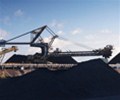
South Africa's coal export corridor has moved beyond stabilization and is now showing sustained recovery, according to state-owned logistics operator Transnet SOC Ltd. The company is targeting 61 million mt of throughput in the 2026-27 financial year, supported by improved maintenance execution, new rolling stock, and 6.8 billion South African rand in Budget Facility for Infrastructure funding from National Treasury for a network upgrade.
"The focus on 61 million mt for 2026-27 and 70 million mt for 2028-29 is fairly reliable because that is based on our existing plan," Dr. Andrew Shaw, Chief Strategy and Planning Officer at Transnet, said in an interview with Platts, part of S&P Global Energy, on July 22.
South Africa is one of the world's largest thermal coal exporters, and the rail corridor linking Mpumalanga coalfields to the Richards Bay Coal Terminal (RBCT) is a critical logistics artery for that trade. The throughput target is central to the country's effort to restore confidence in its coal export chain after years of underperformance marked by derailments, cable theft, locomotive shortages, and network instability — underperformance that came at a steep cost to mining revenue during a period when South African coal exports had fallen well below the 70 million–80 million mt annual levels seen in earlier years. Transnet expects RBCT to export approximately 57 million mt, while the rail operator's own delivery capacity remains "a little below that," Shaw noted.
The recovery plan aims to narrow the gap between RBCT's 91 million mt/year nameplate capacity and the actual volume of coal moved by rail to the terminal — a persistent frustration for miners and traders exposed to South African thermal coal supply. Shaw emphasized that success would be measured not solely by volume growth, but also by Transnet's ability to sustain a higher operating tempo, reduce disruptions, and provide greater certainty for exporters.
Maintenance Overhaul Drives Operational Gains
A fundamental change in how Transnet maintains the coal corridor lies at the heart of the plan. Shaw said the company has shifted from one major annual shutdown to two planned shutdowns per year, enabling rehabilitation work without removing excessive train-running capacity from the system at any single time.
"We don't want to take significant periods of time out to rehabilitate the network because then we lose the ability to run trains, so there are two shuts as opposed to one," Shaw explained.
Execution rates during these shutdowns have improved sharply under the Transnet Rail Infrastructure Manager (TRIM). "We previously would achieve between 30% to 40% of our planned execution. Planned execution rates are now closer to 80% to 90% for shut execution from TRIM," he said.
That improvement has already contributed to an 11% rise in volumes over the past year, and Transnet is "fairly confident" it can sustain the trajectory toward 61 million mt in the current financial year, Shaw added.
The coal line upgrade is supported by 6.8 billion rand of Budget Facility for Infrastructure funding from National Treasury, which followed an Independent Technical Assessment funded collectively by major coal customers — an unusual step that underscored the mining sector's willingness to cofund diagnostics in pursuit of a more reliable export chain. The program is expected to roll out over roughly three years and focuses on improving the existing corridor rather than immediately changing the operating model.
Rolling stock availability is also improving, with Transnet returning locomotives to service and continuing deliveries of 23E locomotives. "Everything has to fit together," Shaw said, referring to the interplay among network maintenance, locomotive availability, and wagon renewal. While no single constraint determines corridor performance, he identified reliable traction and overall network resilience as the two most important drivers of export performance.
Market Resilience Meets Shifting Demand
The operational recovery comes at a complex point in the market cycle. Shaw noted that Transnet's planning assumptions are based on validated customer demand and logistics readiness rather than forecasts of international coal markets.
Platts-assessed FOB Richards Bay 5,500 kcal/kg NAR prices averaged $93.40/mt in June, down from $94.20/mt in May but above $92.05/mt in April, according to S&P Global Energy data. South African coal exports to India — historically one of the key outlets for Richards Bay material — fell to 7.2 million mt in Q2 2026 from 9.1 million mt in Q1 and 8.8 million mt a year earlier, as Indian direct reduced iron producers increased their reliance on domestic coal and used South African coal more as a blending component.
That demand shift has limited the price impact of rail disruptions. Following a June 9 suspension of coal train operations after a derailment near Richards Bay, market participants said South African thermal coal prices were unlikely to be significantly affected because Indian demand was weak and RBCT stocks were sufficient. Platts assessed FOB Richards Bay 5,500 kcal/kg NAR at $96/mt on June 9. The grade was last assessed at $88.95/mt on July 29, up 45 cents/mt day over day.
Shaw said Transnet's customers remain confident that incremental coal delivered through RBCT will find buyers if prices hold near levels that preserve miners' margins. "As long as price holds at around $130/mt [for FOB Richards Bay 6,000 kcal/kg NAR coal], the market is very resilient for South African coal," he said. Platts does not assess the 6,000 kcal/kg NAR grade.
Focus on Throughput, Not Market Redesign
Transnet's immediate focus is throughput rather than structural change. The existing operating structure — Transnet Freight Rail as operator, TRIM as infrastructure provider, and RBCT as terminal operator — will remain in place through 2026-27, Shaw confirmed.
"Our challenge is really just to drive the throughput," Shaw said. He added that Transnet's objective is to ensure logistics functions as an enabler of South Africa's export competitiveness rather than a constraint. "Our focus is just to continue to improve the volume throughput, ultimately to drive up to the 70 million mt mark, which we have a two-year target for."
Shaw described the 81 million mt per annum objective as a medium-term strategic ambition rather than a short-term target. Progress toward this goal would depend on the successful implementation of operational improvements, infrastructure investment programs, ongoing rail reform initiatives, and appropriately structured private-sector participation arrangements.
Private-sector participation remains a medium-term question rather than a near-term operational shift. Shaw said Transnet has committed to developing a business case by the end of 2027 to assess how the coal line could be taken to market, with any transaction likely to be handled through the Development Bank of Southern Africa's private-sector participation office. This timeline aligns with South Africa's broader National Rail Policy direction, which envisions enabling third-party access to the freight rail network — a reform long sought by mining companies that have borne the cost of constrained export logistics.
Source: Platts, S&P Global Energy

