Perpetua Resources, U.S. Army, and Idaho National Laboratory Open Antimony Pilot Plant
Key Takeaways
- •The pilot plant at Idaho National Laboratory will process antimony samples from Perpetua Resources' Stibnite Gold project, which is the only identified domestic antimony reserve in the United States.
- •China and Russia dominate global antimony production, and China halted shipments of specialized antimony trisulfide to the U.S. in 2021 before announcing broader export restrictions effective September 2024.
- •The facility's primary objective is to demonstrate processing of high-quality antimony trisulfide for military and industrial applications, supporting a fully domestic ground-to-round supply chain.
- •The Stibnite Gold project has received a Final Environmental Impact Statement from the U.S. Forest Service, representing a significant regulatory milestone toward production.
- •The partnership between Perpetua Resources and the U.S. Army was formalized through the Defense Ordnance Technology Consortium and aligns with broader Defense Production Act efforts to reduce reliance on foreign critical minerals.
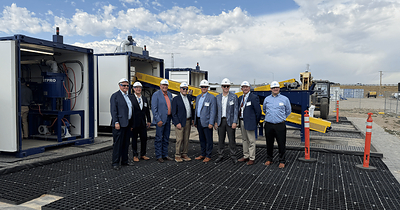
Perpetua Resources (TSX: PPTA; Nasdaq: PPTA), the U.S. Army, and Idaho National Laboratory (INL) announced Thursday the opening of a new modular mineral processing plant aimed at establishing an end-to-end domestic supply chain for antimony.
Antimony is classified as a critical mineral essential to U.S. national and economic security. It serves as a key component in ammunition, defense systems, energy storage, and high-tech manufacturing, yet the United States remains heavily dependent on imports from Asian markets. China's announcement in August 2024 of export restrictions on antimony, effective September 15, 2024, further exposed the vulnerability of Western supply lines for the mineral and heightened urgency around developing domestic sources.
The pilot plant, located at INL in Idaho Falls, is designed to process antimony samples from Perpetua's Stibnite Gold project in central Idaho. According to the company, the facility combines the nation's only identified domestic antimony reserve with INL's advanced materials expertise to drive innovation, train a skilled workforce, and strengthen the technical capabilities required to rebuild commercial-scale critical mineral production in the United States.
The project represents the culmination of a multi-year collaboration between the U.S. Army—through the Defense Ordnance Technology Consortium—and Perpetua to develop a fully domestic, "ground-to-round" antimony supply chain. The partnership aligns with broader U.S. government efforts under the Defense Production Act to reduce reliance on foreign sources of critical minerals. The company also noted that the facility could support future processing of additional critical minerals.
A primary objective of the pilot plant is to demonstrate the processing of high-quality antimony trisulfide for specialized military and industrial applications. Antimony is used across a broad range of products, including defense munitions, battery technologies, solar glass, and flame retardants.
China and Russia Dominate Global Supply
China and Russia dominate global antimony production. In 2021, China stopped supplying the United States with the specialized form of antimony trisulfide required for more than 300 types of ammunition.
In response, the U.S. Department of War and Perpetua Resources entered into a strategic partnership focused on advancing domestic antimony trisulfide production. Perpetua's Stibnite Gold project holds the only identified domestic reserve of antimony and is under development to deliver a large-scale domestic source of the critical mineral alongside significant gold output. The Stibnite Gold project received a Final Environmental Impact Statement from the U.S. Forest Service, marking a key regulatory step toward production.
Perpetua CEO Jon Cherry emphasized the significance of the collaboration in a news release.
"Today's milestone shows what's possible when industry, government, and scientific innovation work together on practical domestic solutions," Cherry said.
"As construction advances at the Stibnite Gold project, this pilot plant extends that momentum downstream by helping establish the capabilities needed to produce military-grade antimony materials here in America," he continued. "Together, these investments are laying the foundation for a secure, end-to-end domestic supply chain that strengthens national security while creating long-term economic opportunity."
Idaho Governor Brad Little, Lieutenant Governor Scott Bedke, U.S. Representative Mike Simpson, and INL Laboratory Director John Wagner joined Perpetua on July 29 for a ribbon-cutting ceremony marking the facility's official opening.

