Trader Joe's Holds a Customer Service Advantage Over Walmart and Target
Key Takeaways
- •Trader Joe's ranked first on Forbes' annual best employers list in 2025 and cultivates authentic customer interactions by hiring naturally warm employees rather than mandating scripted behavior.
- •Target recently introduced its 10-4 program, requiring employees within ten feet of customers to smile and use welcoming body language, and those within four feet to personally greet and offer assistance.
- •Walmart no longer employs dedicated greeters at store entrances, having replaced them with customer hosts who handle expanded responsibilities including security and shopper assistance.
- •A Cornell University study surveying 2,407 hospitality customers found that nearly half focused on employee treatment and generally held a negative view of scripted service.
- •Trader Joe's carries roughly 4,000 products compared to over 30,000 at a typical supermarket, enabling staff to develop deeper inventory familiarity and more natural customer conversations.
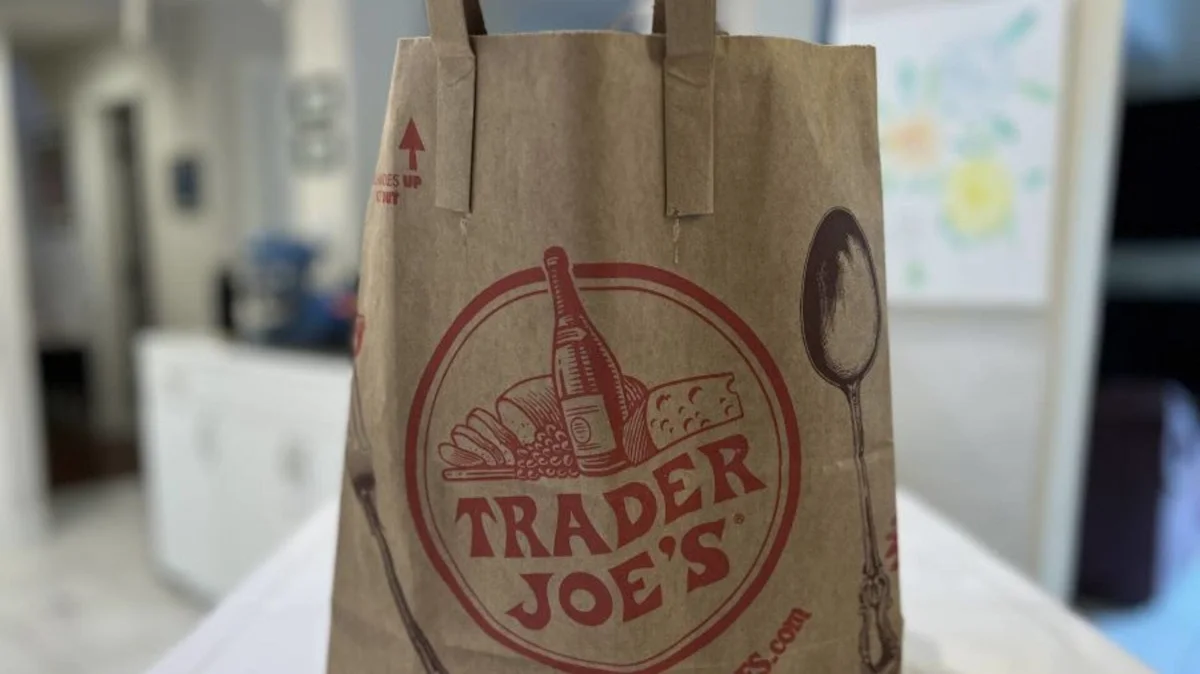
Trader Joe's Holds a Customer Service Advantage Over Walmart and Target
Forced greetings, scripted routines, and mandated employee rituals are common tools that retail and restaurant chains use to reinforce brand identity. But according to customer experience experts, these practices often produce the opposite of their intended effect.
"When they create scripts they're essentially trying to mandate behavior — but it backfires more often than it doesn't," Jeannie Walters, CEO of Experience Investigators, told Restaurant Dive. "It's pretty obvious when somebody is not talking like a human would talk."
While major retailers like Target and Walmart have adopted structured — or in Walmart's case, scaled-back — approaches to customer interaction, Trader Joe's has built a reputation for authentic, naturally occurring employee engagement that industry analysts say gives it a distinct edge. The stakes are considerable: grocery retail operates on notoriously thin margins, and customer loyalty is increasingly viewed as a critical differentiator as chains compete not only with each other but with growing online grocery options.
Trader Joe's Doesn't Have to Fake It
Retailers invest millions annually in training associates on customer interactions, recognizing that repeat shoppers are heavily influenced by service quality. Many chains attempt to mandate happiness or at least the appearance of it. Trader Joe's, by contrast, has cultivated working conditions where genuine friendliness arises on its own.
The grocery chain topped Forbes' annual list of best employers in 2025.
"Trader Joe's hires people who are comfortable talking to customers. They hire people who are naturally warm," Walters said.
Trader Joe's operates with a deliberately curated selection of roughly 4,000 products — far fewer than the 30,000-plus items carried by a typical supermarket — allowing employees to develop deeper familiarity with the inventory and making casual, informed conversation with shoppers more natural. The privately held chain, owned by Aldi Nord through a family trust, also does not face the quarterly earnings pressures that publicly traded competitors like Walmart and Target must navigate, giving it flexibility in how it staffs and trains.
Rather than issuing scripts, brands should provide employees with guiding principles and the freedom to express them naturally, she noted.
"You've got to give them the principle, and then let them have some freedom in terms of how they express that," Nate Brown, executive director of CX Accelerator, told Restaurant Dive.
How Target's 10-4 Program Works
Target recently implemented a new customer service initiative known as the 10-4 program, as USA Today reported. The rollout comes as Target works to differentiate its in-store experience amid competition from both discount rivals and e-commerce platforms.
Under the program:
- Target employees within 10 feet of customers should smile, make eye contact, wave, and use welcoming body language.
- Target employees within 4 feet of customers should personally greet shoppers, smile, and offer to help.
"We know when our guests are greeted, feel welcomed, and get the help they need that translates to guest love and loyalty," Adrienne Costanzo, Target's executive vice president and chief stores officer, told the newspaper.
Walmart, meanwhile, does not have a comparable rule and no longer employs dedicated greeters at its store entrances. NPR reported in 2019 that "Walmart has been eliminating greeters and replacing them with 'customer hosts,' who have expanded responsibilities, such as taking care of security or assisting shoppers."
The Case for Authenticity Over Scripts
John Abraham, writing for the Arizona State University Center for Leadership, argues that overly rigid standards undermine the personal quality they aim to create.
"When customer experience standards become too rigid and scripted, interactions that should feel personal can lose their authenticity — leaving customers with an awkward feeling at best," he wrote.
Abraham contends that scripting interactions makes it harder for employees to solve problems because customer needs are inherently unpredictable.
"When customer experience standards try too hard to script how an individual interaction should play out, they leave less flexibility for employees to deal with the nuances associated with each customer's unique situation," he added. "You can't predict every customer's needs — and often, customers won't distinguish between an employee who is not allowed to adapt their approach and one who is simply unwilling to help."
Research supports this view. A Cornell University research paper found that "customers in hotels and restaurants can quickly discern when an employee is following a service script." The study, based on a survey of 2,407 U.S. hospitality customers, revealed that nearly half of respondents focused on how they were treated by employees and held a generally negative view of scripted service.
"Fake interest is not good customer service. Rote delivery of catch phrases is not good customer service," according to Better Retailing. "The best retail employees are those who are authentically engaged with customers without spending too long to the disservice of other customers."
This story was originally published by TheStreet on August 3, 2026.

