Linus Torvalds Fixes Two-Year-Old Intel Xe GPU Bug With AI-Assisted Debugging
Key Takeaways
- •The bug originated in a roughly two-year-old commit (37173392741c) that applied round_up() instead of round_down() in the CCS offset calculation for VRAM allocation, causing compression metadata to be handed out as usable video memory.
- •Torvalds' investigation required 24 debug patches and 18 kernel boots before he pinpointed the faulty function call, which the fix (commit 818bebeb63dd) corrects.
- •Although an AI tool assisted by adding debug code and analyzing output, it at one point suggested the problem was unsolvable — an assessment Torvalds rejected before finding the solution himself.
- •The bug hit users of Intel Battlemage G21 hardware (the die behind Arc B-series cards) especially hard, manifesting as screen corruption and forced restarts of display managers.
- •The fix is scheduled for inclusion in Linux version 7.3 and is expected to be backported to stable kernel releases, addressing display problems for users on older kernel versions.
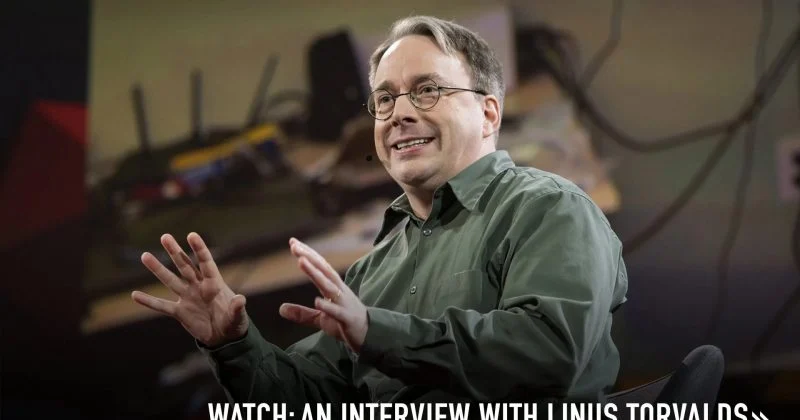
Linus Torvalds, creator and lead maintainer of the Linux kernel, merged a one-line fix to Intel's Xe graphics driver on August 21, 2026. The patch itself was trivially simple; the debugging journey required to reach it was anything but.
The effort consumed 24 debug patches and 18 kernel boots, Torvalds reported, with an AI tool playing a substantial role in streamlining the work. It helped add debug code and analyze output — and, at one point, concluded that the problem was essentially unsolvable. Torvalds rejected that assessment, pressed on, and found the answer anyway.
A single function call behind months of trouble
The root cause was one incorrect function call in an earlier commit, identified as 37173392741c and dating back roughly two years. That commit applied round_up() where round_down() belonged in the CCS offset calculation for VRAM allocation. CCS — Compression Control Surface — is the metadata Intel GPUs use to track the compression state of buffers in video memory; like other reserved regions, it depends on a correctly computed offset so the space it occupies is not handed out to anything else.
As a result, the kernel incorrectly allocated compression metadata as usable video memory. The consequence was corrupted page tables, which surfaced as screen corruption and forced restarts of display managers.
Users running Intel Battlemage G21 hardware under specific workloads were hit especially hard. Battlemage is Intel's second-generation discrete GPU architecture, and G21 is the die behind its Arc B-series cards. Torvalds happened to be running a Battlemage G21 system himself, which made the bug easy to reproduce once certain user-space changes triggered the conditions.
The fix, identified as commit 818bebeb63dd, changes a single function call.
AI as a debugging partner, not a savior
Torvalds even allowed the AI to help draft the commit message — a small but symbolically meaningful gesture from someone who has historically been protective of the kernel's communication standards.
Midway through the debugging session, the AI suggested the problem could not be solved, effectively advising Torvalds to give up. He ignored that advice, continued the methodical cycle of patching, rebooting, and analyzing, and eventually pinpointed the faulty rounding function.
The episode stands in contrast to Torvalds' previous frustrations with AI in the kernel development process. He has been vocal about the flood of AI-generated patches and communications submitted to the kernel mailing list, characterizing much of it as low-quality spam. Employing AI as a personal debugging assistant is a fundamentally different use case — a line between supervised tooling and unsolicited machine-generated contributions that the wider kernel community continues to debate.
A rare hands-on fix in GPU territory
Linux graphics driver development is typically handled by dedicated teams at Intel, AMD, and other hardware vendors, along with independent contributors who specialize in the DRM (Direct Rendering Manager) subsystem. For Torvalds to personally debug and fix an issue in the Xe driver is unusual enough to be noteworthy on its own. The Xe driver is also young by kernel standards: Intel merged it into the mainline in 2024 with the goal of eventually succeeding i915, the long-standing driver that has served Intel graphics hardware for roughly two decades, so some of its code paths carry far less mileage than their battle-tested i915 counterparts.
The patch is slated for inclusion in Linux version 7.3, with expectations that it will be backported to stable kernel releases. Given that the underlying bug has existed for approximately two years, the backport should resolve the issue for users on older kernel versions who have been experiencing intermittent display problems with affected Intel hardware. For those tracking the fix, the stable-kernel release announcements are where a backport of 818bebeb63dd would surface.
Broad attention across open-source communities
The development attracted significant attention across Linux and open-source communities, with discussions lighting up on Phoronix, Reddit, and Hacker News.

