Top 10 Global Miners Outside North America and Australia: Zijin's Expansion Strategy Delivers Record Results
Key Takeaways
- •Zijin Mining reported record net income of $7.4 billion in 2025, representing a 62% year-over-year increase driven by acquisitions and higher copper and gold prices.
- •Anglo American signed a proposed $53 billion merger with Teck Resources in September that shareholders of both companies have approved, aiming to create a major global copper producer.
- •Glencore swung to a $363 million profit and unveiled a roadmap to roughly double annual copper production to approximately 1.6 million tonnes by 2035.
- •Vale's attributable net income declined 62% to $2.4 billion after the company recorded a $3.5 billion impairment charge on its Canadian nickel assets amid downward price revisions.
- •Ma'aden more than doubled its net profit to approximately $2 billion and is diversifying into gold, copper, rare earth elements, and critical minerals as part of Saudi Arabia's Vision 2030 initiative.
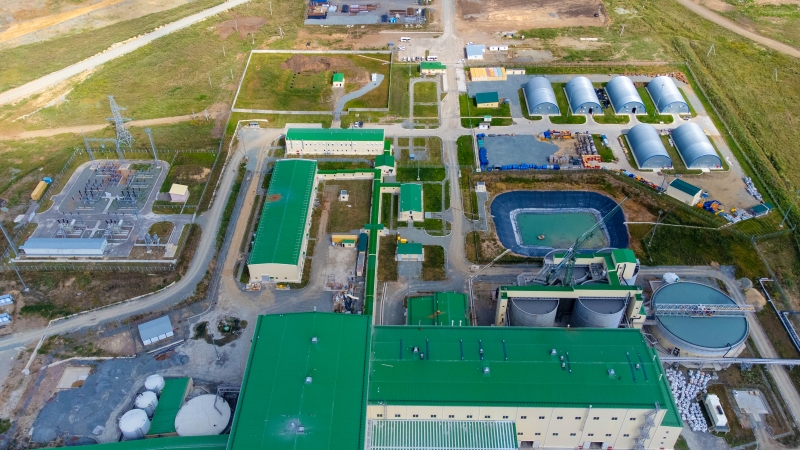
Zijin Mining's (SSE: 601899; SEHK: 2899) aggressive expansion strategy delivered strong results in 2025, as the Chinese miner achieved the highest market capitalization among global peers headquartered outside North America and Australia. The Fujian-based company has spent the past decade building one of the mining sector's most acquisitive growth engines, deploying capital across Africa, Central Asia, South America, and Southeast Asia in a push to secure copper and gold supply chains for China's industrial base.
Attributable net income for 2025 surged 62% to a record $7.4 billion (C$10.4 billion), driven by higher copper and gold prices combined with increased production output. Revenue climbed 15% to $49.7 billion.
Acquisitions fueled a 23% increase in 2025 output, with Zijin producing 90 tonnes of mined gold. Two key assets drove the growth: Ghana's Akyem gold mine, acquired from Newmont in April for $1 billion as the U.S. major shed assets following its Newcrest takeover, and Kazakhstan's Raygodorok operation, purchased in October.
Zijin continued to deepen its investment in copper, a metal central to global electrification and renewable energy infrastructure. The company advanced plans for a $1.5 billion expansion at Peru's La Arena copper-gold operation, designed to extend mine life and increase copper production. Zijin had acquired La Arena from Pan American Silver (TSX, Nasdaq: PAAS) in 2024.
M&A activity remains a central priority. In January, Zijin announced a friendly C$5.5 billion deal to acquire Canadian producer Allied Gold (TSX, NYSE: AAUC). The transaction — which would have added Mali's Sadiola mine along with assets in Côte d'Ivoire and Ethiopia — collapsed in late July. Zijin nonetheless agreed to purchase 12.8 million newly issued Allied shares for approximately $295 million, leaving it with a 9.2% stake in the company. Separately, in May, Zijin's Zijin Gold unit agreed to acquire a controlling stake in Chifeng Jilong Gold Mining for 18.3 billion yuan ($2.64 billion), reinforcing its standing as China's largest gold producer.
Grupo México Posts Record Performance
Grupo México (BMV: GMEXICOB; US-OTC: GMBXF) leveraged strong copper prices, disciplined cost management, and sustained investment across its mining, transportation, and infrastructure businesses to become Mexico's most valuable company by market capitalization. The company's shares gained 72% in peso terms. Mexico ranks among the world's top copper-producing nations, and Grupo México's mining division operates the country's largest open-pit copper mine at Cananea.
Sales increased 12% to a record $18.2 billion, while net profit rose 18% to $4.6 billion.
Glencore Returns to Profit
Improved operational performance across Glencore's (LSE: GLEN; US-OTC: GLCNF) mining businesses helped the company swing to a profit of $363 million in 2025, recovering from a year-earlier loss of $1.6 billion.
Talks with Rio Tinto (NYSE, LSE, ASX: RIO) regarding a combination valued at approximately $260 billion were called off in February after the two companies could not reach agreement on valuation and leadership terms. A successful deal would have ranked among the largest mining mergers on record.
On the operational front, Glencore met production guidance for key commodities for the second consecutive year. Copper output declined 11% in 2025 to 851,600 tonnes due to lower grades and recoveries, but second-half production rebounded sharply as several mines improved performance.
Glencore's 2035 Copper Ambitions
Copper now sits at the core of Glencore's corporate strategy, reflecting growing demand from electrification and energy infrastructure. In December, executives laid out a roadmap to position the company among the world's largest producers of the metal, targeting annual production of approximately 1.6 million tonnes by 2035. That level would roughly double current output and place Glencore alongside Chile's state-run Codelco and Freeport-McMoRan at the top of global copper producer rankings.
Vale Focuses on Copper Growth
Brazil's Vale (NYSE: VALE) is similarly focused on expanding its copper footprint. The company advanced studies and investments at its copper assets last year, including operations in Brazil and Canada, while continuing efforts to improve its nickel business performance amid challenging market conditions. Nickel prices have been pressured in recent years by surging Indonesian supply, which now accounts for roughly half of global production.
Vale's base metals unit reached an agreement with Glencore in December to jointly assess a brownfield copper development in the Sudbury Basin, one of the world's most prolific nickel-copper mining camps and the historical center of Canada's nickel industry.
Attributable net income fell 62% year-over-year to $2.4 billion, as Vale recorded a $3.5 billion impairment charge on its Canadian nickel assets following a downward revision in long-term price assumptions.
Ma'aden Reports Record Results
Ma'aden, as Saudi Arabian Mining is known, posted record results driven by rising phosphate and aluminum output. Net attributable profit more than doubled to approximately $2 billion, while revenue increased 19% to $10.3 billion.
A key element of Ma'aden's strategy is continued expansion beyond its traditional phosphate and aluminum businesses. The company is now working to increase gold output, develop copper resources, and explore opportunities in rare earth elements and critical minerals. This diversification aligns with Saudi Arabia's Vision 2030 initiative, which identifies mining as a pillar of the kingdom's effort to reduce its economic dependence on oil revenues.
Ma'aden also advanced its exploration partnerships. In December, it established a joint venture with Midana Exploration — a company backed by Australian mining entrepreneur Gina Rinehart — to explore large areas of the Arabian Shield for gold deposits. The Arabian Shield shares geological characteristics with mineral-rich regions of Africa and has been comparatively underexplored.
Anglo American's Landmark Merger
Anglo American's (LSE: AAL; US-OTC: NGLOY) attributable loss widened to $3.74 billion after the company wrote down the value of its De Beers diamond unit by $2.3 billion — the third such writedown in as many years, as lab-grown diamond supply and soft luxury demand continue to pressure rough diamond valuations.
Anglo's defining move was the September signing of a proposed $53 billion merger with Canada's Teck Resources (TSX: TECK.A, TECK.B; NYSE: TECK) to create a major global copper producer. Shareholders of both companies have since approved the combination, and Anglo has been working to secure regulatory approvals. The deal followed BHP's (ASX: BHP) abandoned takeover bid for Anglo American in 2024 and would concentrate the combined entity's growth pipeline around copper and other energy transition metals.
The London-based miner also continued divesting non-core assets under a 2024 strategy that includes the separation of De Beers and the sale of steelmaking coal and nickel operations.
AngloGold Ashanti Strengthens Financial Position
Higher gold prices, cost control measures, and asset sales helped AngloGold Ashanti (NYSE: AU) bolster its financial position. Attributable income more than doubled to $2.6 billion, while free cash flow tripled to a record $2.9 billion as gold production increased approximately 16% year-over-year to exceed 3 million ounces. That production level places AngloGold among the world's top five gold producers by output.
AngloGold continued reshaping its asset portfolio by completing the sale of its Serra Grande mine in Brazil, while advancing a pipeline of organic growth projects in Nevada, Ghana, Tanzania, and Egypt. Capital spending remained focused on extending mine lives and developing higher-return projects designed to support long-term production.
Antofagasta Expands Copper Capacity
Chile's Antofagasta (LSE: ANTO; US-OTC: ANFGF) is another major miner targeting copper output growth. Chile is the world's largest copper-producing country, and Antofagasta's operations are concentrated in the water-stressed Atacama Desert region, where declining ore grades and chronic drought have made infrastructure investment essential. Group capital spending rose more than 50% to $3.7 billion in 2025, reflecting peak investment activity at major projects.
At Los Pelambres — one of the world's largest copper mines — investments include an expanded desalination plant and a new concentrate pipeline. At the Centinela open-pit mine, construction of a second concentrator is slated for 2027 to support Antofagasta's medium-term goal of increasing production by 30%.
