Trump Envoy Tom Barrack Draws Criticism Over Syria Stance and Golan Heights Remarks
Key Takeaways
- •Tom Barrack, named U.S. Special Envoy for Syria after being confirmed as ambassador to Turkey in 2025, has drawn criticism from multiple quarters over his comments on Syria and the Golan Heights.
- •The Golan Heights was captured by Israel from Syria in the 1967 Six-Day War and effectively annexed in 1981, a move largely unrecognized internationally until the United States acknowledged Israeli sovereignty there in 2019.
- •Barrack's envoy role sits within a broader U.S. re-engagement with Syria following the Assad government's collapse in December 2024, including the lifting of sanctions on Damascus and a meeting between Trump and Syria's new president, Ahmed al-Sharaa, in Riyadh.
- •Following Barrack's remarks, the prediction market tied to Mojtaba Khamenei's attendance at U.S.–Iran diplomatic talks by the end of 2026 declined, with current odds remaining notably low.
- •Future statements from the U.S. State Department or Iran's Foreign Ministry, along with geopolitical incidents affecting regional tensions, could influence market perceptions of potential diplomatic meetings.
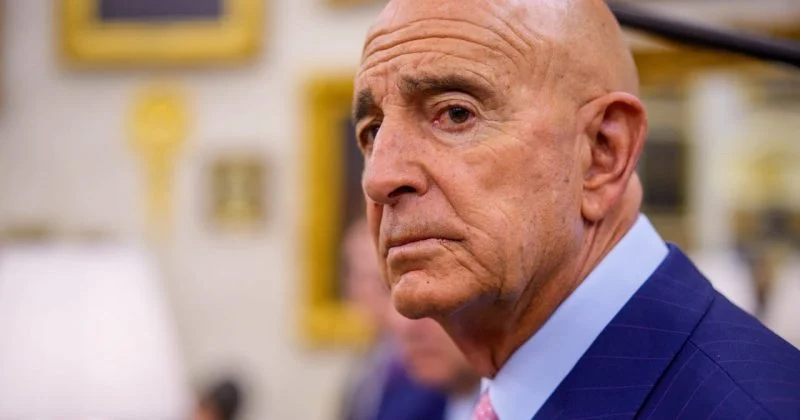
U.S. Special Envoy for Syria Tom Barrack has drawn criticism over his recent comments on Syria and the Golan Heights, a controversy that has rippled through diplomatic circles and into prediction markets that track the prospects for U.S.–Iran engagement.
Barrack, a veteran American investor and founder of the private-equity firm Colony Capital who has long been known for controversial views, has faced pushback from multiple quarters, adding to the strain on the region's broader diplomatic climate. He founded Colony Capital in 1991 and later chaired President Trump's 2017 inaugural committee, and in 2022 he was acquitted at trial of federal charges that he had acted as an unregistered foreign agent for the United Arab Emirates. He was confirmed as U.S. ambassador to Turkey in 2025 before being named to the Syria envoy post.
The dispute centers in part on the Golan Heights, a strategic territory occupied by Israel. Israel captured the plateau from Syria in the 1967 Six-Day War and effectively annexed it in 1981, a step that went largely unrecognized internationally until the United States acknowledged Israeli sovereignty over the area in 2019 under President Donald Trump. The Golan remains a persistent point of contention between Israel and Syria, and the territory has drawn renewed attention since the collapse of the Assad government in December 2024 reshaped Syria's politics and opened a new phase of international engagement over the country's future.
The criticism directed at Barrack appears to reflect tensions within U.S. foreign policy toward the Middle East and could carry implications for diplomatic engagements involving the United States, Israel, and Iran. His envoy portfolio sits within a broader U.S. re-engagement with Syria that followed that collapse: Washington moved in 2025 to lift sanctions on Damascus, and Trump met Syria's new president, Ahmed al-Sharaa, in Riyadh.
Prediction markets — platforms where traders buy and sell contracts tied to real-world event outcomes, with prices read as implied probabilities — have already registered a response. The market tied to Mojtaba Khamenei — a son of Iran's Supreme Leader Ali Khamenei — and his potential attendance at U.S.–Iran diplomatic talks by the end of 2026 declined following Barrack's remarks. The move suggests that market participants perceive an increased likelihood of strained diplomatic relations, potentially reducing the chances of direct engagement between Washington and Tehran. Current odds for Khamenei's attendance remain notably low, a level that signals skepticism toward any near-term diplomatic breakthrough.
Attention now turns to U.S. foreign policy statements and any movement in the diplomatic dialogue among the United States, Israel, and Iran. Announcements from the U.S. State Department or Iran's Foreign Ministry regarding talks could influence market perceptions, while geopolitical incidents that escalate regional tensions may further affect the likelihood of diplomatic meetings taking place before the end of the year.
Source: CryptoBriefing

