Tokenized Assets Hit $35B as Mantle Maps the Path From Billions to Trillions
Key Takeaways
- •Tokenized real-world, excluding stablecoins, are worth more than $35 billion, up over 70% from the prior year, according to data tracked by RWA.xyz.
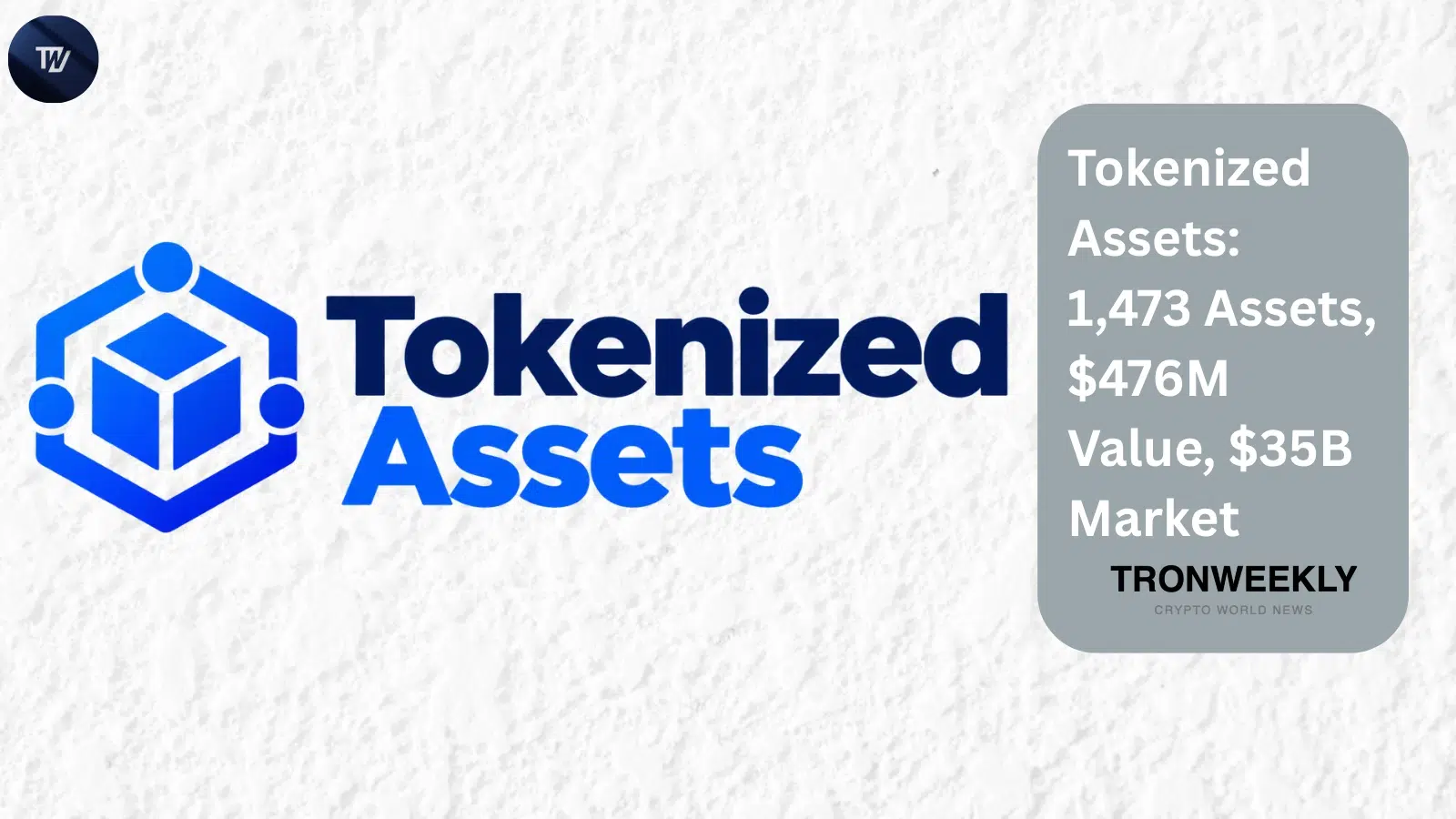
- •Mantle's network grew from 71 tokenized assets in January to 1,473 by October, with $476 million of distributed asset value and a 110% increase in just 30 days.
- •Panelists identified the industry's pre-funded, balance-sheet-heavy issuance model as the key bottleneck, since each new issuance consumes fresh capital, custody, and compliance resources.
- •Demand-driven liquidity through perpetuals and margining, combined with distribution channels like Mantle's Tokenization-as-a-Service platform built with Bybit and backed through xStocks, can help fund new issuance for issuers such as BlackRock, Franklin Templeton, and Ondo Finance.
- •Consultancies BCG and McKinsey project the tokenized asset market could expand from $35 billion toward $2–10 trillion by 2030 if liquidity demand aligns with cost-reducing infrastructure, though secondary-trading regulatory uncertainty and bridging security risks remain.
Saying that trillions of dollars in assets will one day be tokenized is easy; actually doing it is the hard part. That gap took center stage at the Blockworks Digital Asset Summit, where Mantle's Joshua Cheong joined HyperliquidX, AlpacaHQ and others to map the rollout from billions to trillions.
A clip shared by Mantle Official reframed the conversation around tokenized assets away from issuance alone and toward funding and distribution, highlighting three drivers that will help decide whether real-world assets (RWAs) — traditional instruments such as Treasuries, private credit, equities and funds represented as blockchain tokens — become core market infrastructure. The view is resonating as the market has already scaled into something tangible, yet remains small relative to its potential.
Why Issuance Alone Will Not Scale
Tokenization's first chapter asked whether a regulated asset could be replicated on a public chain. That question is now largely solved. Tokenized real-world assets, excluding stablecoins, tracked by the data site RWA.xyz are worth more than $35 billion, up over 70% from the prior year, led by Treasuries, private credit and equ.
Mantle's own numbers point to a second phase. In January the network recorded 71 tokenized assets; by October it counted 1,473 assets and $476 million of distributed asset value — an increase of 110% in just 30 days, according to Mantle's release and RWA.xyz. Growth spans every category — equities, funds, stablecoins and structured products — rather than a single fund-raising vehicle.
That signals widespread formation, but the current funding model constrains velocity. Products are overwhelmingly pre-funded and balance-sheet heavy, meaning how quickly real-world assets reach the chain is limited. Each issuance consumes fresh capital, custody and compliance resources, and without secondary demand the pipeline stalls. In effect, the bottleneck is not the ability to issue but the balance sheet required to keep issuing.
Creating Liquidity to Meet Issuance Demand
The second driver is demand-driven liquidity. Instead of issuers using assets to build supply on-chain, user demand for RWA exposure can generate on-chain liquidity and fund new issuance. HyperliquidX demonstrated how perpetuals — derivative contracts without an expiry date — create deep liquidity and collateral reuse across crypto assets. Applied to tokenized equities, similar dynamics open up hedging and directional exposure while helping fund primary issuance.
AlpacaHQ APIs — already standard in fintech apps as fractional equity — show where the demand is coming from. When users can borrow against and margin tokenized assets, like stablecoins, the cost of capital shrinks. This flywheel brings value to BlackRock, Franklin Templeton and Ondo Finance, which have scaled tokenized funds but need distribution beyond crypto channels.
The panel was promoted by Mantle in a post on X:
"Trillions will be tokenized" is easy to say. It's not even far-fetched, but few can tell you what it takes. @joshuacheong at @blockworksDAS with top leaders from @HyperliquidX , @AlpacaHQ , and more on what scales tokenized assets from billions to trillions: → Today's funding… pic.twitter.com/9XsgnU7jNs
— Mantle (@Mantle_Official) October 8, 2026 (source)
Supporting such a system demands 24/7 settlement, cross-chain collateral mobility and compliant liquidation engines. These are areas where Mantle's EVM-compatible layer-two, a network that executes Ethereum-style smart contracts and operates as a liquidity chain, can make a difference rather than simply executing trades. It also calls for exchanges, custodians, market makers and DeFi protocols to integrate the same assets — and Mantle's recent focus is distribution.
Distribution, Velocity, and Regulation
Mantle's Tokenization-as-a-Service platform, developed with crypto exchange Bybit and backed through xStocks, allows programmable exposure to US equities such as Apple and Nvidia, offering fractional ownership and real-time settlement. On RWA.xyz, Mantle is listed among the leading networks alongside Ethereum, Polygon and Solana.
For investors, attention is shifting from TVL (total value locked) to velocity: how frequently assets move, how they are used as collateral in lending protocols Aave and Morpho, and how they settle via stablecoin rails. That shift places turnover, rather than assets locked, at the center of evaluating tokenized markets. For regulators monitoring MiCA — the European Union's Markets in Crypto-Assets framework — and US market structure bills, leverage on tokenized securities raises questions about investor protection.
Risks persist. Secondary trading faces regulatory uncertainty, bridging involves security risks, and compliance attestations are still developing. If demand that generates liquidity aligns with infrastructure that reduces servicing costs, the market could expand beyond $35 billion toward $2–10 trillion by 2030, based on projections from the consultancies BCG and McKinsey. Upcoming milestones include prime brokerage integration, cross-margining with stablecoins, and institutional perpetuals on tokenized RWAs globally.

