Uniswap founder sees tokenization as the next test for AMMs
Key Takeaways
- •AMM-based decentralized exchanges were estimated by the BIS to process more than $10 billion in digital assets each day.
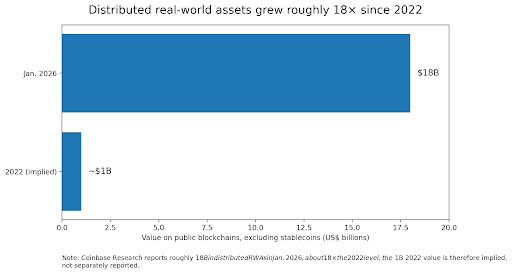
- •Coinbase Research estimated that about $18 billion in distributed real-world assets were on public blockchains by January 2026, with most of the total made up of tokenized U.S. Treasuries.
- •BlackRock’s BUIDL fund holds more than $2 billion in tokenized Treasuries, representing nearly 25% of that market.
- •A BIS study found that a small group of experienced participants supplied 65% to 85% of Uniswap V3 liquidity.
- •SIFMA told the SEC that protocol functions such as order routing, execution, price discovery and settlement may fall under securities laws, underscoring ongoing regulatory uncertainty.
Uniswap founder Hayden Adams said tokenization is likely to reshape liquidity in both crypto and traditional markets, while automated market makers, or AMMs, are still at an early stage, according to an X post published on August 25.
The comment is notable because AMMs already handle billions of dollars in transactions each day and may become important infrastructure for tokenized real-world assets moving onto public blockchains, where trading systems will need to support assets that are transferable but not automatically liquid.
AMMs allow decentralized exchanges to use pooled user deposits and determine prices without relying on an order book to match buyers with sellers. In a working paper published by the Bank for International Settlements (BIS) in November 2024, AMM-based decentralized exchanges were estimated to process more than $10 billion worth of digital assets every day.
If real-world assets (RWAs) migrate on-chain, those markets will also need reliable liquidity. AMMs are among the few mechanisms capable of providing liquidity at scale, but the balance between access, depth and efficient price formation is still being tested.
Tokenized assets are already entering global markets
Coinbase Research estimated that about $18 billion in “distributed” RWAs, excluding stablecoins, had been placed on public blockchains by January 2026, a figure 18 times larger than in 2022. Most of that amount consists of tokenized U.S. Treasuries. Coinbase data shows that BlackRock’s BUIDL fund holds more than $2 billion of them, or nearly 25% of the total tokenized Treasury market.
Regulation is also becoming more defined. Coinbase says the rollout of the 2025 GENIUS Act and reforms at the Securities and Exchange Commission (SEC) under Paul Atkins are making the U.S. environment for digital assets and tokenized financial assets more favorable. In Europe, MiCA and the DLT pilot regime are advancing the framework, while Singapore’s Project Guardian and the UAE’s VARA framework are helping establish tokenization hubs in Asia.
Market infrastructure is also improving. The Depository Trust & Clearing Corporation (DTCC) announced on July 15 that it had converted assets held in its depository into tokens for live production trades involving more than 30 traditional and digital market companies. DTCC said it plans to launch its tokenization service in October 2026.
Why AMMs still appear early
Adams’ point about AMMs being in the early stages is reflected in how these systems currently operate.
According to the BIS study, a small group of experienced participants supplied between 65% and 85% of the liquidity on Uniswap V3. Their orders behaved more like those of regular buyers or sellers and generated better returns than retail liquidity providers.
Although AMMs have broadened access to market making, liquidity has still become concentrated among specialists, similar to patterns seen in traditional financial markets.
Tokenization itself does not create liquidity. As Cryptopolitan noted in Why Tokenized Assets Are Not Liquid (Yet), tokenizing an asset makes it transferable, but not necessarily easy to trade.
On-chain markets still need market makers willing to provide two-sided quotes and hold inventory. Many tokenized funds and bonds remain available only to accredited investors and individual issuers, and secondary trading is still thin, which helps explain why tokenized markets can grow in issuance before they mature in day-to-day trading activity.
Regulatory uncertainty remains over on-chain trading
Whether AMMs can legally host tokenized securities is still unclear.
In a March 30, 2026 letter to the SEC’s Crypto Task Force, the Securities Industry and Financial Markets Association (SIFMA) argued that regulators should focus on the functions of a protocol, rather than on whether it is decentralized. SIFMA said order routing, execution, price discovery and settlement may all fall under securities laws.
The group also raised concerns about slippage, incentives for liquidity providers, pseudonymous trading and limited surveillance for market manipulation.
The issue is important because its resolution will help determine where tokenized asset markets develop. DTCC’s planned launch of its own spot trading service in October 2026 suggests that the SEC’s approach to AMMs may decide whether the market-making model Adams envisions develops on a public blockchain or inside a regulated exchange.
