Alternet Column: Attorney General Todd Blanche Is 'Infinitely More Sinister' Than His Boss
Key Takeaways
- •Attorney General Todd Blanche publicly refused on August 16, 2026, to pledge that he would act independently of the White House, departing from a principle the column says has guided the Justice Department since Watergate.
- •After President Trump fired Pam Bondi on April 1, 2026, Blanche became acting attorney general, secured James Comey's re-indictment before the month ended, and was permanently confirmed by a 50-49 Senate vote on August 8, 2026.
- •According to the column, Blanche alone signed a May 2026 agreement granting Trump and his family immunity from IRS investigations, disregarding his earlier pledge to recuse himself from Trump-related matters.
- •Since his confirmation, the column states, the Justice Department under Blanche has pursued voter-roll lawsuits rejected by 26 federal courts, searched Rep. Ilhan Omar's home 22 days before her election, and sued California to purge 20,000 voters from its rolls.
- •Blanche faces ethics complaints and a direct judicial referral to the New York bar by Judge Kathleen Williams, and federal courts have reportedly concluded his Justice Department no longer merits the 'presumption of regularity.'
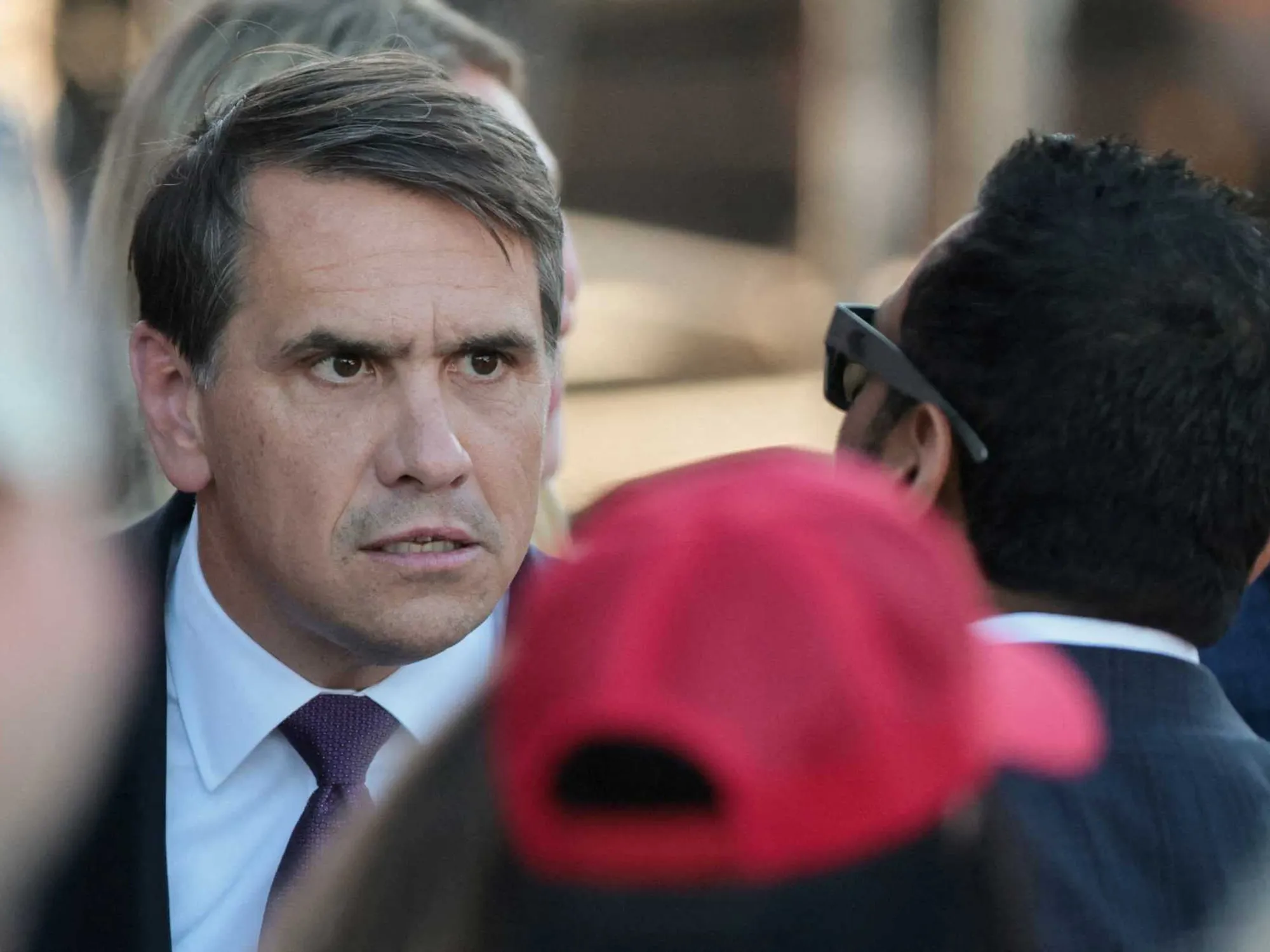
An opinion column published by Alternet argues that Attorney General Todd Blanche is "infinitely more sinister than his boss," President Donald Trump, citing what it describes as Blanche's systematic abandonment of the Justice Department's independence.
The column centers on Blanche's appearance on NBC's "Meet the Press" on August 16, 2026, where he acknowledged stepping away from the principle that has guided the Justice Department since Watergate. Asked whether he would pledge to act independently of the White House, Blanche said: "No, I'm not going to pledge that. And no attorney general should make that pledge."
The author contends that Blanche is "tragically wrong" and has forgotten that he works for all Americans rather than for "the single man he refers to as 'the boss.'" The column warns that, in the near term, Blanche is working to influence the midterm elections, in which Republicans are poised to lose President Donald Trump's grip on Congress, and that in the long run the nation will bear the consequences of his weaponization of the Justice Department for years to come.
The Comey and James Cases
According to the column, Attorney General Pam Bondi failed in her efforts to satisfy Trump's determination to punish his perceived enemies. Her most visible failures involved former FBI Director James Comey and New York Attorney General Letitia James.
Career prosecutors at the Department of Justice (DOJ) found the evidence insufficient to indict Comey for posting a photograph of seashells forming "86 47" on a North Carolina beach. US Attorney Eric Siebert—whom Trump had nominated—recommended charging him. Career prosecutors likewise informed Siebert that the evidence was insufficient to indict James, who had won a civil fraud case against Trump and his organization.
Trump disregarded those assessments. In a social media post that he reportedly intended as a private message to then-Attorney General Bondi, Trump told her to get moving against Comey and James, and urged her to assign the task to Lindsay Halligan—described in the column as an unqualified White House staff attorney whose prior experience consisted primarily of defending insurance companies against homeowners and corporate plaintiffs.
Bondi complied, and Halligan used what the column calls dubious tactics to obtain indictments of Comey and James. A federal court dismissed the indictments, ruling that Halligan's appointment had been illegal from the outset. Two weeks after the dismissal of James's indictment, the Justice Department tried again; in a remarkable rebuke, the grand jury refused.
Blanche's Path to Attorney General
Trump fired Bondi on April 1, 2026. With her departure, then-Deputy Attorney General Blanche—Trump's personal defense counsel between his two presidential terms—became acting attorney general. Before the month ended, Blanche had secured Comey's re-indictment. Five weeks later, Trump said he would nominate Blanche as Bondi's permanent replacement, and the Senate confirmed him on August 8, 2026, by a 50-49 vote.
Long before his confirmation, the column notes, Blanche had moved quickly to please "his boss":
- In July 2025, Blanche joined senior White House staff in the Situation Room to develop strategies for minimizing the ongoing damage to Trump personally from the Epstein files.
- In March 2026, he said the Justice Department had rid itself of more than 200 career prosecutors and FBI agents—anyone "who had anything to do with prosecuting Trump."
- In May 2026, he alone signed the document that—contrary to federal law, per the column—gave Trump and his family immunity from Internal Revenue Service investigations in return for settling Trump's lawsuit against the IRS, which a federal judge had found to be a sham. The column observes that Blanche thereby ignored his prior pledge to recuse himself from Trump-related matters.
Actions Since Confirmation
Since his August confirmation, the column states, Blanche has promoted what it describes as Trump's assault on the democratic process.
Despite the uniform rejection of the DOJ's position by 26 federal courts—including Trump-appointed judges—he has continued to pursue lawsuits seeking state voter rolls as part of what the column calls an effort to subvert the upcoming midterms. In September, he asserted without evidence that "common sense" proved what the column calls demonstrably false—that mail-in voting presents a greater risk of fraud than in-person voting with identification. The column characterizes that argument as another element of a campaign to undermine public confidence in the democratic process.
In October, Blanche relaxed longstanding DOJ rules limiting presidential appointees in the department from participating in political gatherings. By then, he had already hit the campaign trail for Republicans and spoken at the party's midterm convention.
The column identifies two recent actions as an escalation of efforts to preemptively discredit the midterm results. In what it calls a violation of the Justice Department's 60-day rule against actions that could affect the outcome of an approaching election, the department executed a search of Rep. Ilhan Omar (D-Minn.)'s home only 22 days before the election in which she is on the ballot. The DOJ also sued California after demanding the state use the federal government's database—which the column deems unreliable—to purge 20,000 voters from its rolls, in violation of federal and state law and probably a prior court order, according to the column.
California's secretary of state rejected the department's 48-hour pre-suit ultimatum, pointing to a comparable episode in Nevada: the Department of Homeland Security initially alleged that Nevada's voter rolls included nearly 16,000 potential non-citizens, but after working with the state, DHS officials failed to establish that a single non-citizen was on the voter rolls. In the column's view, Blanche's lawsuit is another effort to promote public doubt about the integrity of the midterm elections and lay the groundwork for baseless post-election challenges.
Mounting Legal and Ethical Pressure
The column notes that Blanche's actions are already costing him. He has been the subject of ethics complaints relating to his work at the DOJ. US District Court Judge Kathleen Williams made a direct judicial referral of Blanche to the New York bar—where he is licensed—based on his "troubling testimony" and the questionable legality of the Trump-IRS immunity agreement he alone signed. Federal courts across the country, the column says, have concluded that Blanche's Justice Department is no longer worthy of the "presumption of regularity," and federal judges no longer trust DOJ attorneys to tell them the truth.
None of this fazes Blanche, the column concludes. It suggests his ambition may be to become Trump's latest "Roy Cohn"—Trump's infamous early mentor, who rose to notoriety as Sen. Joseph McCarthy's (R-Wis.) chief legal counsel during the 1950s "Red Scare." If so, the author writes, he has succeeded. But the column closes with a warning: Trump is a fickle friend who can quickly become a fierce foe—and Cohn was eventually disbarred.

