Coldcard Drain Reaches 1,367 BTC as Galaxy Research Identifies Third Suspected Attack Wave
Key Takeaways
- •The three suspected attack waves have drained an estimated 1,367.05 BTC valued at approximately $88.6 million across 4,585 addresses.
- •The third attack wave differed from earlier ones by using P2WSH destinations and batching an average of 6.37 victim addresses per transaction, which may indicate new tooling or a different attacker.
- •The vulnerability originated from a March 2021 firmware change that caused the random-number generator to fall back to a deterministic routine, reducing seed entropy to roughly 72 bits from the intended 128 bits.
- •Coinkite's expanded advisory now covers Mk2, Mk3, Mk4, Mk5, and Coldcard Q devices across multiple firmware versions, and installing fixed firmware alone does not protect seeds already created under vulnerable versions.
- •Affected users should install fixed firmware, generate a completely new seed, verify the backup and receive address, send a small test transaction, and transfer remaining funds only after confirming receipt.
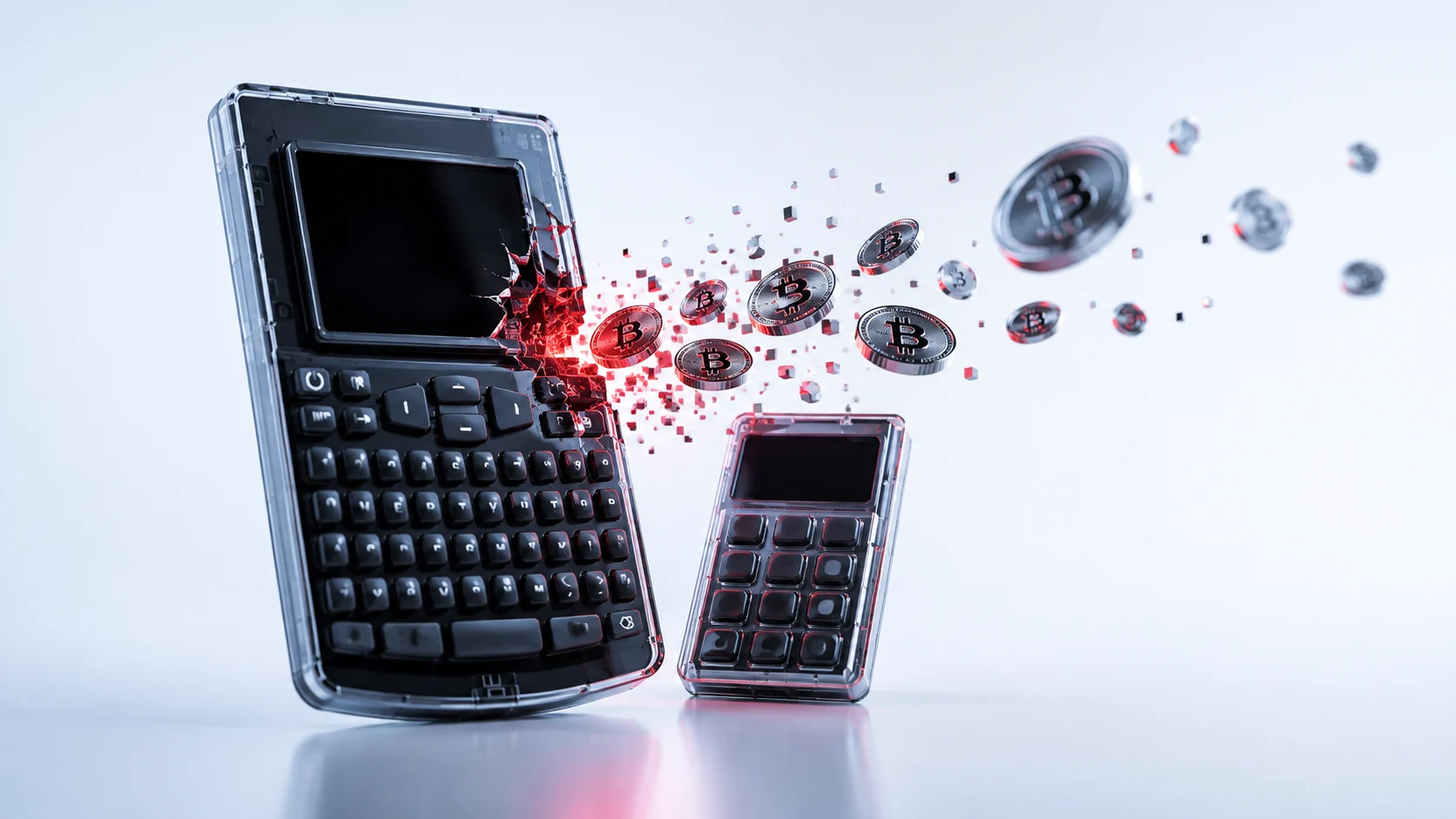
Galaxy Research has identified a third suspected wave of attacks targeting Bitcoin addresses believed to have been generated by vulnerable Coldcard firmware, bringing the estimated total drained to 1,367.05 BTC across 4,585 addresses.
Coldcard, manufactured by Coinkite, is one of the most widely used air-gapped Bitcoin hardware wallets, marketed specifically to users who prioritize self-custody security. The device is designed to generate and store private keys entirely offline, making the quality of its internal random-number generator a foundational security assumption rather than one layer among many.
The latest wave drained 207.7294 BTC, pushing the combined observed total to approximately $88.6 million at the time of Galaxy's update.
Third Wave Exhibits a Different Transaction Pattern
The first two suspected attack waves displayed similar on-chain patterns. Both used a funnel structure that consolidated funds into a small number of shared collector addresses and relied on pay-to-witness-public-key-hash (P2WPKH) destinations.
By contrast, the third wave employed pay-to-witness-script-hash (P2WSH) destinations and batched an average of 6.37 victim addresses per transaction. These differences may indicate that the same attacker has adopted new tooling, or alternatively that a separate operator is exploiting the same address-generation weakness.
Galaxy has not independently confirmed that every affected address originated from Coldcard's flawed random-number process. The firm's findings represent an on-chain estimate rather than definitive proof that all three waves stem from a single attacker or a single group of vulnerable devices.
The updated total exceeds the previous estimate of up to 1,083 BTC that was traced after Block and Coinkite first disclosed the seed-generation vulnerability.
Coinkite Expands List of Affected Devices
Coinkite's updated security advisory now covers Mk2 and Mk3 seeds generated on firmware versions 4.0.1 through 4.1.9, as well as Mk4 and Mk5 seeds created before standard firmware 5.6.0 or Edge firmware 6.6.0X. Coldcard Q seeds generated before standard version 1.5.0Q or Edge version 6.6.0QX are also affected.
Coinkite estimates that vulnerable Mk4, Mk5, and Q seeds contained roughly 72 bits of entropy rather than the intended 128 bits. The intended 128-bit standard corresponds to approximately 3.4 × 10^38 possible combinations — a keyspace considered computationally infeasible to brute-force. At roughly 72 bits, the effective search space shrinks to about 4.7 × 10^21 possibilities, a reduction that places affected seeds within practical reach of determined attackers using modern computing resources.
Fixed firmware is available for each affected model, but installing an update does not repair a seed that was already created under vulnerable firmware. Importing the same recovery phrase into a different wallet leaves the funds equally exposed.
Seeds supplemented with at least 50 fair, independent, and private dice rolls are not considered vulnerable through this randomness flaw alone. A strong, unique BIP-39 passphrase provides an additional layer of protection, though Coinkite still recommends that affected users migrate their funds entirely.
Block Traces the RNG Defect to March 2021
Block's technical investigation traced the weakness to a March 2021 firmware change that caused Coldcard's random-number library to fall back to a deterministic MicroPython routine instead of using the device's STM32 hardware generator.
Mk2 and Mk3 version 4 firmware added no cryptographic entropy to that fallback. Newer devices incorporated secure-element input but retained only four bytes during reseeding, which limited securely distinguishable output streams to no more than 2^32 — approximately 4.3 billion possibilities — under fixed fallback conditions.
The disclosure follows comments by ZachXBT, who previously called hardware wallets "garbage" and recommended using a dedicated iPhone for cryptocurrency storage. His remarks addressed broader wallet software and operational risks and did not specifically identify the Coldcard entropy defect.
Affected users are advised to install the fixed firmware before generating a replacement seed, verify the new backup and receive address, send a small test transaction, and transfer the remaining balance only after confirming that the test funds have arrived.

