Therapist Says Trump's Obama Comments to Stephen A. Smith Reveal Narcissistic Grandiosity
Key Takeaways
- •President Donald Trump said in a Thursday interview on Stephen A. Smith's YouTube show that he could easily beat Barack Obama, whom he described as highly overrated.
- •Trump cited his vote totals and all-time records in big states such as Texas and Florida as reasons he believed he would defeat Obama.
- •Trump described Obama as a divider and said he himself brings people together through success.
- •Psychotherapist Elliott Connie interpreted Trump's remarks as an example of grandiose thinking associated with narcissistic personality disorder.
- •The Goldwater rule bars American Psychiatric Association member psychiatrists from diagnosing public figures they have not personally examined, though it does not apply to psychotherapists more broadly.
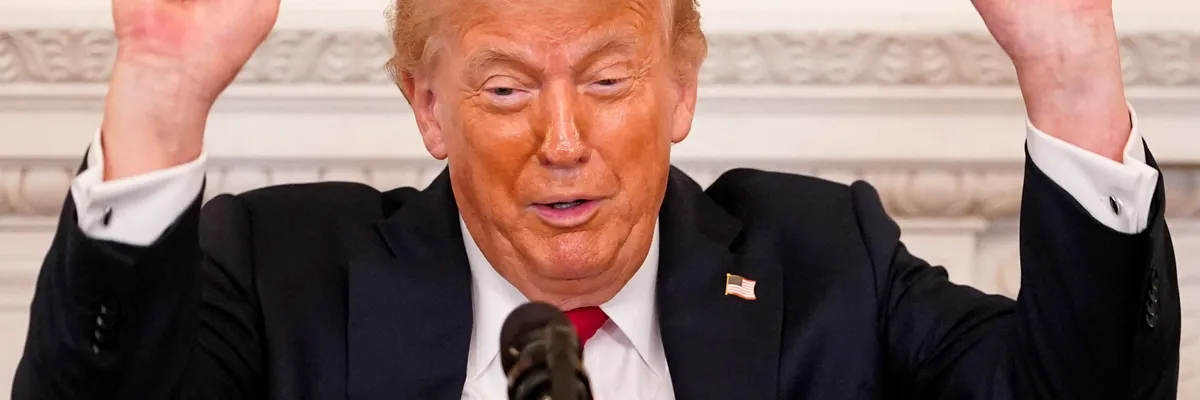
President Donald Trump sat down with sports commentator Stephen A. Smith for an interview on Smith's YouTube show that aired Thursday, and his remarks about former President Barack Obama prompted a psychotherapist to argue that the exchange laid bare the president's narcissism.
Long-form online shows have become an increasingly common venue for political figures, offering extended, unscripted exchanges that run longer and looser than the tighter formats of traditional broadcast interviews.
Therapist Elliott Connie, who has spent 20 years practicing psychotherapy and produces short, accessible breakdowns of how people think, zeroed in on one moment of grandiosity that played out during the conversation.
At one point, Smith asked Trump about Obama, who has remained a constant focus for Trump for nearly two decades. Smith wanted to know whether Trump believed he could win against Obama. Trump said he would, because he is so much better.
"I got many more votes than he got and I got many more votes uh in the states and I have all the state, you know, most of the state records of the big states. If you take a look at uh Texas, I have the all-time record. Florida, I have the all-time record," Trump said, referring to the two red states.
When Smith pressed on whether that meant Trump believed he could beat Obama, Trump replied that he could do it "easily."
"I think he's highly overrated," Trump said.
"Oh, my lord. How is — how is Barack Obama overrated?" a shocked Smith asked.
Trump went on to say that Obama was not a good president and described him as a "divider." When Smith asked what Trump considered himself to be, Trump said he brings people together through "success."
Connie analyzed Trump's response and concluded that it was a clear indication of narcissistic personality disorder. His assessment also touches on a long-running debate about mental health professionals commenting on public figures they have never treated: the American Psychiatric Association's ethics guidelines, known as the Goldwater rule, bar member psychiatrists from offering professional diagnoses of people they have not personally examined, though the rule does not extend to psychotherapists more broadly.
"One of the most common characteristics of narcissistic personality disorder is something that we refer to as grandiosity or grandiose thinking," Connie said. "And that's when you see yourself as far more superior than everyone else even in the face of contrarian information. So, in this clip you see Donald Trump saying that he believes he would beat Barack Obama because he has high numbers in red states."
"And he's also saying that — I'm a better candidate. Barack Obama was divisive and I bring people together. He is ignoring that he has the ... lowest numbers, the most historically low numbers of any president's approval rating. And Barack Obama is quite popular. But Donald Trump doesn't care about that," Connie continued.
In Connie's view, Trump's conviction of his own superiority means he cannot picture himself losing, which helps explain why he struggles so much when he does lose elections.
"When you struggle with narcissistic personality disorder, and you're in a competition, there's only two outcomes that could be possible. Either I won or they cheated. And that is very much how Donald Trump thinks," Connie explained. "So, when you see him giving an answer like that, that should give you an indicator. Oh, that's grandiose thinking. And he just thinks he's better than everyone else and he thinks he's more superior than everyone else, which cannot be true. ... When asked that question, the only thing he can see is I must be able to win because I'm just better than everyone else. And that would include Barack Obama."
The full conversation is available on Smith's YouTube show.

