Thea Green: How a 23-Year-Old Fashion Editor Built Nails.Inc Into a Global Brand—and Sold It for $40 Million
Key Takeaways
- •Thea Green launched Nails.Inc in 1999 without any beauty industry experience or formal business plan, starting with a 70-shade polish range and a single walk-in nail bar in London.
- •Green introduced the walk-in nail bar concept to the U.K. market and became the first to place a service rather than a product in a department-store beauty hall through her Fenwick's concession.
- •Nails.Inc was an early adopter of celebrity and brand collaborations in the beauty industry, partnering with Alexa Chung, Victoria Beckham, Magnum, and McDonald's to build awareness on a limited budget.
- •At the end of 2024, Green sold Nails.Inc to American private equity firm Pacific World Corporation in a deal reportedly worth £30 million ($40 million) and remained on as chair.
- •The company reported its highest-ever turnover of $34.7 million in 2025 and currently sells its products in more than 30 countries worldwide.
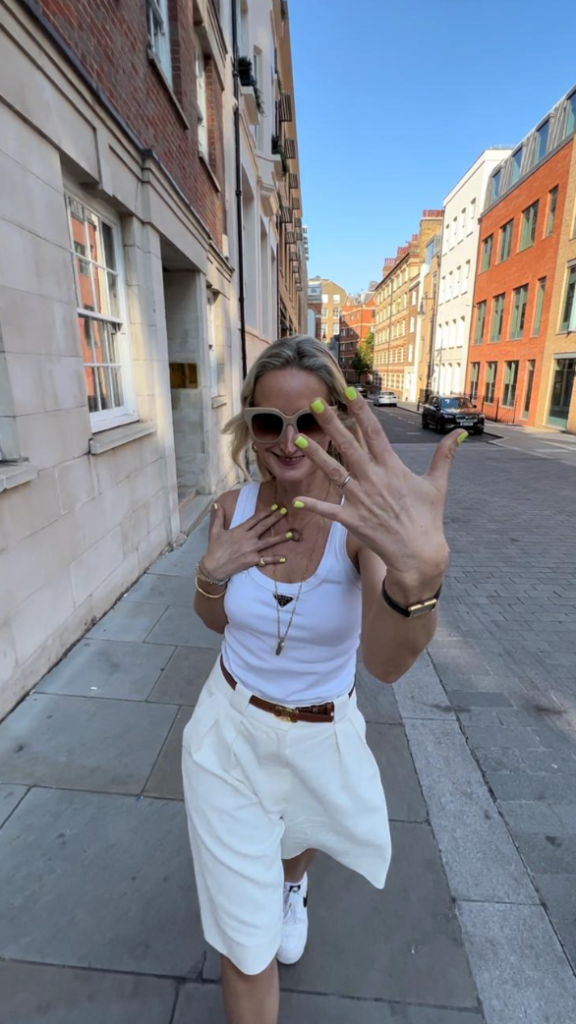
At 23, Thea Green was a fashion editor at Tatler magazine, jetting between London, New York, and Los Angeles. On those trips, she kept squeezing in last-minute manicures between meetings—a quick, walk-in service that simply did not exist back home in the U.K. That observation became the spark for Nails.Inc, founded in 1999. Twenty-six years on, the company says it sells one bottle of nail polish every single minute.
Green had no background in beauty and no formal business plan when she launched a 70-shade polish range and opened her first nail bar. What she did have was the example set by her father, who worked his way up from a tea boy to a retail director. That was all the evidence she needed. "Hard work and a good idea could take you anywhere," Green tells Fortune.
The Nails.Inc nail bar happened to open just around the corner from Vogue's headquarters. Staff there began scheduling client meetings during their manicures, and the queues quickly followed. Fenwick's became the first department store to offer Green a beauty concession—also the first time a service, rather than a product, occupied space in a beauty hall. "People worried women wouldn't want to get their nails done in public, but I knew convenience would win over privacy," she says. The walk-in nail bar format Green introduced has since become a standard feature on British high streets, replicated by chains and independents alike.
Harvey Nichols and Selfridges signed on next. Eventually, Green pivoted to mass-market retail, placing her nail varnish in Boots across the U.K. and Sephora in the U.S.
By the late 2000s, Green was expanding across the United States and needed to build brand awareness on a limited budget. She turned to collaborations—a strategy that was still unusual among beauty brands at the time. "Alexa Chung was one of our first, and it flew off the shelves," she says. Partnerships with Victoria Beckham, Magnum, and even McDonald's followed. What was then a novel tactic has since become a core marketing playbook across the beauty industry, with major brands routinely launching limited-edition collaboration lines to drive buzz and reach new demographics.
Throughout it all, she was raising three children—two sons and a daughter. Her mornings began with emails before the children woke up. She and her husband, also an entrepreneur, split the school run. She took calls on her way home from the office and logged back on after bath time.
Now 50, Green lives in West London with her husband, three children, and a dog named Sunday. At the end of 2024, she sold Nails.Inc to the American private equity group Pacific World Corporation in a reported £30 million ($40 million) deal, remaining on as chair. The acquisition reflects a broader pattern of private equity interest in independent beauty brands, a sector that has drawn consistent dealmaking due to its relatively strong margins and recurring consumer demand. She says the company posted its highest-ever turnover in 2025, reaching $34.7 million, "and every signal points to that being surpassed in 2026." Nails.Inc products are now available in more than 30 countries, and its newest range, It's Topless, sells at a rate of one bottle per minute in the U.K. alone.
Looking back, Green says her proudest moments are not necessarily the headline deals but the milestones along the way. "The first queue outside the bar. A customer asking for a shade by name when we had only been live for a few weeks. It's important to celebrate those small wins—they're the things that get you to the big ones."
Fortune's series, The Good Life, explores how rising leaders spend their time and money outside of work.
Being in the C-suite is a high-pressure job with long hours, board responsibilities, and intense scrutiny. But what is it like to be a top executive when you're off the clock? Here's what Green told us.
The Money
What's the best financial decision you've ever made—and how much did it make or save you?
Holding my nerve on pricing. Every instinct when you're young and unknown is to price low and win on volume. Resisting that let us build real brand equity—worth far more in the long run than any single deal.
And the worst?
Ordering against excitement rather than confirmed demand. If I was doing it again I would launch with a tighter assortment—you can always expand the range later.
What's in your wallet?
Not cash. Club memberships and stamps, as I love sending family and friends cards.
What's the one area of your life where you're surprisingly tight with money, even now?
I can't bear to waste money on anything that doesn't have a long shelf life: plastic toys, tech games that go out of fashion, clutter. Only flowers can be regularly replaced; everything else should be built to last.
What's your most ridiculous ongoing expense?
I seem to buy a lot of AirPods as I often lose one—ridiculous product but too convenient to ditch.
Do you invest in shares?
Yes. I invest in boring stuff, not trends, and I play the long game. I invest with my husband in the stock market, and then I have made some investments in a number of exciting female founder businesses: Better Menopause, Luna Daily, Dot Dot Bubble Tea.
What personal finance advice would you give your 20-year-old self?
Save early; if it's not keeping you up at night, you don't need it. Teach kids to save and invest as our schools don't!
The Routine
What are your living arrangements like?
I live in West London with my husband and three children. The commute into central London is easy and I tend to walk with my pup and get my steps in—I walk a good hour, and I try to use it to think or listen to podcasts, but it's also a good time to fit in important calls.
How have you managed the juggle between work and family—and what has it cost you?
With strong support and a great husband, it becomes manageable. Though I won't pretend it's effortless. Childcare is a real investment and rarely guilt-free, but once your kids can tell you what's important to them, it gets easier. I have also accepted that you don't win on all fronts all the time.
What does your morning routine actually look like?
I wake up at 5:45 a.m., get outside and work out first in morning light to help my circadian rhythm and manage stress. Then I look over my diary, plan, do my skincare, and make tea to take on the go. Take lots of supplements. I start work by 8 a.m., but I've usually checked my emails an hour earlier.
How much do you spend each day on your caffeine hit?
I don't drink coffee. Hot lemon and ginger tea is my order.
What about eating on the go?
I love all the salad places: Salad Project or Atis if out, or Soho Mews House is local.
Where do you buy groceries?
I love my local Chelsea stores for great delis, fishmongers, and lovely European fruit and vegetable shops. For the basic family stuff I use Ocado.
How often in a week do you dine out versus cook at home?
Mostly cook at home during the week. Weekend dinners out when we can, but we love to entertain. We have a very full house—I love a full table.
What's the 5-to-9, after your 9-to-5?
Centred around family—right now that means a fair bit of GCSE revision with my daughter, then winding down with the kids. I often walk my pup after dinner, especially when it's so hot; it's nice to walk and helps my sleep. I fit in an evening sauna at a nearby health club two to three times a week, which really helps sleep. Then I go to bed between 10 and 11 p.m.
How do you unwind from the top job?
Walking, travelling, and discovering new cities. It's where I get inspiration and reset.
What's your take on work-life balance at the top?
I don't love the phrase. Balance implies a steady state that doesn't exist. Protect a few non-negotiables and let everything else flex.
The Rewards
What's the one subscription you can't live without?
Spotify. I love music and podcasts. It's £11 a month and probably the best value thing I pay for. Audible has massively helped my reading time too.
Are you the proud owner of any tech gadgets?
My kids bought me an Oura Ring for my 50th, and it's the greatest gift. I'm obsessed with tracking my fitness, sleep, and cycle data. It's addictive.
How do you celebrate a big win?
With the people who made it happen. We love a good celebration in the office.
What's the most expensive bonus treat you've bought yourself?
My puppy.
How many days annual leave do you take a year? And do you ever truly switch off?
I have no idea; I'm a founder. I travel constantly, for work and for pleasure, and the lines blur. When I need a break, I take one.
What's the most extravagant trip you've ever taken?
I am going on a safari this Christmas, and I cannot wait!
Where did you go on holiday this year?
France this year: St Paul de Vence in the hills, then St Tropez for the beach. But always somewhere that lets you properly switch off. I try to get away a few times a year with the family.
After everything you've built, what's the ultimate reward?
Freedom, the ability to choose what I work on and with whom. Getting to 50, having built something real, means you can be selective. You stop doing things out of fear and start doing them because you genuinely want to. I'm not entirely there yet, but I can see it.
This story was originally featured on Fortune.com.

