Thai Deputy PM Seeks Korea-Linked Biotech Ecosystem From Universities to Startups
Key Takeaways
- •Thailand seeks to build a broad biotechnology ecosystem with South Korea spanning talent development, research, commercialization, and investment rather than pursuing isolated company attractions.
- •The Thai government intends to reduce regulatory obstacles for Korean companies entering its market, with agencies such as the National Innovation Agency providing support for new product launches.
- •Thailand offers access to its diverse patient population, clinical trial data, and the Genomics Thailand initiative, a $134 million program launched in 2019 to sequence 50,000 genomes for precision medicine.
- •Education partnerships including expanded double-degree programs and joint graduate research between Thai and Korean universities would serve as the starting point for broader collaboration.
- •Thai officials held discussions with Seoul National University on clinical database sharing, with KT on AI and supply chain participation, and planned a visit to SK Bioscience to follow up on potential pilot projects.
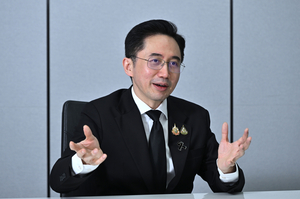
Thailand is working to establish a broad biotechnology partnership with South Korea that would connect universities, startups and major companies in both countries, while reducing regulatory obstacles for Korean firms seeking to enter the Thai market, Deputy Prime Minister Yodchanan Wongsawat said.
The push comes as Southeast Asia's healthcare and life sciences sector expands rapidly, driven by rising incomes, aging populations and growing demand for advanced medical technologies across the region.
Wongsawat, who also serves as Thailand's minister of higher education, science, research and innovation, said the relationship should move beyond efforts to attract individual Korean companies. Instead, he said, the two countries should build a wider ecosystem that covers talent development, research, commercialization and investment.
"We try to do talent management and human resource matching," Wongsawat told The Korea Herald in an exclusive interview Wednesday on the sidelines of the Thailand-Korea Business Forum in Seoul.
Researchers, engineers and health care professionals from Thailand and Korea could work together to develop medical technologies, he said. Those innovations could then be commercialized through startups or joint ventures with the potential to enter Thailand and other markets.
Wongsawat said Korean universities, including Seoul National University, KAIST and POSTECH, could play an important role in creating that framework.
Cooperation to Extend to Commercial Level
At the startup level, Wongsawat said Thailand is considering joint incubation programs involving government agencies and private incubators from both countries.
Thai startups could gain access to international investment and overseas markets through Korean partners, he said. Korean investors, in turn, could work with Thai companies to identify technologies and products with growth potential across Southeast Asia, a market of more than 680 million people.
The Thai government also intends to address regulatory barriers that Korean companies may encounter when entering the country.
Wongsawat acknowledged that regulations and administrative paperwork can create obstacles for investors. However, he said Thai government agencies, including the National Innovation Agency, would support collaboration and help new products enter the market.
Thailand could also strengthen Korea's biomedical capabilities by providing access to a diverse patient population and clinical data, he said. Thailand is one of the world's leading medical tourism destinations, drawing millions of international patients annually.
Joint clinical trials, for example, could give researchers in both countries access to medical cases that may not be sufficiently available in their domestic markets. That could accelerate the development of medical devices and other health products, Wongsawat said.
His visit also led to concrete discussions with local research institutes. Wongsawat said talks with Seoul National University during the trip included the possibility of sharing databases for clinical research.
He also pointed to Thailand's strengths in medical services, tropical medicine, biodiversity and genomics. Thailand's patient pool extends beyond its own population to people from neighboring countries and other regions who travel there for medical treatment, he said.
Thailand's accumulated data on tropical diseases and its Genomics Thailand initiative could offer another basis for joint research, especially for products designed for tropical markets.
The Genomics Thailand initiative is a national 4.5 billion baht ($134 million) strategic medical program launched in 2019. It aims to sequence 50,000 genomes and build a local human genetic database of Thai nationals for precision medicine.
Wongsawat said education would be the starting point for a broader partnership.
He proposed expanding double-degree programs between Thai and Korean universities, along with joint graduate research programs in which students complete theses under institutions in both countries.
Cooperation could then move from universities into commercialization, an area where Wongsawat said Thailand could learn from Korea, Asia's fourth-largest economy and a global leader in biotechnology manufacturing.
He cited Korea's technology transfer offices and university holding companies, which provide seed funding to startups and allow researchers to verify their technologies before seeking larger private investments.
"Korea has an innovation ecosystem inside the country," he said, describing Korea's efforts to connect research, testing, clinical trials and commercialization as "quite impressive."
During the visit, Thai officials also held discussions with KT on AI literacy and so-called physical AI. The talks included opportunities for Thailand's manufacturing sector to participate in supply chains for robotics, semiconductors and electronic components.
Wongsawat said he was also scheduled to visit SK Bioscience to follow up on discussions over potential cooperation and a pilot project.
The ultimate goal is to connect institutions across the two countries rather than pursue isolated projects, he said. Once companies, universities and investors build those ties, they can use the strengths and markets of both countries to "accelerate the success" of new technologies.

