Lawsuit Claims Tether Froze $42.4 Million in USDT Months Before Any Seizure Warrant Existed
Key Takeaways
- •Nutthawat Rukthammachalern and Natthawat Kasamvilas sued four Tether entities in SDNY on August 31 over approximately $42.4 million in USDT frozen across ten Ethereum addresses.
- •Tether blacklisted the addresses on October 30, 2025 after an informal Homeland Security Investigations request, while a seizure warrant was not signed until February 19, 2026.
- •Plaintiffs seek a ruling that the freeze was unlawful, a bar on destroying the tokens before forfeiture, damages, and the yield Tether earned while the funds were frozen.
- •The complaint alleges freezing USDT costs Tether nothing while it continues earning Treasury yield on reserves, creating a financial incentive to freeze tokens, and that Tether does not disclose its ability to block tokens at will.
- •Tether called the lawsuit baseless, noting it works with more than 340 law enforcement agencies across 65 countries and has helped freeze over $4.4 billion in assets tied to suspected illicit activity.
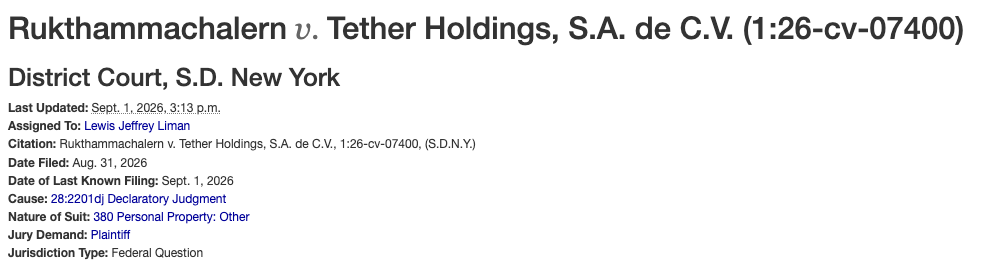
Two Thai businessmen are suing Tether in federal court over approximately $42.4 million in frozen USDT, arguing that the stablecoin issuer froze the tokens last October based on nothing more than a verbal request from a US agent, and that a seizure warrant obtained nearly four months later cannot retroactively cure an unlawful freeze, according to the complaint.
The case is the latest flashpoint in a long-running debate over the centralization powers embedded in stablecoins. USDT, the largest stablecoin by market capitalization, is issued by a single company that retains the technical ability to freeze any holder's tokens — a feature that distinguishes it from fully permissionless crypto assets and has drawn scrutiny from regulators and users alike.
The Blacklist Hit Ten Ethereum Addresses
The lawsuit was filed on August 31 in the U.S. District Court for the Southern District of New York. It names Nutthawat Rukthammachalern and Natthawat Kasamvilas as plaintiffs and four Tether entities as defendants.
According to the filing, the tokens were held across ten Ethereum addresses, nine belonging to Rukthammachalern and one to Kasamvilas. Tether blacklisted those addresses on October 30, 2025, the complaint says, after a Homeland Security Investigations agent unofficially requested the blacklisting without a warrant, court order, or any notice to the account holders.
A federal magistrate judge in North Carolina did not sign a seizure warrant until February 19, 2026. The complaint states that the warrant laid out a plan for Tether to burn the frozen USDT, mint an equal amount of new tokens, and transmit them to a government-controlled wallet.
"Tether froze our clients' funds following an informal government request with no warrant, no court order, no legal process directed to Tether and no notice," said Mark Beckett, counsel for the two men. He added that "a warrant followed nearly four months later."
Beckett also stated that Tether "has no contractual relationship with our clients, is not a custodian of our clients' USDT, and has no legal right or basis to blacklist our clients' accounts."
The lawsuit depicts Tether as a private company acting on its own, separate from any potential government claim. The plaintiffs are seeking a ruling that the freeze is unlawful, an order barring the destruction of the tokens before any final forfeiture ruling, and damages. They are also seeking the income, according to the complaint, that Tether earned while the funds were frozen.
The outcome of the dispute may also be read against the backdrop of the US stablecoin regulatory framework signed into law in 2025, the GENIUS Act, which requires stablecoin issuers to meet reserve, redemption, and disclosure standards — although the law does not directly address the kind of unilateral freezing power at issue in this case.
Reserves Keep Earning Treasury Yield While Accounts Sit Locked
The complaint explains that when Tether mints USDT, it takes in dollars and purchases interest-bearing instruments, primarily US Treasury securities held in New York, which constitute its reserves. Tether has become one of the largest holders of US Treasury securities, and interest income on those reserves is the company's core revenue source.
The plaintiffs contend that freezing a customer's USDT costs Tether nothing, while the company continues to accumulate yield on the corresponding reserves. This, they argue, gives Tether a financial inducement to freeze and burn tokens.
The plaintiffs further allege that Tether markets USDT as stable, fully backed, and freely transferable, but fails to disclose that it can block or destroy any holder's tokens on any blockchain at will.
"The new lawsuit against Tether is a baseless attempt to interfere with Tether's important work with global law enforcement, including the Department of Justice, to prevent the unlawful use of USDT," the company said in a statement.
The USDT smart contract includes a blacklisting capability, meaning Tether can flag addresses on blockchains such as Ethereum.
Tether works with more than 340 law enforcement organizations across 65 nations, Cryptopolitan reported in April. The company has said that this cooperation has helped freeze over $4.4 billion in assets tied to suspected illicit activity. How courts weigh that law-enforcement cooperation against holders' due-process claims is likely to shape how other issuers structure their own freezing policies.
Source: Cryptopolitan | Court Docket
