Tether sued in New York over alleged unlawful $42.4 million USDT freeze
Key Takeaways
- •The lawsuit was filed in New York and names Tether Holdings Limited as the defendant.
- •The plaintiff alleges that Tether unlawfully froze $42.4 million in USDT.
- •The case is still at the complaint stage, and no court has ruled on the claims.
- •The dispute raises questions about issuer control over centralized stablecoins like USDT.
- •Tether’s own terms of service reportedly allow freezes in certain situations.
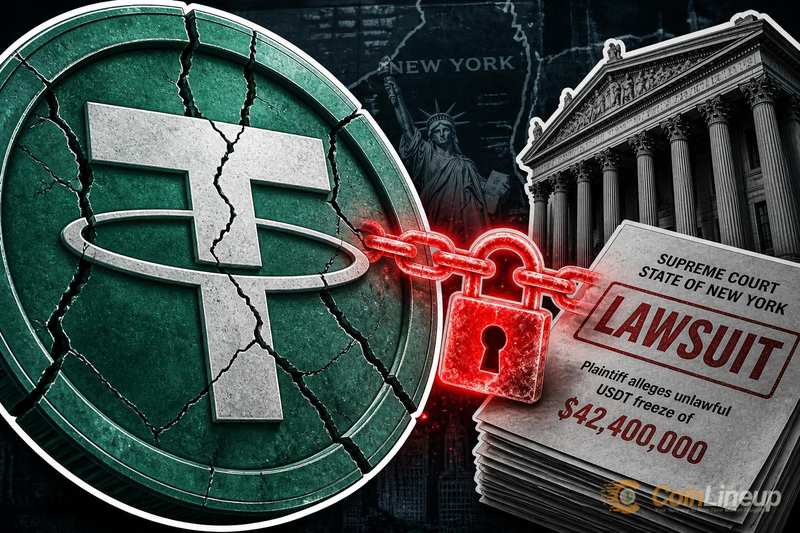
Tether, the company behind the widely used USDT stablecoin, has been sued in New York over an alleged unlawful freeze of $42.4 million worth of USDT. The plaintiff says the company blocked access to a large stablecoin balance, and the lawsuit asks a court to decide whether that freeze was justified.
What the New York lawsuit alleges against Tether
The case, Riverstone Consultancy Inc. v. Tether Holdings Limited, appears on the federal court docket naming Tether as the defendant. The dispute is being pursued in New York, where the complaint puts Tether’s authority to restrict access to USDT at the center of the case. For related coverage, see Pocket Bitcoin Exposed Records Linking 291 Customers’ Identities to Public Bitcoin Addresses.
It is important to be clear: these are allegations made in a complaint, not facts a court has confirmed. Tether has not been found to have done anything wrong. For related coverage, see Intersango Customer Recovers 61 BTC.
The core claim is straightforward. The plaintiff argues that Tether’s freeze of its USDT was unlawful. USDT, a stablecoin designed to trade near one U.S. dollar, is the specific asset at the center of the case. For related coverage, see Fake Claude App Spreads RevStealer Malware, Targeting 50+ Crypto Wallets.
Why the alleged $42.4 million USDT freeze is central to the case
The action being challenged is the freeze itself. According to reporting by DL News, a firm sued Tether seeking the release of tens of millions of dollars in blocked USDT.
The disputed amount, $42.4 million, is significant for anyone following stablecoin risk because a freeze turns a token balance into something the holder cannot move or spend until the restriction is lifted.
That is one reason this lawsuit may draw interest beyond the parties involved. USDT is widely used for trading, transfers and settlement across the crypto market, so disputes over issuer controls tend to resonate with users who rely on stablecoins for quick movement of value. At the same time, the case also shows why centralized stablecoins are different from self-custodied assets: access ultimately depends on the issuer’s ability to restrict the token.
Key takeaways
- Tether has been sued in New York over an alleged unlawful freeze of USDT.
- The plaintiff wants a court to order the release of the blocked stablecoin balance.
- The claims are allegations only; no court has ruled on the merits yet.
- Tether has publicly reserved the right to freeze tokens in certain situations. Its own terms of service describe conditions under which the company can restrict access to USDT.
What the case could mean for USDT holders and stablecoin oversight
The lawsuit highlights a basic feature of centralized stablecoins. The issuer can freeze balances, which means users do not have full unilateral control over their own tokens.
That is different from holding a coin like Bitcoin in a self-custody wallet. It is closer to how exchanges can restrict funds, similar to when Phemex placed dozens of USDT trading pairs under enhanced review. For related coverage, see Phemex Places 82 USDT Trading Pairs Under Enhanced Review.
Because USDT is one of the most widely used stablecoins, litigation over a large freeze is likely to attract attention from traders and compliance watchers. Tether has frozen wallets before, including a reported action tied to a Bulgarian investigation. See also Tether Froze $44M Crypto in Bulgarian Investigation.
The case also comes amid a broader regulatory conversation, as officials consider new rules such as proposed SEC changes for tokenized securities. For related coverage, see SEC Transfer Agent Rule Changes for Tokenized Securities.
For regular holders, the practical point is simple: a stablecoin balance sits with an issuer that retains the power to freeze it.
Disclaimer: This article is for informational purposes only and does not constitute financial or investment advice. Cryptocurrency and digital asset markets carry significant risk. Always do your own research before making decisions.
