Tether and Kazakhstan Reportedly Planning Tenge-Pegged Stablecoin Pilot
Key Takeaways
- •Tether is reportedly planning a pilot with Kazakhstan for a stablecoin pegged one-to-one to the Kazakhstani tenge.
- •The project remains at a preliminary pilot stage, with no confirmed launch date, reserve structure, or regulatory approval yet.
- •Tether has prior experience issuing non-dollar stablecoins, including the euro-pegged EURt and a Mexican peso token launched in 2022.
- •Kazakhstan's Agency for Regulation and Development of the Financial Market would likely need to approve reserve-holding arrangements and redemption rules before the token could reach users.
- •Kazakhstan brings prior digital asset experience, including a period as a leading Bitcoin mining destination and a central bank pilot of a digital tenge.
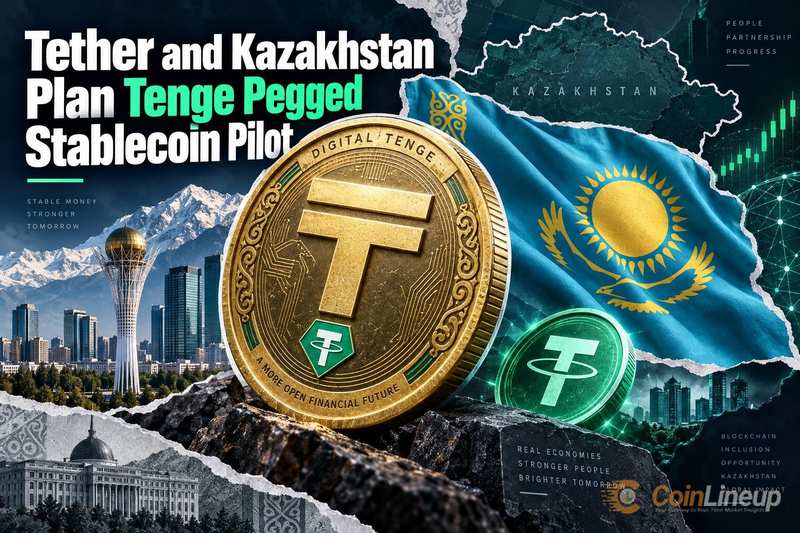
Tether, the company behind the world's largest stablecoin, USDT, is reportedly planning a pilot program with Kazakhstan for a new digital currency pegged to the Kazakhstani tenge. If the project moves forward, it would create a government-backed digital token designed to hold the same value as the country's national currency.
How a Tenge-Pegged Stablecoin Would Work
A tenge-pegged stablecoin would function as a digital version of Kazakhstan's money. Each token would be backed one-to-one by actual tenge held in reserve, meaning one token would always equal one tenge. This mirrors the basic model Tether uses for USDT, under which each token is supposed to be backed by one U.S. dollar.
The initiative is described as a pilot, meaning it would be a limited test before any wider rollout. A pilot phase of this kind typically involves a small group of users or institutions testing the token under controlled conditions — checking whether the reserves work correctly, whether transactions settle quickly, and whether the system meets local regulations. Only after such testing would any broader public rollout be considered.
Potential Use Cases
A local-currency stablecoin would target everyday tenge-denominated transactions. Potential uses include faster domestic payments, lower-cost cross-border transfers, and a gateway that would allow Kazakhstan residents to participate in crypto markets without converting their money into U.S. dollars first.
Tether has experience issuing stablecoins in currencies beyond the U.S. dollar. The company already operates EURt, a euro-pegged token, and has issued other currency-linked tokens, including a Mexican peso token launched in 2022. A tenge version would follow that same pattern, adapted for Central Asia's largest economy.
Kazakhstan, for its part, is not new to digital assets. The country briefly ranked among the world's leading Bitcoin mining destinations after China banned the practice in 2021, and it has since introduced licensing and tax rules for the mining sector. The National Bank of Kazakhstan has also piloted a digital tenge, a central bank digital currency, giving the country direct experience with tokenized versions of its own money.
Regulatory compliance would be central to the pilot. Any stablecoin backed by a national currency requires cooperation with that country's central bank and financial regulators. Kazakhstan's financial sector regulator, the Agency for Regulation and Development of the Financial Market, would likely need to approve reserve-holding arrangements and set redemption rules before the token could reach everyday users.
Why It Matters Beyond Kazakhstan
Stablecoin regulation is a live issue globally. Tether is already navigating rule changes in major markets and has pushed back on proposed reserve requirements in Europe, where both Circle and Tether have sought changes to the reserve rules of the EU's Markets in Crypto-Assets Regulation (MiCA) that they argue are impractical.
A tenge-pegged stablecoin would represent a different model: one in which a global stablecoin issuer partners directly with a national government rather than operating independently in the market. In principle, that structure could give regulators more direct oversight of reserves and redemptions.
For Kazakhstan, the appeal is straightforward. A tenge stablecoin could modernize payment infrastructure, attract crypto-related business activity, and give the country a stronger foothold in digital finance, all without requiring citizens to use dollar-pegged tokens for domestic transactions.
Tether's broader legal and operational environment is also relevant for the announcement. The company has faced scrutiny over its reserve practices and has been involved in asset-freeze disputes, including a case in which Conduit sued Tether over a $2.76 million USDT freeze connected to a Brazil investigation. A government-partnered pilot in Kazakhstan would operate under a different framework, with state oversight potentially reducing some of the trust concerns that have followed Tether's independent operations.
What to Watch
Because the project remains at the pilot stage, there is no confirmed launch date, no confirmed reserve structure, and no confirmed regulatory approval yet. Key milestones to follow include an official announcement from Kazakhstan's financial regulator, details on which blockchain the token would run on, and confirmation of the reserve-holding arrangement.
For anyone new to crypto, the initiative is worth watching because it shows how governments are beginning to use stablecoin technology as practical financial infrastructure rather than treating it purely as a speculative asset class. A successful pilot in Kazakhstan could influence how other countries in Central Asia and beyond approach national-currency stablecoins.
Disclaimer: This article is for informational purposes only and does not constitute financial or investment advice. Cryptocurrency and digital asset markets carry significant risk. Always do your own research before making decisions.

