Tether Freezes Nearly $550 Million in USDT Tied to Iran Sanctions Networks
Key Takeaways
- •Tether froze approximately $550 million in USDT during 2026 across addresses that U.S. authorities linked to Iran-related sanctions networks.
- •The 2026 freezes included more than $344 million across two addresses in April after information from OFAC, and more than $130 million across four TRON wallets in July following expanded U.S. designations.
- •Tether reported cooperation with authorities on more than 2,900 investigations globally, including over 1,600 involving U.S. law enforcement, contributing to more than $4.9 billion in total frozen assets, of which over $2.4 billion involved U.S. cases.
- •Tether and Shiga plan to build self-custodial wallets for Africa and the GCC on Tether's open-source Wallet Development Kit, with ENTA targeting individuals and businesses and Pulse serving banks and institutional clients.
- •Shiga's Nigerian Digital Asset Intermediary license remains under regulatory review, leaving the service's standing in that market unresolved.
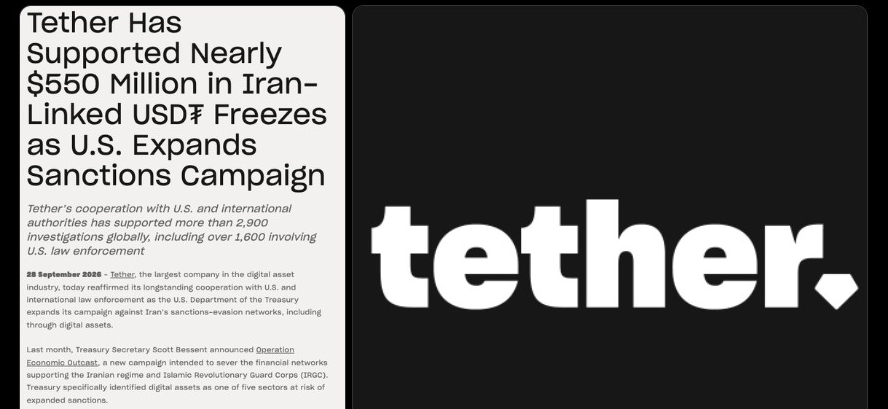
Tether has frozen nearly $550 million in USDT tied to Iran-related sanctions networks during 2026 as the stablecoin issuer continues to cooperate with U.S. and international authorities. U.S. authorities have identified digital assets as a sector targeted in expanded efforts against Iran sanctions-evasion networks. The company said the freezes followed requests from law enforcement agencies and actions connected to sanctions enforcement, targeting wallets that authorities linked to Iran's financial networks. The episodes illustrate how stablecoin issuers sit at a chokepoint of digital-dollar flows: because Tether issues USDT, it can lock balances at specific addresses, giving sanctions designations a direct operational effect on-chain. In a separate announcement, Tether said it will work with Shiga to expand self-custodial wallet services across Africa and the Gulf Cooperation Council (GCC) region.
Iran-Linked Addresses Come Under Restrictions
In April 2026, Tether froze more than $344 million in USDT across two addresses after receiving information from the Office of Foreign Assets Control (OFAC) and U.S. law enforcement agencies. OFAC later added those addresses as digital currency identifiers linked to Iran's Central Bank, placing them on a public list that banks and companies use to screen for sanctions exposure.
In July 2026, the company froze more than $130 million in USDT across four additional wallets after U.S. authorities expanded sanctions-related designations involving TRON addresses. The two enforcement actions, carried out in response to requests from law enforcement, brought the total value of Iran-linked USDT frozen during 2026 to approximately $550 million. Freezes of this kind immobilize the tokens at the listed addresses rather than reversing past transactions, which is what makes issuer cooperation a practical lever once investigators identify a wallet.
Tether said its cooperation with authorities covers more than 2,900 investigations globally, including more than 1,600 involving U.S. law enforcement. The company reported work with agencies such as the Department of Justice, the Federal Bureau of Investigation, the U.S. Secret Service, Homeland Security Investigations, and OFAC.
Compliance Partnerships Expand
Tether has also worked with international agencies on cases involving terrorism financing, fraud, and sanctions-related activities. Among these partnerships, the company cooperated with Israel's National Bureau for Counter Terror Financing on cases involving cryptocurrency addresses connected to illicit activity.
In 2023, Tether froze 32 addresses containing more than $873,000 in USDT after coordination with Israeli authorities. company later reported additional freezes involving more than 22 million USDT across more than 640 addresses linked to cases referred by the same authority.
Tether said its broader cooperation has helped freeze more than $4.9 billion in assets across different investigations. More than $2.4 billion of those assets involved cases connected to U.S. authorities, according to the company. Recent matters include a $225.3 million cryptocurrency seizure investigation supported by Tether, a $61 million fraud-related freeze, and a $52 million action involving alleged scam networks.
Blockchain Records Anchor Crypto Investigations
Tether has aligned its wallet-freezing process with the OFAC Specially Designated Nationals (SDN) List, an approach that allows the company to restrict wallets identified under U.S. sanctions requirements. As OFAC adds new digital currency identifiers, that alignment gives Tether a standing basis to restrict matching addresses.
Chief Executive Officer Paolo Ardoino said, "Public blockchains provide authorities with a level of visibility into the movement of funds that simply does not exist with cash, and Tether can act when credible information is provided by law enforcement."
Tether's actions come as governments increase attention on digital assets used in sanctions evasion and financial crime investigations. Authorities continue to examine how blockchain data can support enforcement efforts.
Self-Custodial Wallet Expansion in Africa and the GCC
Meanwhile, Tether and Shiga announced plans to develop self-custodial wallets for users and institutions across Africa and the Gulf Cooperation Council region. The products will be built on Tether's open-source Wallet Development Kit (WDK), according to an official Tether announcement.
Shiga plans to launch ENTA for individuals, high-net-worth users, and businesses, while Pulse will target banks, fintech companies, and institutional clients. ENTA users will be able to fund their wallets using local currency, U.S. dollars, or Bitcoin, then hold and transfer USDT, Bitcoin, and Tether Gold.
Pulse will allow institutions to use wallet infrastructure managed by Shiga or deploy the software within their own systems. That setup gives companies direct control over keys, data, and transaction signing processes.
The two announcements capture Tether's two-sided role in the stablecoin economy: the same issuer that freezes addresses at authorities' request is also building infrastructure that puts key management directly in users' hands. Self-custody changes who holds the keys, but USDT balances remain subject to the issuer's address-level freeze capability wherever they are stored.
Tether invested in Shiga Digital in 2025 as the company developed services involving virtual accounts, foreign exchange, treasury management, and over-the-counter transactions. Shiga said its Nigerian Digital Asset Intermediary license remains under review, leaving the service's regulatory standing in that market still to be resolved.

