Tether Pushes Back After S&P Global Ratings Keeps USDT at Lowest Stability Score Over Reserve Risks
Key Takeaways
- •S&P Global Ratings maintained USDT's stability score at 5, the lowest grade on its stablecoin scale, in November 2025.
- •Assets S&P considers higher-risk, including Bitcoin, gold, public equities, secured loans and corporate bonds, rose to 28% of Tether's reserves at the end of September, up from 24% a year earlier.
- •Tether rejected S&P's analysis by citing $191.45 billion in assets against $183.50 billion in liabilities as of Sept. 30, an excess buffer of roughly $7.95 billion, alongside $132.4 billion in U.S. Treasury bill exposure.
- •S&P raised concerns about El Salvador's regulatory framework, undisclosed reserve custodians and counterparties, and the fact that KPMG's unqualified audit opinion on Tether International's 2025 financial statements was not made available for public review.
- •Despite its concerns, S&P acknowledged USDT's strong price-stability record and made no further reduction because 5 is already the minimum score in its rating system.
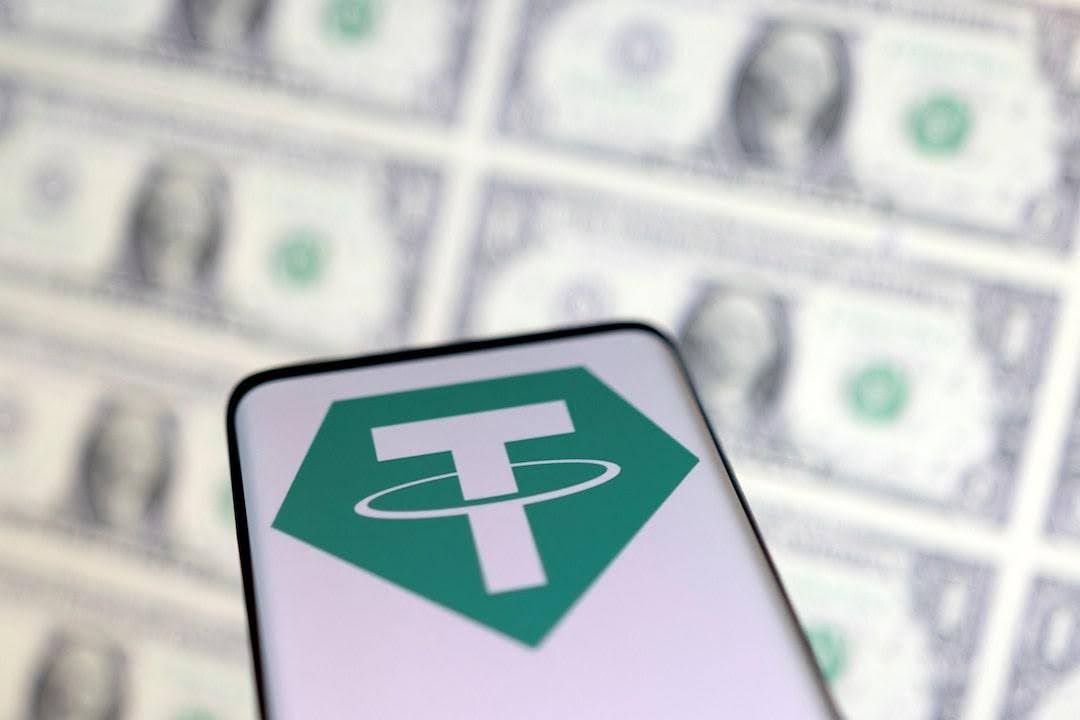
Tether has pushed back against S&P Global Ratings after the agency kept the USDT stablecoin at the lowest score on its stablecoin stability scale, with the rating tied to the growing share of higher-risk assets in the issuer's reserves.
USDT retains a rating of 5 — the lowest grade, on the “Weak” side of S&P Global Ratings' stability scale for stablecoins. The agency reported that higher-risk reserve assets now account for 28% of the assets backing USDT in circulation. Tether contested the analysis, citing a reserve buffer of nearly $8 billion in excess assets. The disagreement hinges on how stablecoin risk should be read: through the volatility of the assets behind each token, or through the size of the cushion above the issuer's liabilities.
S&P Maintains Lowest Stability Score for USDT
In November 2025, S&P assessed USDT's ability to sustain its dollar peg at 5, or below-average, leaving the rating unchanged from its previous level. The agency said the increasing share of Bitcoin, gold and other higher-risk assets in Tether's reserves remains a key concern, despite the stablecoin's strong price-stability record.
According to S&P, assets it deems less secure — including Bitcoin, gold, public equities, secured loans and corporate bonds — accounted for 28% of Tether's total assets at the end of September, up from 24% a year earlier. The agency reiterated its warning that a significant drop in the value of those assets could compromise Tether's collateral cushion and leave USDT undercollateralized. Because every token in circulation is backed by that same pool, the composition of reserves — not just their headline value — is what the score most directly reflects.
Tether Points to Nearly $8 Billion Reserve Buffer
Tether responded by citing its own financial position. Its financial figures as of Sept. 30 showed $191.45 billion in assets against $183.50 billion in liabilities, leaving an excess of roughly $7.95 billion. The numbers formed part of Tether's third-quarter reserves report, which was signed by BDO.
Short-term instruments such as U.S. government securities and U.S. Treasury bills remain central to Tether's reserve structure. The company reported $132.4 billion in direct and indirect U.S. Treasury bill exposure at the end of the quarter. Tether's framing emphasizes buffer size and Treasury-heavy holdings, while the agency's score weights the growing share of assets it deems less secure.
S&P Flags Regulation and Reserve Transparency
S&P also expressed concerns about the regulatory framework under which Tether's reserves are held. El Salvador's stablecoin law imposes a minimum 70% short-term liquidity requirement for assets held in reserve. Even so, S&P noted that provisions covering Bitcoin holdings — as well as gold and loans — provide considerable latitude, and that the rules do not include the same mandatory segregation requirements found in some U.S. and European regimes. Segregation rules are the mechanism those regimes use to keep reserve assets ring-fenced from an issuer's other holdings and obligations.
The agency also identified disclosure shortcomings, including the lack of publicly identified reserve custodians and counterparties, and the provision of reserve attestations every quarter rather than every month.
Tether's Audit Adds Another Layer to the Dispute
Tether has moved to strengthen its financial reporting. In August, KPMG U.S. issued an unqualified opinion on Tether International's 2025 financial statements, which Tether described as its first complete independent financial audit. KPMG's review covered assets, transactions, systems, valuations and counterparties.
S&P noted, however, that the audited financial statements and the full audit report were not available to the agency for public review. The reporting formats sit at the center of the transparency debate: Tether's quarterly reserve reports carry BDO's attestation, while its first full independent audit has not been published for outside review.
Notwithstanding the risks it cited, S&P credited USDT with a good record of price stability, particularly over the past year. The agency made no further reduction to the score, since 5 is already the lowest rating in its scoring system. The dispute remains one of interpretation for now: the score holds at 5, higher-risk assets stand at 28% of reserves, and the audited statements remain out of public view. Upcoming quarterly reserve reports — and any change in asset mix, disclosure cadence or audit publication — are the concrete checkpoints against which both sides' arguments can be measured.
Source: Crypto Ninjas

