Morgan Stanley Says Tesla Must Prove Robotaxi Can Scale
Key Takeaways
- •Morgan Stanley said Tesla needs tangible progress in scaling its robotaxi business as investors demand measurable returns from its AI strategy.
- •The firm estimates the global robotaxi market could reach about $1 trillion by 2040 and about 2.5 million vehicles by 2035.
- •Tesla’s planned 2026 capital expenditures are projected to reach about $25 billion, raising concerns about cash burn and capital efficiency.
- •Morgan Stanley lowered its Tesla price target to $400 from $417 while keeping an Equalweight rating.
- •The market is increasingly focused on execution metrics such as autonomous miles, ride volume, utilization, safety performance and revenue per vehicle.
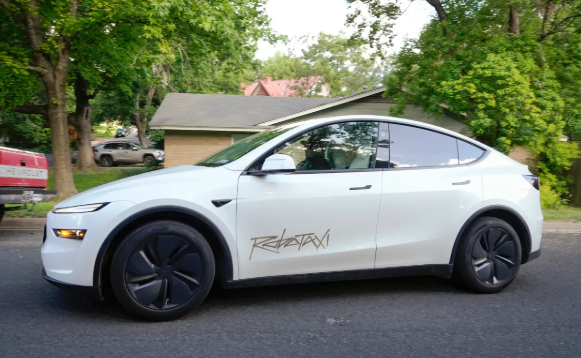
Tesla is facing a new test of investor confidence as Wall Street increasingly looks beyond electric vehicle sales and toward the company’s robotaxi and artificial intelligence strategy.
Morgan Stanley analysts warned that Tesla must show tangible progress in scaling its robotaxi business as rising investment, weaker automotive margins and growing cash requirements put more pressure on the company to demonstrate measurable returns from its AI ambitions.
The warning comes at an important moment for Tesla. For years, the company has positioned autonomous driving as one of the most important pillars of its future, with CEO Elon Musk repeatedly arguing that self-driving technology and robotaxis could eventually transform Tesla’s economics.
Investors are now being asked to wait for those promises to turn into a larger commercial operation.
Morgan Stanley’s recent research describes robotaxis as a potentially enormous market, forecasting roughly 2.5 million robotaxis globally by 2035 and estimating that the broader industry could become a $1 trillion opportunity by 2040. At the same time, the firm said regulatory barriers, safety requirements and heavy investment could slow the path toward profitability.
That combination is putting Tesla under increasing pressure.
The company’s AI strategy requires significant capital, while its traditional automotive business is facing margin challenges. For investors who have assigned Tesla a valuation partly on future autonomy and robotics revenue, the question is becoming more direct: when will the robotaxi opportunity begin producing results that can be measured in commercial scale and financial performance?
Tesla’s Robotaxi Ambitions Face a Reality Check
Tesla has increasingly presented itself as more than an automaker.
The company is trying to build a broader technology ecosystem around autonomous vehicles, artificial intelligence, robotics and software.
Robotaxis are central to that strategy.
The idea is straightforward. Tesla vehicles equipped with advanced autonomous driving technology could eventually operate without a human driver, allowing owners or Tesla itself to use vehicles as part of a ride-hailing network.
Such a system could generate revenue from vehicles long after their initial sale.
Instead of earning money primarily when a car is purchased, Tesla could potentially generate recurring revenue from transportation services, autonomous driving software and fleet operations.
That possibility is one reason investors have been willing to assign significant value to Tesla’s future AI businesses.
But the economics only become compelling if Tesla can show the system works reliably and can be deployed at scale.
That is where Morgan Stanley’s latest concerns become especially important.
Scaling Is Becoming the Key Metric
For years, discussions around Tesla’s autonomous driving ambitions have focused on technological capability.
Can the vehicles navigate roads? Can the system handle difficult traffic situations? Can Tesla achieve sufficiently high levels of reliability? Can regulators approve driverless operations?
Those questions remain important.
But investors are increasingly asking a different question: can Tesla scale the business?
A successful demonstration involving a limited number of vehicles is not the same as a commercially viable network.
To become a meaningful contributor to Tesla’s valuation, robotaxis would likely need to expand across multiple markets, accumulate significant autonomous miles and generate enough revenue to justify the enormous investments required to build the system.
Morgan Stanley’s research suggests that the broader robotaxi industry is moving from experimental deployments toward scaling as AI technology improves, hardware costs decline and regulations become clearer.
For Tesla, however, the pace of that expansion matters.
Investors are increasingly looking for evidence rather than projections.
Higher Spending Raises the Stakes
Tesla’s AI ambitions are becoming increasingly expensive.
The company is investing heavily in data centers, autonomous vehicle infrastructure, robotics and manufacturing capacity.
Reuters reported in July that Tesla was expected to experience its first quarterly cash burn in more than two years as spending on AI and robotics increased. The company’s planned 2026 capital expenditures were projected to reach approximately $25 billion, exceeding the cash generated by its core automotive and energy operations.
That level of spending changes the investment equation.
When a company spends billions of dollars to develop a future business, shareholders eventually need evidence that those investments are creating economic value.
For Tesla, that means robotaxi deployment, autonomous driving progress and related AI businesses increasingly need to show measurable milestones.
The market may tolerate substantial spending if investors believe those investments are building a durable competitive advantage.
But if spending rises while commercialization remains limited, concerns over capital efficiency can become more pronounced.
Tesla’s Automotive Business Still Matters
Despite the focus on AI, Tesla remains heavily dependent on its automotive operations.
Vehicle sales provide the company’s largest established source of revenue.
That means weaker automotive margins can increase the importance of Tesla’s future businesses.
Tesla’s 2025 annual filing showed total revenue of $94.83 billion, down from the prior year, while net income attributable to common shareholders fell to $3.79 billion. Tesla also reported $14.75 billion in operating cash flow for 2025.
Those figures highlight the challenge facing the company.
Tesla needs to continue funding its existing automotive and energy businesses while simultaneously spending heavily on future technologies.
The more pressure that develops in the traditional business, the more investors may look toward robotaxis and AI to justify the company’s long-term growth expectations.
The Cash Burn Question
Cash flow has become one of the most closely watched issues surrounding Tesla.
A technology company can spend aggressively during a growth phase, but investors generally want to understand how that spending translates into future earnings.
Tesla’s first-quarter 2026 filing showed $3.94 billion in cash provided by operating activities against $5.02 billion in cash used in investing activities. The company reported $16.60 billion in cash and cash equivalents and $28.14 billion in short-term investments as of March 31, 2026.
Tesla therefore retains substantial liquidity.
The concern is not necessarily that the company is immediately facing a financial crisis.
Instead, the issue is whether increasingly large investments can generate sufficient future returns.
That distinction is important.
Tesla has the financial resources to invest heavily, but investors still need evidence that those investments are building the economic foundation for the next phase of growth.
Morgan Stanley Sees a Large Robotaxi Opportunity
Morgan Stanley’s broader research remains constructive on the long-term robotaxi industry.
The firm estimates that the global robotaxi market could reach approximately $1 trillion by 2040.
It also projects around 2.5 million robotaxis globally by 2035, with the United States and China accounting for approximately 70% of adoption.
Morgan Stanley expects operating costs for robotaxis to decline as technology matures and hardware becomes cheaper.
The firm estimates operating costs could fall by about 20% over the next three years, potentially helping the industry approach break-even economics later this decade.
That outlook provides an important counterpoint to the current concerns surrounding Tesla.
The robotaxi opportunity itself may be real and potentially enormous.
The challenge is determining which companies will capture that opportunity and how quickly.
Tesla Is Not the Only Company Racing Toward Autonomous Mobility
Tesla faces competition from companies already operating or testing commercial autonomous ride-hailing services.
The robotaxi market includes technology companies, automakers and specialized autonomous-driving firms.
That means Tesla cannot simply demonstrate that autonomous driving works.
It must show that its approach can compete economically and technologically against other systems.
Morgan Stanley’s research argues that the winners in the robotaxi industry may not necessarily be traditional automakers.
Value could shift toward AI platforms, companies controlling customer demand, low-cost vehicle suppliers and businesses capable of operating fleets efficiently.
That creates an additional challenge for Tesla.
The company needs to establish not only technological leadership but also an effective business model.
Why Robotaxi Scale Matters to Tesla’s Valuation
Tesla’s valuation has long been debated because conventional automotive metrics do not fully explain how investors value the company.
If Tesla were valued strictly as an automaker, its future growth expectations would be tied primarily to vehicle deliveries, automotive margins and energy storage.
But Tesla has increasingly been valued as an AI and robotics company as well.
That creates a much larger potential addressable market.
It also creates a higher burden of proof.
A company valued primarily on current vehicle earnings can be judged on current earnings.
A company valued partly on autonomous transportation and robotics must eventually show that those future businesses can become commercially significant.
This is why robotaxi scaling has become such an important issue for investors.
Source: Xpost
Investors Want Measurable Milestones
The market is likely to pay increasing attention to specific indicators.
Those could include the number of robotaxi vehicles operating without human intervention, the geographic expansion of service areas, autonomous miles driven, ride volume, utilization rates and revenue generated per vehicle.
Investors may also want evidence that Tesla can reduce the cost of operating the service.
A robotaxi network that generates substantial revenue but requires excessive human oversight or expensive infrastructure could struggle to produce attractive margins.
By contrast, a highly automated system operating large numbers of vehicles with limited intervention could produce a very different economic model.
The difference between those two outcomes is enormous.
Safety Remains a Critical Issue
Scaling robotaxis is not simply a matter of deploying more cars.
Safety and regulation remain major barriers.
Autonomous vehicles must operate safely in unpredictable environments, including construction zones, emergency situations, unusual road conditions and interactions with pedestrians and other vehicles.
Regulators also have to determine whether autonomous systems meet applicable safety standards.
A single high-profile incident could slow expansion and increase regulatory scrutiny.
Morgan Stanley specifically identified regulatory hurdles and safety concerns among the factors that could slow robotaxi industry growth.
For Tesla, this means scaling must happen while maintaining public and regulatory confidence.
The Importance of Software Economics
Tesla’s long-term robotaxi strategy also depends heavily on software.
Traditional vehicles generally generate most of their revenue at the point of sale.
Software-based autonomy creates the possibility of recurring revenue.
If customers pay for autonomous driving features or Tesla earns money from robotaxi rides, the company could generate revenue from the same vehicle multiple times over its operating life.
That would represent a significant change in the economics of the automotive industry.
However, that business model only works if customers are willing to pay and the technology is sufficiently reliable.
The challenge is turning technological capability into recurring revenue.
AI Spending Could Become a Competitive Advantage
Higher spending is not automatically negative.
If Tesla’s investments allow the company to develop a superior autonomous driving system, build a strong AI infrastructure and establish a large robotaxi network before competitors, the spending could ultimately create a competitive advantage.
That is the argument Tesla supporters are likely to make.
The company is investing today because it wants to control a much larger market tomorrow.
The problem is timing.
Investors have to absorb the cost of those investments before the benefits become clear.
As capital expenditure increases, the company has less room for execution delays.
That is why the pressure for measurable progress is growing.
Tesla’s 2026 Investment Plans Are Significant
Tesla’s capital spending plans have become a central issue in the investment debate.
Reuters reported that Tesla’s capital expenditures could reach $25 billion in 2026, with spending directed toward AI infrastructure, manufacturing capacity and other strategic initiatives.
That is a dramatic increase compared with Tesla’s previous spending levels.
Such an investment cycle could support long-term growth.
But it also increases the amount of capital that must eventually generate returns.
Morgan Stanley subsequently lowered its Tesla price target to $400 from $417 while maintaining an Equalweight rating, citing higher capital expenditure and concerns about the impact of prolonged cash burn. The firm also reduced its 2026 adjusted EBITDA estimate by 7%, reflecting lower automotive and energy margins and continued R&D growth.
The changes underscore the tension facing Tesla.
Wall Street can recognize the potential of AI while becoming more cautious about the cost of reaching that potential.
R&D Spending Adds Another Layer
Research and development spending is another area investors are watching.
Tesla has been investing in autonomous driving, AI hardware, robotics and other technologies.
Those investments may not immediately produce revenue.
R&D is inherently uncertain.
A company can spend billions developing a technology that eventually becomes highly profitable, or it can spend heavily without achieving the expected commercial breakthrough.
For Tesla, the size and scope of its AI ambitions make the relationship between R&D spending and eventual revenue increasingly important.
Investors want to know whether the company’s expanding technology budget is producing a meaningful advantage.
Robotaxi Could Change Tesla’s Business Model
If Tesla successfully scales robotaxis, the impact could extend far beyond another source of revenue.
A large autonomous fleet could potentially increase demand for Tesla vehicles.
It could create additional demand for autonomous driving software.
It could generate recurring ride revenue.
It could provide large amounts of real-world driving data.
And it could strengthen Tesla’s AI development efforts.
That creates a potential feedback loop.
More vehicles could generate more data. More data could improve autonomous driving systems. Better autonomy could increase vehicle utilization. Higher utilization could improve economics. Better economics could support further fleet expansion.
This is part of the long-term argument behind Tesla’s robotaxi strategy.
But the loop only works if the technology and economics are strong enough to reach scale.
What Could Change Investor Sentiment?
Several developments could significantly change how investors view Tesla.
A rapid expansion of driverless robotaxi operations would likely matter. So would sustained growth in autonomous rides. Evidence of strong utilization could show that customers actually want the service. Improving unit economics could indicate that robotaxis can eventually become profitable. Regulatory approvals across additional markets could remove one of the biggest barriers to expansion.
Conversely, prolonged delays, rising costs or limited adoption could reinforce concerns that Tesla’s AI ambitions are taking longer and costing more than expected.
The Market Is Looking Beyond Announcements
Tesla has made numerous announcements about autonomous vehicles over the years.
Investors are now increasingly focused on execution.
That means the company must demonstrate actual vehicles operating in real markets.
The transition from demonstration to commercial scale is critical.
A prototype can prove that something is technically possible.
A limited pilot can prove that it can work under controlled conditions.
A large-scale commercial service must prove that it can operate reliably and economically.
That final stage is where Tesla now faces the greatest scrutiny.
Robotaxi Economics Could Become the Next Big Test
The next stage of Tesla’s robotaxi story will ultimately be measured in economics.
How much does each ride cost? How much revenue does each vehicle generate? How many rides can a vehicle complete each day? How much human oversight is required? How much does Tesla spend on fleet maintenance and charging? How much does autonomous driving reduce operating costs?
These questions matter because the robotaxi opportunity is ultimately a business proposition.
Technology alone is not enough.
Tesla must show that the technology can produce attractive returns.
Wall Street’s Expectations Are Rising
Morgan Stanley’s analysis illustrates the changing expectations around the robotaxi industry.
The firm sees an enormous long-term opportunity, but it also recognizes that investors are increasingly focused on which companies can scale quickly and operate efficiently.
For Tesla, that means the market may become less patient with vague promises.
The company’s valuation incorporates expectations for future AI and autonomy growth.
As spending rises, those expectations become more demanding.
Tesla therefore faces a delicate balancing act.
It must continue investing enough to maintain technological momentum while demonstrating that those investments are producing measurable progress.
What This Means for TSLA Investors
For shareholders, the Tesla debate increasingly comes down to two competing narratives.
The bullish case is that Tesla is building a transformative AI and autonomous transportation platform. If robotaxis scale successfully, the company could unlock a much larger and more recurring revenue opportunity than traditional vehicle sales provide.
The bearish case is that Tesla is spending heavily on projects whose commercial returns remain uncertain. If robotaxi expansion is slower than expected, investors could begin placing greater weight on the company’s existing automotive economics.
That could create pressure on Tesla’s valuation.
The truth may ultimately depend on execution.
The Bigger Picture for Autonomous Vehicles
The robotaxi industry is moving toward a potentially important transition.
For years, autonomous vehicles were primarily research projects and technology demonstrations.
Today, commercial services are beginning to operate in selected markets.
Morgan Stanley expects the industry to expand substantially as AI improves, hardware costs decline and regulations become clearer.
But scaling autonomous transportation will require enormous amounts of capital and sophisticated technology.
Companies must solve not only the driving problem but also fleet management, insurance, maintenance, charging, customer acquisition and regulatory compliance.
The eventual winners may be the companies that can solve all of those problems simultaneously.
Bottom Line
Morgan Stanley’s latest analysis puts the spotlight on one of the most important questions facing Tesla: can the company turn its robotaxi ambitions into a large, measurable and economically sustainable business?
The opportunity is significant.
Morgan Stanley estimates that robotaxis could become a $1 trillion market by 2040, while the number of robotaxis worldwide could reach roughly 2.5 million by 2035.
But the path to that future requires substantial investment.
Tesla’s planned 2026 capital expenditure of approximately $25 billion has increased concerns about cash burn and capital efficiency, particularly as the company’s traditional automotive margins face pressure.
Morgan Stanley has responded by lowering its Tesla price target to $400 from $417 while maintaining an Equalweight rating, citing higher capital spending and the prospect of prolonged cash burn.
The central issue is not whether robotaxis could eventually become a massive industry.
They could.
The question is whether Tesla can scale its own operation quickly enough to justify the capital being invested today.
For investors, the coming milestones will therefore matter more than ambitious projections.
Vehicle deployments, autonomous ride volumes, geographic expansion, utilization, safety performance and eventually robotaxi economics could become the numbers that determine whether Tesla’s AI narrative continues to command investor confidence.
Tesla has spent years promising a future in which autonomous vehicles become a major part of its business.
Now Wall Street is increasingly asking the company to demonstrate that the future is beginning to arrive.

