Tesla Captures 59% of US EV Market, Highest Share Since 2023
Key Takeaways
- •Tesla’s share of US EV sales rose to 59% in Q4 2025, its strongest quarterly result since 2023.
- •Tesla’s market share reached 60.5% in January 2026, although its own sales fell 17% from the previous month.
- •Total US EV sales were about 66,000 units in January 2026, down 29.9% from a year earlier.
- •The $7,500 federal clean-vehicle tax credit ended on September 30, 2025 under legislation signed in July 2025.
- •Hyundai, Toyota, Cadillac, and Rivian were the remaining top five EV sellers in the US, while Ford fell out of the group in January 2026.
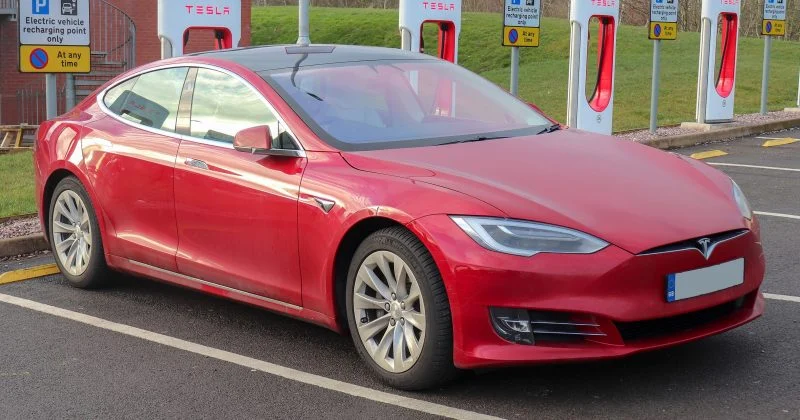
Tesla captured 59% of all US electric vehicle sales in Q4 2025, up sharply from 41% in Q3 2025 and its strongest quarterly performance since 2023, according to figures from Cox Automotive analyzed by CareEdge. The gain came as the overall US EV market continued to contract.
Dominance in a shrinking market
Total EV sales reached approximately 66,000 units in January 2026, a decline of 29.9% year-over-year. EVs accounted for only about 5.8% to 6% of total new vehicle sales in Q2 2026, down from the roughly 8% share of the US new-vehicle market the segment reached in 2024.
Tesla's market share climbed to 60.5% in January 2026, even as the company's own sales dropped 17% month-over-month. For the full year 2026, Tesla is estimated to account for roughly 45% of all new US EV sales, down from 49% in 2024. On a quarterly basis, Tesla held 50.5% of the market in Q2 2026.
The Model Y and Model 3 continue to carry the bulk of Tesla's sales, combining a price position and brand recognition that competitors have struggled to match.
Why rivals are losing ground
The expiration and reduction of certain federal EV incentives played a significant role in reshaping the competitive landscape. The $7,500 federal clean-vehicle tax credit, which earlier law had scheduled to run through 2032, ended on September 30, 2025 under legislation signed in July 2025. Higher-priced models from traditional manufacturers took a disproportionate hit, while Tesla's scale advantages in manufacturing and its established charging network made the transition away from incentives far less painful. That charging network has taken on industry-wide reach, with most major automakers adopting Tesla's North American Charging Standard (NACS) connector for their own EVs.
Hyundai, Toyota, Cadillac, and Rivian now round out the top five EV sellers in the US. Notably absent is Ford, which dropped out of the top five entirely in January 2026.
Volatility and policy factors
The gap between Tesla's quarterly peaks of 59% to 60.5% and its full-year estimate of around 45% indicates significant volatility in monthly purchasing patterns.
Government policy remains a key variable. Shifting federal incentive structures have already reshaped buying decisions, and legacy automakers are watching these policy signals closely as they decide how aggressively to price their own EV offerings. Subsequent Cox Automotive and CareEdge data releases will show whether Tesla's early-2026 share gains hold as the post-incentive market settles.

