Terence Tao Warns AI Is Solving Mathematics’ Best Problems Faster Than New Ones Can Be Found
Key Takeaways
- •Terence Tao says AI could exhaust mathematics’ most productive open problems before researchers develop replacements.
- •OpenAI and Anthropic models have independently produced results on difficult, long-standing mathematical problems, including the Erdős unit-distance conjecture.
- •Tao is concerned that rapid AI competition may interrupt researchers’ efforts to develop and publish broader methods, not merely final answers.
- •His proposed “analysis-required” label would give limited credit to solutions that lack reasoning useful for related problems.
- •No institution has formally adopted Tao’s proposal, and he considers banning AI from mathematics infeasible.
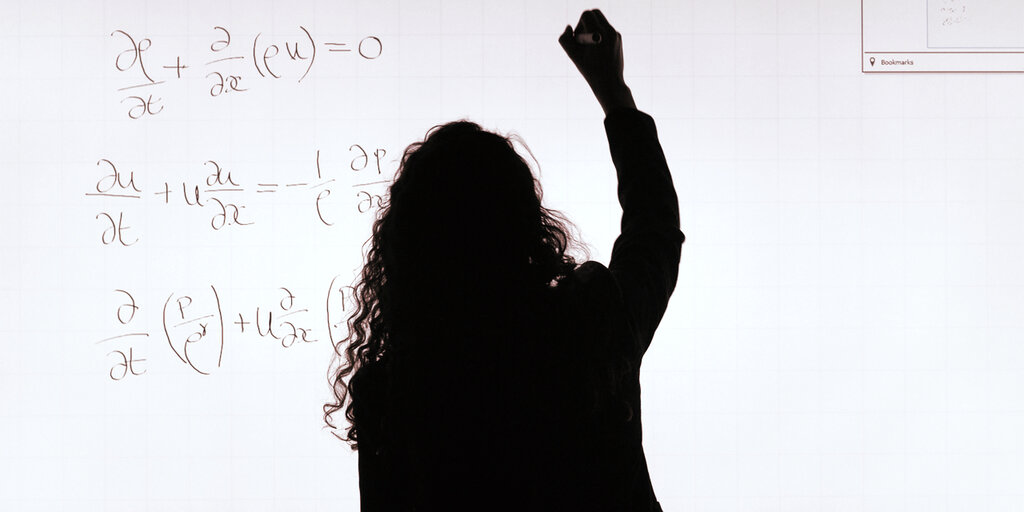
Terence Tao has warned that artificial intelligence is depleting mathematics’ supply of fruitful open problems faster than mathematicians can identify new ones.
The UCLA professor, widely considered the best living pure mathematician and a recipient of the 2006 Fields Medal, issued the warning in a post on the math-focused Mastodon instance Mathstodon. His comments come as AI companies increasingly apply large amounts of computing power to mathematical and scientific questions that have challenged researchers for years or even decades.
Tao’s concern is not a shortage of mathematical questions. Anyone can create an unlimited number of problems; calculating the googol-th digit of pi, for example, is technically an unsolved question. Most such questions, however, do not advance the broader field. The important task is identifying which problems are worth the time and effort required to solve them.
“In short, the indiscriminate use of powerful solution-extraction tools can achieve the immediate short-term goal of solving problems at hand, but at the cost of sustaining the ecosystem for the next wave of progress, or in understanding the progress already obtained,” Tao wrote.
With the emergence of reasoning models and newer generations of frontier AI systems, companies including Anthropic and OpenAI have begun testing their models on difficult mathematical and scientific problems. Reported results have extended across areas including quantum physics, applied mathematics and medicine.
Mathematics presents a particular challenge because genuinely difficult problems are relatively scarce. Researchers often decide carefully which questions justify months or years of work. That process has traditionally depended on what Tao described as a field’s “difficulty landscape”: which questions are easy, which require substantial effort and which are beyond the reach of current methods.
New techniques have historically flattened parts of that landscape while opening new frontiers beyond their limits. Tao argues that AI disrupts this pattern because researchers cannot yet determine precisely where a model’s capabilities end.
From rumor to race
Tao’s warning follows concrete examples rather than a hypothetical scenario. In May, an OpenAI model disproved the Erdős unit-distance conjecture, an 80-year-old question about how many pairs of points can be exactly one unit apart on a plane. Mathematicians outside OpenAI, including Fields Medalist Tim Gowers, verified the result.
Within the same week, Anthropic researcher Levent Alpöge tested the identical problem with Claude Mythos, the company’s unreleased top-tier model. Alpöge worked offline so the system could not copy OpenAI’s published solution. Anthropic engineer Sholto Douglas described Mythos’ result as a “cute, simple proof” that was shorter than OpenAI’s. Mathematician Daniel Litt called it “a bit worse” than OpenAI’s version, although Mythos also found OpenAI’s solution.
Huge credit to the OAI team for solving the unit distance problem with 5.5 - it is now my go to example that models can in fact pull together disparate ideas into new discoveries. As with all 4 minute miles, we had to try and cross it too! Turns out mythos solves it with a cute,…
— Sholto Douglas (@_sholtodouglas) May 26, 2026
Anthropic then formalized a centuries-old proof of Fermat’s last theorem, according to the source, and a few days later OpenAI solved a 90-year-old problem hours after a researcher published an independent proof. OpenAI subsequently coauthored a paper with an Anthropic researcher.
That competition is precisely what concerns Tao. “We have now seen that even the rumor of someone working on a problem can trigger a massive amount of AI-powered effort to flatten it before the original research project has time to reach its full potential,” he wrote.
Tao argues that this could reverse aspects of the open-science process, in which researchers develop ideas over time and publish work that helps others understand not only an answer but also the methods behind it.
Judge the process, not only the answer
Tao proposed labeling certain mathematical problems “analysis-required.” Under that approach, a correct answer produced without explanation would count for little unless it included reasoning that offered insight into related or nearby problems.
That distinction matters because a verified result and a reusable method serve different purposes in mathematics. Tao’s proposal would place greater value on whether an AI-generated proof helps researchers understand neighboring questions, rather than judging progress solely by whether one difficult problem has been closed.
He compared the idea to food banks that stopped accepting donations merely because they were edible: usefulness would depend on more than the immediate result.
The alternative, Tao said, would be to ban AI from mathematics, a solution he described as “technically infeasible.” No institution has yet adopted the “analysis-required” proposal as policy. Given the pace at which major AI laboratories are applying their systems to mathematics, Tao suggested that implementing even this approach could currently prove technically infeasible.
Source: Decrypt
