Ghana Awards 5G Spectrum to State-Owned Telecel Ghana, Rollout Planned by December
Key Takeaways
- •Ghana's National Communications Authority granted Telecel Ghana all three of the 2.3 GHz spectrum lots it applied for, aiming to support 5G deployment and expand mobile broadband capacity.
- •The award followed the government's decision to revoke Next Gen InfraCo's exclusive 5G licence after the state-backed provider completed only 16 of the 50 required sites in Accra and Kumasi.
- •Telecel plans to roll out 5G service on its own network by December, marking the first independent 5G ownership in Ghana and a departure from the wholesale infrastructure model.
- •The final price Telecel paid was not disclosed, though the NCA had set a $10 million minimum for each of the five licences offered, and bids were received for only four lots, with Goal Telecom applying for one block.
- •Ghana targets 70% 5G population coverage by 2027, while a decision on MTN Group's 5G licence application remains pending.
Ghana's National Communications Authority (NCA) has awarded three spectrum lots in the 2.3 GHz band to Telecel Ghana, a move intended to accelerate the operator's 5G rollout and expand mobile broadband capacity across the country. Mid-band spectrum in this range is a common building block for 5G networks, valued for the balance it offers between coverage reach and data capacity.
According to a Bloomberg report, the decision follows the government's move to end the exclusive rights of a state-backed wholesale provider that had partnered with Indian billionaire Mukesh Ambani's Reliance Industries Ltd.
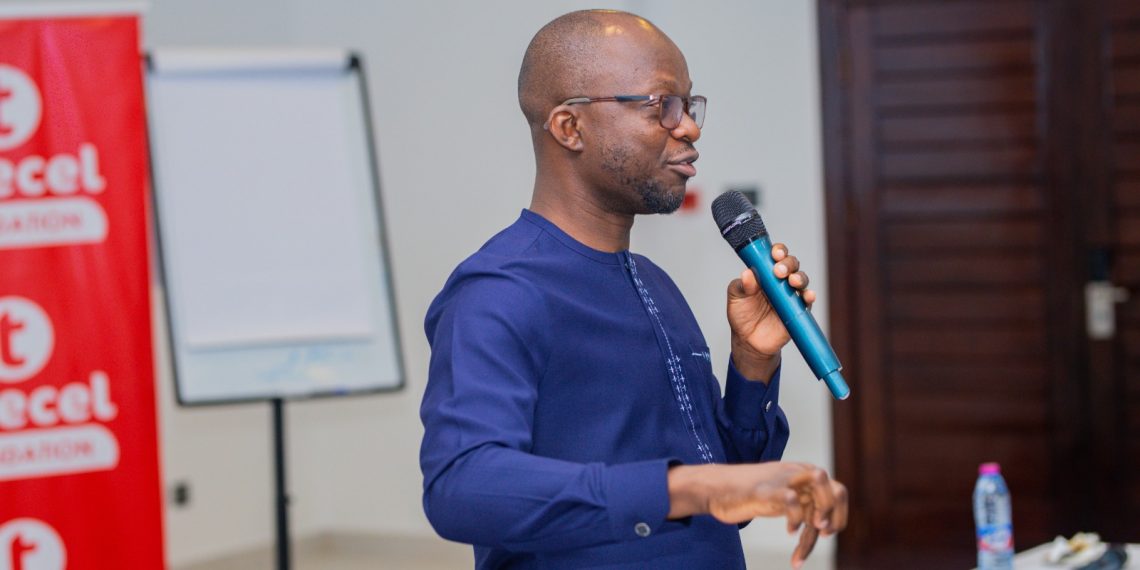
The regulator granted the operator all three of the lots it applied for in the band. In response, Telecel external affairs director Komla Buami said the additional spectrum marks a significant step toward commercial 5G deployment. He described it as a move that strengthens network capacity, improves service quality, and drives growth across Ghana's digital economy.
Buami added that the spectrum award aligns with the communications authority's ambition to accelerate 5G deployment in the country and foster efficient industry-wide usage.
The final price Telecel paid for the new licences was not made public. However, the NCA had previously set a minimum price of $10 million for each of the five licences offered in the 2.3 GHz band. Bids were received for only four of those lots, with Goal Telecom also applying for one block.
Following the award, Telecel plans to roll out 5G service on its own network by December.
Telecel Ghana is jointly owned by the Telecel Group, which holds a 70% majority stake, and the Government of Ghana, which retains a 30% minority shareholding.
The acceleration of 5G spectrum awards comes amid the country's goal of achieving 70% 5G population coverage by 2027, the year the West African nation clocks 70.
Previously, Next Gen InfraCo (NGIC) held exclusive rights to build and deploy a 5G network in Ghana. That licence was revoked after NGIC fell short of its deployment requirements, completing 16 of the 50 sites required in Accra and Kumasi.
As 5G services in Ghana are conditioned to be offered through a wholesale, neutral network intended for multiple providers, NGIC's 4G/5G infrastructure was meant to serve as an open door for several telcos in the country.
While MTN Group and Telecel both bid for the 5G licences, it has yet to be determined whether MTN has been granted a licence. Telecel's spectrum acquisition now cements the presence of independent 5G ownership for the first time in Ghana, a departure from the wholesale model under which operators were expected to rely on NGIC's shared infrastructure. With Telecel targeting a December launch and MTN's application still undecided, those two developments are the next markers to watch as Ghana works toward its 2027 coverage goal.

