TCN accuses Ikeja Electric of misleading customers over the cause of Lagos power outages
Key Takeaways
- •TCN accused Ikeja Electric of falsely attributing the November 3-4 Lagos outages to the national grid in a November 5 announcement, saying load shedding from low generation was the actual cause.
- •TCN's published records for November 1-2 show 68% of Ikeja Electric's outages stemmed from load shedding caused by low generation, 26% from Ikeja Electric's non-compliance with load allocations or its own network faults, and 6% from TCN's planned maintenance.
- •Of the 46 outages on 33kV feeders cited by Ikeja Electric, TCN attributed 29 to load shedding, 14 to Ikeja Electric, and three to scheduled maintenance on the Ogba-Alimosho line on November 1, stating none involved transmission equipment failures.
- •NISO identified gas supply constraints limiting thermal plants and falling water levels at hydroelectric plants as the main causes of the decline in power generation.
- •Some premium customers continue to receive fewer than the 20 hours of supply they were promised while the conflicting explanations remain unresolved.
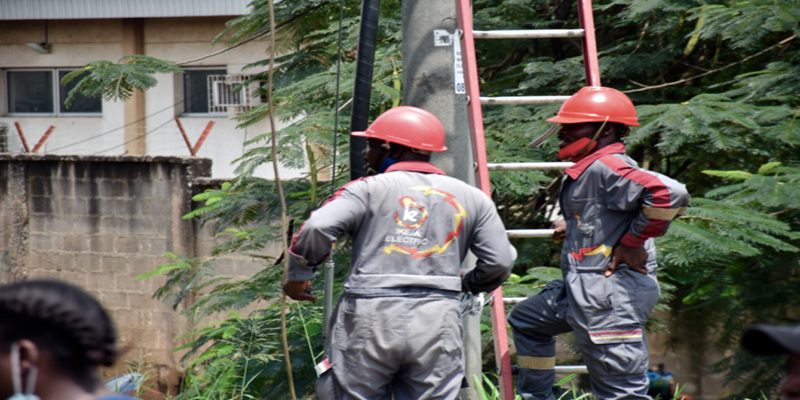
The Transmission Company of Nigeria (TCN) has pushed back against claims by Ikeja Electric Distribution Company over recent power outages in parts of Lagos, accusing the utility of misleading customers by blaming the disruptions on the national grid.
In a statement posted on X, TCN said an announcement by Ikeja Electric on November 5 falsely attributed the outages of November 3 and 4 to the transmission company. According to TCN, the reduced electricity supply stems from lower power generation, which has forced load shedding, rather than from any fault in the transmission network itself. The clash reflects how responsibility for supply is divided across Nigeria's electricity chain: power plants generate the electricity, TCN carries it over the transmission grid, and distribution companies such as Ikeja Electric deliver it to homes and businesses — meaning an outage can originate at any layer of that chain.
The dispute follows an apology issued by Ikeja Electric after supply fell below the minimum requirement of 20 hours on November 3 and 4. The company had earlier attributed the shortfall to lower allocations from the national grid, an explanation it set out in Persistent Lagos power outages: Ikeja Electric blames reduced grid allocation.
To substantiate its position, TCN published records covering the outages that affected Ikeja Electric on November 1 and 2. According to those figures, 68% of the outages resulted from load shedding triggered by low electricity generation. Another 26% stemmed from Ikeja Electric's failure to comply with load allocations set by the National Control Centre, or from problems within its own distribution network such as faults and maintenance. The remaining 6% were linked to TCN's planned maintenance or switching operations. The transmission company stated that none of the outages was caused by equipment failures on its transmission network.
TCN also addressed the 46 outages on 33kV feeders cited by Ikeja Electric. Of these, 29 were attributable to load shedding linked to low generation, while 14 were the responsibility of Ikeja Electric — including nine cases of non-compliance with load allocations and five instances of faults or trips in its network. The remaining three outages resulted from scheduled TCN maintenance on the Ogba–Alimosho line on November 1.
The transmission company singled out the Rack Centre feeder as a specific example: a cable fault on Ikeja Electric's network caused an outage on November 2, and the fault was repaired by Ikeja Electric's own team. TCN noted that its figures cover only November 1 and 2, and not November 3 and 4 — the period covered by Ikeja Electric's apology.
TCN also cited a statement issued on November 5 by the Nigerian Independent System Operator (NISO), which identified gas supply constraints and falling water levels at hydroelectric plants as the main causes of the decline in generation. Limited gas availability has prevented some thermal power stations from running at full capacity, while lower reservoir levels have reduced hydropower output. The resulting deficit means less power is available to distribution companies, producing shorter supply hours and more frequent outages.
Under the Electricity Act 2023, NISO holds key responsibilities related to managing electricity generation and transmission. TCN emphasized that distribution companies should rely on accurate information from NISO when discussing power supply issues, and urged them to stop making what it described as baseless claims about the causes of power shortages. The company stressed that its role is to transmit the electricity it receives, not to generate it.
For customers, the dispute does little to change conditions on the ground: some premium customers continue to receive fewer than the 20 hours of supply they were promised. As the transmission and distribution companies offer conflicting explanations, consumers are left to weigh competing accounts of the outages while ongoing generation problems continue to affect electricity supply. Which account holds up matters beyond the exchange of statements: it points to where the fix lies — in generation inputs such as gas and water, in transmission operations, or in distribution-level maintenance and compliance. With NISO identifying gas supply and reservoir levels as the main constraints, developments on gas deliveries and water levels are the factors to watch as the outages continue.
Related: Power shortages, broadband costs, funding gaps threaten Nigeria's digital economy, experts say

