Tausug Blacksmith in Zamboanga Keeps Centuries-Old Blade-Making Tradition Alive
Key Takeaways
- •Traditional Tausug swords such as the kris, barung, and kampilan date back to the 1500s and were used in conflicts against Spanish, American, and Japanese forces, including the Moro Rebellion of 1899–1913.
- •Madz Kamsa has been forging blades since 2000 and runs a family workshop in Zamboanga with his father, who taught him the craft, and three siblings.
- •Each sword takes about 20 days to complete, with 15 days spent carving the handle and scabbard from woods like banati, narra, or mahogany and five days devoted to the blade itself.
- •Tausug blacksmiths have become scarce as many have shifted to other occupations, while the Philippines honors traditional craftsmanship through the National Living Treasures Award and the NCCA's intangible cultural heritage inventory.
- •The Kamsa family sells blades — including kris, barung, sibat spears, and the bangkong — primarily on Facebook to Filipino and overseas customers, and the youngest sibling has expressed interest in the trade.
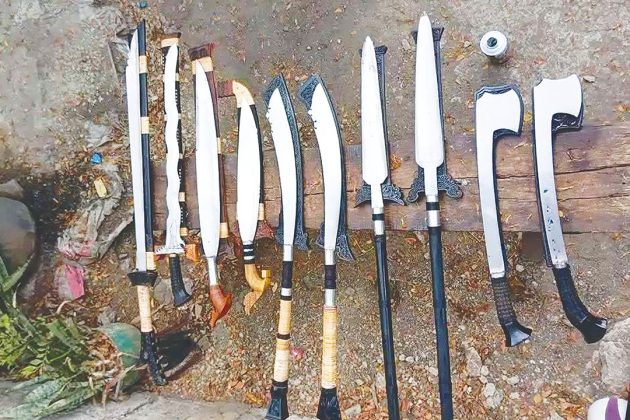
The Tausug people of Mindanao carry a rich heritage of traditional blades, with swords long handcrafted by skilled artisans. Among the best known are the kris, with its distinctive wavy blade; the barung, a leaf-shaped single-edged sword; and the kampilan, a long blade that broadens near the tip.
For Madz Kamsa, a Zamboanga-based Tausug blacksmith, these traditional Moro swords — which trace their history back to the 1500s — embody a martial culture.
"Gamit 'yan laban Kastila, Amerikano, at Hapon (These were used to fight the Spaniards, the Americans, and the Japanese)," he told BusinessWorld in an interview conducted via Messenger.
That martial past is part of the documented record. "Moro" is the collective name for the Muslim peoples of Mindanao and Sulu — the Tausug among them — and their homeland around the Sulu archipelago was the seat of a sultanate, established in the 15th century, that Spain never fully subdued despite repeated military campaigns. Under American colonial rule, Moro fighters wielding blades such as the kris and barung sustained resistance through the Moro Rebellion of 1899–1913.
Mr. Kamsa has been forging blades since 2000, drawing on knowledge passed down through his family. He sells his work primarily on Facebook, where he notes that both Filipinos and foreigners express interest. His pride in the craft is evident in his posts, which document each blade as a work in progress, from its rough early state to the finished product.
One sword usually takes 20 days to make, he said, with 15 days spent on the handle and scabbard and five days on the blade itself. Banati, narra, or mahogany are typically used for the wooden hilts and scabbards, which are carved with intricate designs ranging from the curved beak of a cockatoo to serpentine dragon patterns. Swirling leaf or wave motifs on the wood symbolize life and energy.
Asked what the various swords are used for, Mr. Kamsa's answer was simple: to cut meat, wood, bamboo, and — back in the day, of course — people. On social media, Manila-based Filipinos as well as overseas clients and knife enthusiasts attest to the sharpness and quality of his blades.
Tausug blacksmiths are rare nowadays, even though their craft was once part of everyday life shaped by trade and martial practice. In Sulu and across Muslim Mindanao, carrying a blade traditionally signified status and authority.
"Konti na lang kami kasi 'yong iba may ibang trabaho na (There are only a few of us now because others pursue other jobs)," Mr. Kamsa said, adding that the blacksmiths who remain in the profession are those who did not finish school.
Forging a sword, he explained, requires precision and patience. His team of artisans consists of himself, his three siblings, and his father, who taught them the craft.
These days, the family takes requests for a wide variety of weapons. Aside from the usual kris and barung, they receive orders for long spears known as the sibat, and the bangkong, a short slashing weapon historically used by Moros.
"Kung may order, kaya naman kasi nagawa na namin lahat 'yan (If there's an order, we can do it because we've made them all before)," he said with pride.
While there is no official count of active Tausug blacksmiths in the Philippines, the country does have formal instruments for honoring traditional craftsmanship: the Gawad sa Manlilikha ng Bayan (National Living Treasures Award), created by Republic Act No. 7355 in 1992, recognizes master practitioners of traditional arts ranging from epic chanting and weaving to metalwork, and the National Commission for Culture and the Arts documents traditional crafts in its national inventory of intangible cultural heritage under the National Cultural Heritage Act of 2009. For now, the family-based tradition continues to be handed down. The youngest of the siblings, 22 years old, has shown an interest in the craft.
For the Kamsas, blade-making is more than a source of livelihood — it is also an opportunity to strengthen the foundation of cultural identity for future generations.
More information on the swords can be found on Madz Kamsa's Facebook page. — Brontë H. Lacsamana

