Tanzania Moves to License Digital Asset Service Providers Ahead of 2028 AML Assessment
Key Takeaways
- •Tanzania's licensing framework for digital asset service providers is built on three pillars: formal authorization, enforced operational and compliance standards, and consumer protection.
- •The initiative is timed to Tanzania's 2028 anti-money laundering assessment, conducted against FATF standards through the regional body ESAAMLG.
- •FATF Recommendation 15, revised in 2018, requires jurisdictions to license or register virtual asset service providers and apply AML/CFT obligations, with non-compliant countries facing possible grey-listing and closer scrutiny from international financial institutions.
- •Tanzania's regulatory stance has evolved from the Bank of Tanzania's 2019 warning that cryptocurrencies were not legal tender, to President Samia Suluhu Hassan's 2023 call for the central bank to prepare, to the Governor's July 2026 statement that crypto and stablecoin regulations were being finalized.
- •The next milestones to watch are the formal publication of draft rules by Tanzanian authorities and the 2028 AML assessment, which will demonstrate how the framework is implemented in practice.
Tanzania is moving toward a formal licensing regime for digital asset service providers as the country prepares for an anti-money laundering (AML) assessment expected in 2028, according to a report published by BitcoinKE (BitcoinKE).
According to the report, the framework under development rests on three pillars:
- Licensing: Requiring formal authorization for digital asset service providers.
- Operational Standards: Enforcing compliance rules across platforms.
- Consumer Protection: Safeguarding citizens who use digital asset services.
The timing of the initiative is tied to Tanzania's upcoming AML review. Countries are assessed against the standards of the Financial Action Task Force (FATF), the global standard-setter for anti-money laundering and counter-terrorist financing — in Tanzania's case through its regional body, the Eastern and Southern Africa Anti-Money Laundering Group (ESAAMLG). Under FATF Recommendation 15 — revised in 2018 to explicitly cover virtual assets and service providers dealing in them — jurisdictions are required to license or register virtual asset service providers (VASPs) and apply AML/CFT obligations to them. A licensing regime for digital assets, combined with enforced operational standards across platforms, would address those expectations directly. The stakes are concrete: the FATF can place jurisdictions with strategic deficiencies in their AML/CFT regimes under increased monitoring, commonly known as grey-listing, which subjects listed countries to closer scrutiny from international financial institutions.
Tanzania's regulatory posture toward cryptocurrencies has evolved considerably in recent years. In 2019, the Bank of Tanzania cautioned the public that cryptocurrencies were not legal tender in the country. In June 2023, President Samia Suluhu Hassan publicly urged the central bank to begin preparing for cryptocurrencies, noting that Africa should not be left behind on the technology. More recently, BitcoinKE reported in July 2026 that the Bank of Tanzania Governor said crypto and stablecoin regulations were being finalized (BitcoinKE). The trajectory — from a public caution in 2019 to a licensing framework under development — reflects a broader shift across African jurisdictions toward formal oversight of digital assets, with licensing increasingly serving as the mechanism for bringing the sector within AML/CFT rules.
The next markers to watch are the formal publication of draft rules by Tanzanian authorities and the country's 2028 AML assessment, which will show how the framework is implemented in practice.
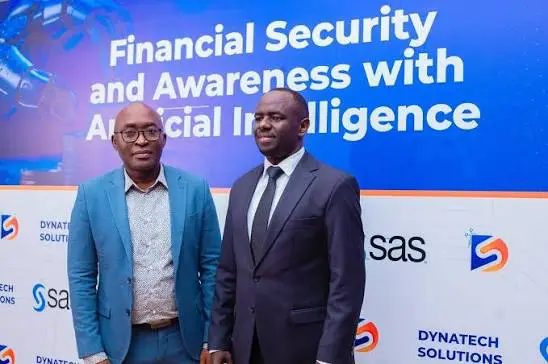
The publication's coverage of Tanzania's AML preparations is illustrated by an anti-money laundering workshop in Morogoro, Tanzania, featuring FIU Commissioner Majaba Magana.
The original report is available at: https://bitcoinke.io/2026/11/tanzania-moves-to-license-crypto-ahead-of-2028-aml-assessment/

