Taiwan Prepares Emergency Short-Selling Curbs as TAIEX Suffers Worst Week Since 2001
Key Takeaways
- •Taiwan will impose emergency short-selling curbs starting Monday, cutting the intraday short-sale cap for borrowed shares from 30% to 3% of a stock's 30-day average daily volume and raising the minimum margin requirement from 90% to 130%.
- •The TAIEX posted a record intraday point drop of 3,737.67 points, or 9%, on Friday, falling below 40,000 to touch 37,837.05 and entering bear-market territory during its worst week since 2001.
- •TSMC, the world's largest contract chipmaker and the TAIEX's dominant component, saw its Taiwan-traded shares fall 4.46% to NT$2,140 on Friday after a 10.78% decline in its U.S.-listed shares on Thursday.
- •Taiwan has signaled readiness to deploy a NT$15 billion support fund, though the announcement did not specify a deployment timetable or the conditions for its use.
- •The selloff in Taiwanese equities followed a broader decline in AI-related stocks that spread from Wall Street into Asian markets.
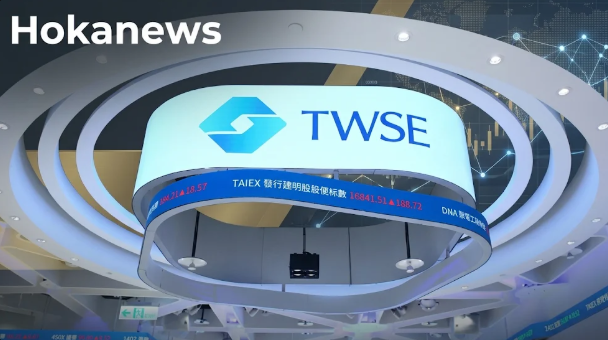
Taiwan is preparing emergency measures to restrict short selling and has signaled its readiness to deploy a NT$15 billion support fund after the benchmark TAIEX index recorded its worst week since 2001. The response follows a sharp market selloff that pushed the index into bear-market territory and dragged down shares of Taiwan Semiconductor Manufacturing Co. (TSMC).
According to information shared by Coin Bureau on X, the emergency short-selling restrictions will take effect on Monday. Taiwan plans to reduce the intraday short-sale limit for borrowed shares and increase the minimum margin requirement, tightening the conditions under which investors can bet against stocks.
TAIEX Posts Record Intraday Drop
The TAIEX, a market capitalization-weighted benchmark dominated by TSMC, plunged 3,737.67 points, or 9%, at its lowest point of the session on Friday. The decline marked a record point drop during a trading session and reflected the scale of selling pressure across the Taiwanese market.
The index fell below the 40,000 level before touching 37,837.05, moving into bear-market territory — a threshold commonly defined as a decline of 20% or more from a recent peak. It also recorded its fourth-largest closing point loss, adding to a week of heavy declines that Coin Bureau described as the market's worst since 2001.
The deterioration in Taiwan followed a broader selloff in artificial intelligence-related stocks, with pressure spreading from Wall Street into Asian markets. The decline placed Taiwan's equity benchmark among the major markets affected by the wider AI-driven downturn.
Taiwan Tightens Short-Selling Rules
Under the emergency measures, Taiwan will lower the intraday short-sale cap for borrowed shares from 30% to 3% of a stock's 30-day average daily volume. The change represents a substantial reduction in the amount of borrowed stock that can be sold short during a trading session. Curbs of this kind are a conventional emergency tool for market regulators: by limiting investors' ability to sell borrowed shares in anticipation of lower prices, they aim to dampen downward pressure during periods of acute stress.
Authorities will also raise the minimum margin requirement from 90% to 130%, increasing the collateral investors must maintain for the relevant transactions.
The restrictions are scheduled to begin on Monday. Taiwan has also indicated that it stands ready to deploy the NT$15 billion fund, although the announcement does not specify the fund's deployment timetable or the precise conditions under which it would be used. With those details outstanding, the fund remains a signaled rather than activated backstop, and Monday's start of the new rules marks the next concrete step in the government's response.
TSMC Shares Fall as AI Selloff Reaches Taiwan
TSMC, the largest single influence on the market capitalization-weighted TAIEX and the world's largest contract chipmaker, also came under pressure. Its Taiwan-traded shares fell 4.46% to NT$2,140 on Friday, following a 10.78% decline in its U.S.-listed shares on Thursday.
The consecutive declines in TSMC's U.S.-listed and Taiwan-traded shares coincided with the broader selloff in AI-related stocks. As a leading manufacturer of the advanced chips used in AI systems, TSMC sits within the segment of the market whose shares have driven the wider downturn. With TSMC dominating the index, its share-price movement accounted for an important share of the pressure facing the benchmark.
Taken together, Taiwan's planned restrictions — cutting the borrowed-share intraday cap from 30% to 3% of 30-day average daily volume and raising the minimum margin requirement to 130% — alongside its stated readiness to deploy the NT$15 billion fund, form the government's response to the TAIEX's worst week since 2001.

