Taiwan Blocks Coinbase Kalshi Websites Over Election Betting Concerns
Key Takeaways
- •Taiwanese authorities have restricted access to the websites of Coinbase and Kalshi, citing concerns about election betting.
- •The blocks target election wagering specifically rather than representing a broad crackdown on cryptocurrency services.
- •Kalshi operates legally in the United States under Commodity Futures Trading Commission approval, but its election prediction markets are not automatically permitted under Taiwanese law.
- •Taiwan passed the Virtual Asset Service Act earlier this year, and the website blocks appear to form part of its broader effort to regulate digital assets.
- •Neither Coinbase nor Kalshi has publicly confirmed the blocks or announced a response, and the effect on existing account holders and mobile app users remains uncertain.
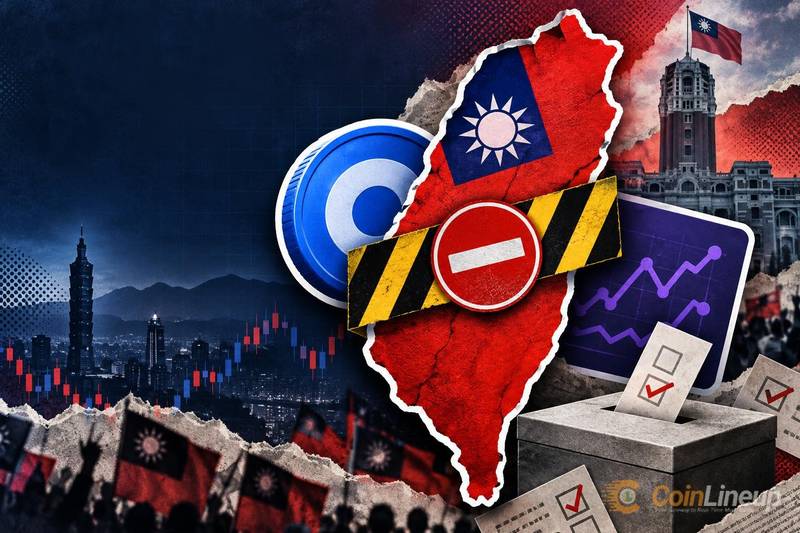
Taiwan has blocked access to the websites of Coinbase, the United States-based cryptocurrency exchange, and Kalshi, a US prediction market platform, citing concerns about election betting. The move means users in Taiwan attempting to reach either website through standard internet connections may find the pages inaccessible or fully blocked.
Why Election Betting Is at the Center of the Restriction
According to reports, Taiwanese authorities have restricted access to both platforms. Coinbase is one of the largest cryptocurrency exchanges in the world, while Kalshi operates a regulated prediction market that allows users to place contracts on the outcomes of real-world events, including elections.
The blocks are tied specifically to election-betting concerns rather than a broad crackdown on cryptocurrency services. That distinction matters: Coinbase is primarily known as a crypto trading platform, not a political betting venue, which makes its inclusion alongside Kalshi notable.
Prediction markets let users buy and sell contracts whose value depends on whether a specific event will happen. An election prediction market, for example, allows someone to take a financial position on who will win a vote, with each contract paying out according to the actual result.
Kalshi operates this type of market legally in the United States, where it holds regulatory approval from the Commodity Futures Trading Commission (CFTC), the agency that oversees US derivatives and event contracts. What is permitted in one country, however, is not automatically legal in another. Taiwan's concern appears to center on whether residents should be allowed to bet on election outcomes through foreign platforms.
The reported election-betting rationale connects to Coinbase because the company's Base network, an Ethereum layer-2 blockchain built by the exchange, and related ecosystem tools have been used to build or access prediction market applications. The exact connection cited by Taiwanese authorities has not been confirmed in detail, and no detailed regulatory order has been independently verified; the reporting reflects the stated rationale attached to the blocks.
Taiwan's Broader Push to Regulate Digital Assets
Taiwan has been actively developing its regulatory framework for digital assets. Earlier this year, the country passed the Virtual Asset Service Act, which sets rules for crypto exchanges and stablecoins operating within its jurisdiction. The website blocks appear to sit within that broader effort to assert oversight over platforms with financial exposure to Taiwanese users.
What the Blocks Could Mean for Users
For people in Taiwan who currently use Coinbase to buy, sell, or hold cryptocurrency, the immediate practical question is whether the website block affects account access. Website blocks typically prevent new users from reaching a platform but may not automatically lock existing account holders out, depending on how the restriction has been implemented at the network level.
Users who access Coinbase through its mobile application rather than a web browser may find that the service continues to function if the block targets the website domain specifically. However, that depends on details of the restriction that have not been publicly confirmed.
Kalshi users in Taiwan face a similar set of uncertainties. Because the platform is primarily web-based, a website-level block would be a more direct obstacle to using the service. Whether either platform plans to respond, appeal, or adjust access for Taiwanese users is not yet known.
Neither Coinbase nor Kalshi has publicly confirmed the blocks or announced a response at the time of writing. Taiwanese residents who rely on either platform should monitor official communications from the two companies directly, as the situation may continue to evolve as regulators and the affected companies engage further.
Taiwan is not alone in restricting access to foreign crypto and financial services platforms over regulatory concerns. Russia, for instance, plans to ban direct peer-to-peer cryptocurrency trading starting in July 2027, a step that reflects a wider pattern of governments placing limits on unregulated cross-border financial activity.
Disclaimer: This article is for informational purposes only and does not constitute financial or investment advice. Cryptocurrency and digital asset markets carry significant risk. Always do your own research before making decisions.

