Embattled Senator Susan Collins Draws Attention With Sharp Comments in Reelection Interviews
Key Takeaways
- •Susan Collins is more embattled in her reelection bid than at any previous point, facing weak approval numbers and competitive polls against Democrat Troy Jackson in a race with significant stakes for Senate control.
- •In a Politico interview, Collins said she would not bring up that the mother of Jackson's two children is his second cousin, prompting the reporter to note she had just mentioned it.
- •Collins dismissed Liz Cheney's current political influence while claiming to be neither Cheney nor Lindsey Graham in her approach to Donald Trump, a remark critics saw as risky with the independent voters she needs in Maine.
- •Collins said she was unaware of Elon Musk's super PAC supporting her, defended aspects of his DOGE effort, and declined to criticize Musk despite controversies around X and Grok.
- •A super PAC supporting Collins is spending $1.1 million on ads attacking Jackson over transgender issues, and Collins was an early signatory of an anti-trans petition after the Human Rights Campaign broke with her following her Kavanaugh vote.
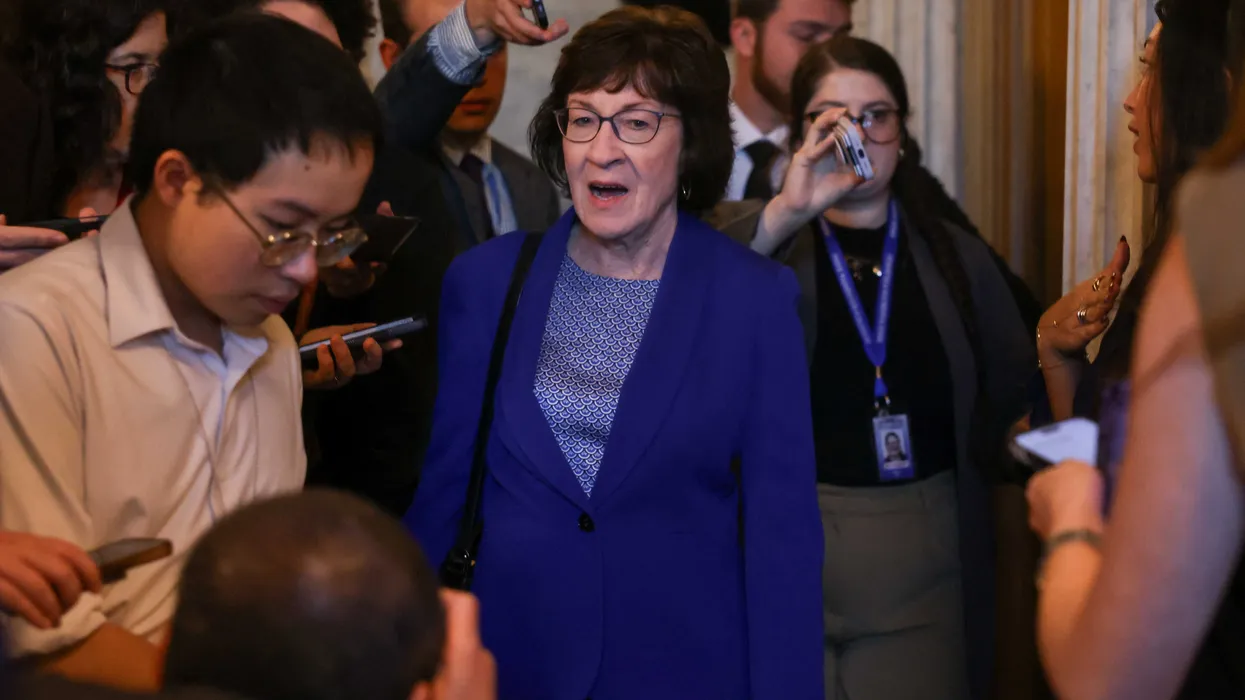
Republican Senator Susan Collins of Maine has long cultivated an image as a “moderate,” while serving as a dependable vote for Senate Republican leadership and Donald Trump when they needed her—a positioning that, as critics see it, has often meant saying one thing while doing another. Her 2018 vote to confirm Brett Kavanaugh to the Supreme Court—cast after she insisted his assurances about precedent convinced her he would not overturn Roe v. Wade—and her continued refusal to say she regrets that vote, led more Maine voters to question that image. That vote, and the subsequent overturning of Roe in 2022, became a defining flashpoint in the debate over whether Collins's assurances about judicial nominees were warranted.
Collins now finds herself more embattled in her reelection bid than at any previous point, facing weak approval numbers and competitive polls against Democrat Troy Jackson. Her expected opponent, Graham Platner, saw his candidacy collapse amid multiple controversies. The stakes extend beyond Maine: with control of the Senate hinging on a handful of competitive seats, both parties are treating the race as a priority, and outside spending—including the super PAC money described below—reflects that.
In a series of interviews this week, Collins made remarks that struck observers as unusually sharp for a senator who has typically presented herself as measured and level-headed.
In a Politico interview, when asked whether facts about Jackson's personal life were relevant to the campaign, Collins responded: “Well, I'm not going to bring up the fact that the mother of his two children is his second cousin. I don't know whether people know that or not.”
The remark drew an immediate response from Politico reporter Jonathan Martin: “I think you just mentioned it.”
The fact in question—relating to Jackson's longtime partner—had surfaced in previous campaigns. MAGA influencers and Fox figures praised Collins on social media for the comment, celebrating it as an “owning-the-libs” moment, though those are not the voters Collins needs to persuade in Maine. Critics also noted that if personal relationships become a campaign topic, Collins's own longtime lobbyist husband—whose work and business relationships have raised questions about potential conflicts involving her Senate career—has received far less scrutiny.
The interview took place at a lobster shack on the coast of Maine, with Collins eating clam chowder during the conversation. Collins has disclosed that she has essential tremor, a neurological condition that can cause involuntary shaking, and has said it does not affect her cognitive abilities or her capacity to do her job.
In another exchange, Martin compared Liz Cheney—who stood up to Donald Trump—with Lindsey Graham, who became largely subservient to Trump, and asked Collins which approach she thought was best in dealing with him. Collins claimed she was neither of them. It is true that she voted to convict Trump in his second impeachment (not the first, in which she voted to acquit), has criticized him at times, and has voted with Democrats—unlike Graham. But she has also sided with Trump and the GOP on many consequential votes when they needed her.
Collins's comments about Cheney drew particular criticism. Responding to the idea of Cheney “standing on principle,” Collins said: “What influence does she have today? Really, none. Liz Cheney, it's not just that she lost her seat, it's that she has no impact, in my view.”
The comment was directed at a politician whom many independents and Democrats have praised for her courage—voters Collins needs in a state that Hillary Clinton, Joe Biden, and Kamala Harris all won statewide in the last three presidential elections. Maine, which splits its electoral votes by congressional district and has twice elected independent senator Angus King, has historically rewarded candidates who court its large independent bloc, making dismissive remarks about a figure those voters admire a notable risk. Critics read the remark as revealing Collins's own political calculus: what good is standing on principle if you lose power? And Collins, in retaining her own power, has not consistently pushed back against Trump on issues where her opposition could have made a difference, siding with Trump and her party on many critical votes.
In another interview, Collins was asked about Elon Musk funding a super PAC supporting her election, following his DOGE effort and his “online behavior”—including the proliferation of white supremacist and extremist content on X, both from Musk personally and from extremists permitted on the platform, as well as controversies involving sexualized images generated by Grok. Collins said she was unaware of Musk's PAC efforts, then defended aspects of DOGE, saying she had spoken with Musk in the past and expressing gratitude for some of his work.
The exchange showed Collins unwilling to criticize a figure whose platform has repeatedly faced criticism for amplifying violent misogyny and racism, and whose Grok has faced investigations and condemnation for generating sexualized images, including of children—even as Musk's super PAC spends money to help elect her. That, critics note, complicates the moderate image she needs to maintain with Maine voters.
In the past, Collins might have navigated such situations with more finesse, but she previously enjoyed stronger standing, without the difficult approval numbers and national political climate she faces now. In 2020, despite a well-funded challenge, she won reelection comfortably, but the landscape since then—party realignment after January 6 and the end of Roe—has left Republicans like Collins defending territory in states their party's presidential nominees no longer carry. Taken together, the interviews depict a senator taking political risks, making sharp statements, and accepting support from—and praising aspects of the work of—a deeply controversial figure in Musk, suggesting a candidate under considerable political pressure.
On LGBTQ issues, Collins has followed a trajectory critics compare to Trump's. For years she portrayed herself as a reliable ally of the LGBTQ community. In 2014, the Human Rights Campaign endorsed Collins even though she had declined to take a position on Maine's 2009 and 2012 marriage-equality ballot measures—an endorsement criticized by many in the LGBTQ community, who believed she had not done enough to earn it. As with Trump—about whom The New York Times wrote a 2016 piece highlighting his supposedly “more accepting views on gay issues” compared with other Republicans—it helped keep the moderate image intact.
But Collins, like Trump, has since taken a stark turn on transgender rights. After she voted to confirm Kavanaugh, the Human Rights Campaign—which had endorsed her three times—broke with her and endorsed her Democratic opponent in 2020, and other LGBTQ groups lined up against her.
Last year, despite having declined to take public positions on Maine's marriage-equality ballot measures, Collins was among the early signatories of an anti-trans petition; the measure did not make the ballot. Now, a super PAC supporting Collins is spending $1.1 million on ads attacking Jackson over transgender issues, according to Axios—part of a broader pattern in which transgender issues have featured prominently in recent Republican campaign advertising nationwide.
As her reelection race tightens, the week's interviews have given voters a fuller picture of how Collins is campaigning—and of just how concerned she is about keeping her seat.
