GOP Faces Alarming Demoralization Among Core Voters Ahead of November Midterms, New AFP Action Data Reveals
Key Takeaways
- •A Koch-linked super PAC survey found that roughly one in five committed Republicans across Iowa, Ohio, North Carolina, Montana, New Hampshire, and Michigan may abstain or vote Democratic in November.
- •The 20% figure specifically excludes low-propensity conservative voters, meaning the GOP faces a separate and additional turnout problem among its casual supporter base.
- •Despite Trump's approval rating dropping to 34%, Democrats hold only a modest six-point generic ballot lead and trail their 2018 performance levels.
- •Some analysts attribute Democratic underperformance to insufficient opposition to the administration and a perceived lack of combative spirit energizing the party's base.
- •Even if Democrats capture both chambers of Congress, experts caution that victory alone would not immediately reverse the institutional damage and erosion of public trust accumulated during Trump's tenure.
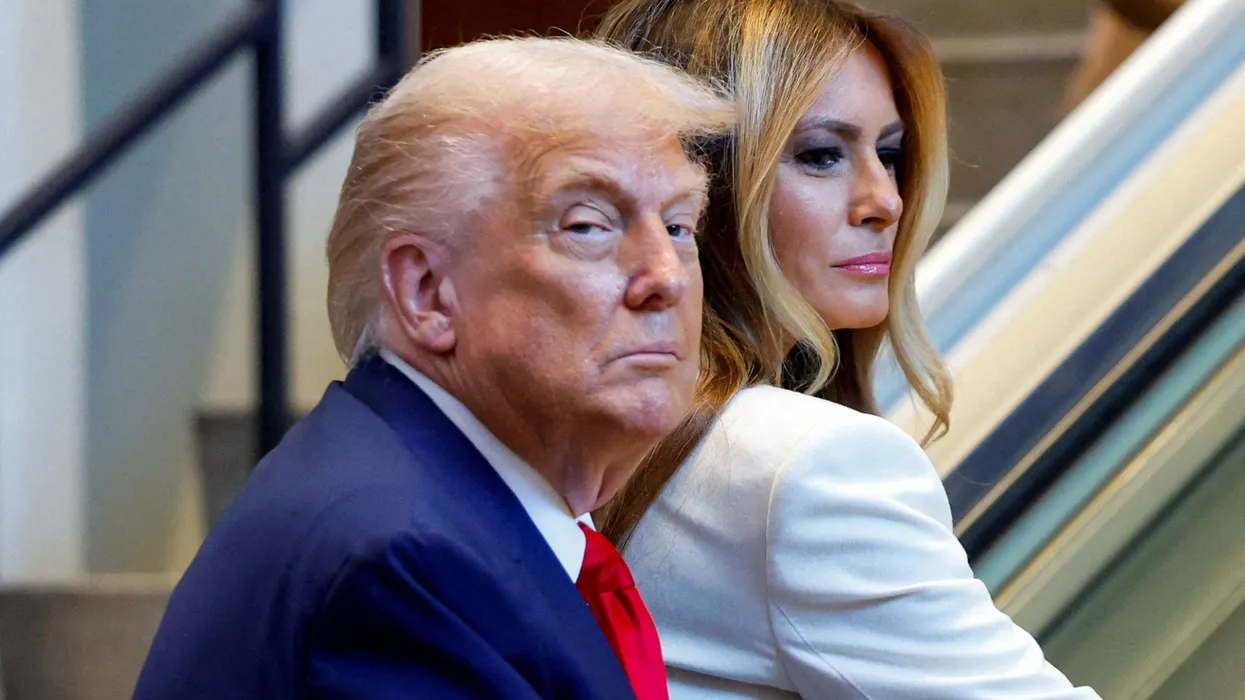
As the November congressional elections approach, the prevailing assumption has been that demoralized Republican voters—frustrated by the economy, the Iran War, and the rising cost of living—will simply stay home. Donald Trump and the GOP campaigned on fixing these issues. They haven't, and many casual voters are expected to abstain as a result.
That conventional wisdom, however, has typically focused on so-called "low-propensity voters"—individuals who may turn out for a presidential election but tend to skip midterms, primaries, and special elections. The Republican Party has been counting on its reliable, high-propensity base to offset any Democratic advantage driven by casual-voter demoralization. Historically, midterm electorates skew older, wealthier, and more partisan than presidential-year electorates—a composition that has generally favored Republicans, making any erosion among high-propensity voters especially consequential.
New survey data suggests that assumption may be in jeopardy.
According to a report published Sunday by the Washington Post, data collected by Americans for Prosperity Action—a super PAC linked to billionaire conservative donor Charles Koch that has built one of the largest conservative field operations in the country—found that a fifth of Republicans across Iowa, Ohio, North Carolina, Montana, New Hampshire, and Michigan "are either saying they may stay home or are weighing voting for Democrats." The states surveyed are home to several of the most competitive Senate races that will determine control of the upper chamber.
"This is a scary number," Nathan Nascimento, executive director of AFP Action, told the Post.
Crucially, the Post noted, that 20 percent figure "does not take into account low-propensity conservative voters," which represents a "separate issue Republicans face in November."
"We have a high-propensity base problem," Nascimento said.
In practice, it is unlikely that regular, committed GOP voters would cross party lines to support a Democrat. Low-propensity voters, who are not bound by party loyalty—though many backed Trump—might do so without hesitation. High-propensity Republicans, by contrast, are far more likely to simply stay home than vote for the opposing party. The Post report noted that during a recent door-knocking session in the Des Moines suburb of Urbandale, AFP Action canvassers encountered voters critical of the war in Iran and high inflation, "with a handful saying they planned to support Democrats in the fall."
The central question, then, is not party-switching but the depth of demoralization. And within the GOP base, that demoralization runs deep—extending beyond casual voters to loyal partisans. If the 20 percent figure holds, Democratic control of both the Senate and the House becomes a realistic possibility. That the warning originates from a Koch-aligned organization with deep roots in conservative organizing—rather than from a Democratic pollster or an academic study—lends it particular weight within Republican circles.
What is largely absent from the political discourse, however, is the corresponding effect of demoralization on Democratic voters. Democratic supporters are widely assumed to be highly motivated to oppose Republicans, reclaim power, and restore democratic norms. Yet anti-Republican sentiment is not necessarily the same as pro-Democratic enthusiasm. While most polls indicate weak support for Trump and the GOP, some fail to show a corresponding surge of support for Democrats.
Commenting on the latest Pew poll, CNN analyst Ronald Brownstein observed that the new data "puts Trump approval at a brutal 34 percent, but gives Democrats only a modest plus-six generic lead (though, like other new polls, that's a tick up.) Among the 49 percent who strongly disapprove [of Trump], it shows Democrats up just 76 percent in the generic [ballot]. They won 95 percent in 2018. Democratic weakness or false hope for Republicans?"
Brownstein elaborated, noting that the core problem "is that as Trump's approval sinks lower than during his first term, [Republicans] are remaining close in generic and Senate races by winning far more voters who disapprove of him than almost any Republican did" during Trump's first term. "Democrats are definitely weaker than 2018, but is that really sustainable?"
In other words, Republicans are performing poorly—but not as poorly as one might expect given Trump's approval ratings. Meanwhile, Democrats are not matching the strength they demonstrated ahead of the 2018 midterms. Presidential disapproval is not fully converting into Democratic approval, a dynamic that may or may not prove temporary.
Various explanations have been offered for this Democratic underperformance. Some critics argue the party has done too much to accommodate the administration and not enough to oppose it. Others contend Democrats have failed to inspire voters with transformative policy proposals. Still others point to a lack of combative spirit. Data journalist G. Elliott Morris argued recently that this attitude gap is precisely why democratic socialists are gaining ground. Primary voters, Morris said, are less concerned with ideology than with the will to fight.
A broader concern, however, is that demoralization is not confined to one party. As previously noted in connection with Trump's new tariffs, these measures function as a form of coercion—forcing voters into a dilemma: vote Democratic and continue bearing the economic burden of the tariffs, or vote Republican and alleviate that burden while effectively rewarding the president responsible for it. Combined with other actions by the administration, the tariffs place voters in a no-win situation. If voters conclude that no good options exist, hope itself may erode—with potentially profound consequences for democratic participation.
Insufficient attention is being paid to the reality that demoralization is becoming pervasive across the electorate, to the point where it has become nearly invisible as a political phenomenon. Trump's second term has been characterized by a sustained series of punitive measures that some observers view as retribution for his 2020 defeat. While many of his actions have drawn accusations of criminality, numerous democratic institutions that typically serve as checks on executive power have been perceived as yielding to that impunity.
In response to the question of whether Republicans can count on continued Democratic weakness through Election Day, Brian Rosenwald, a media historian at the University of Pennsylvania, pushed back. However weak Democrats may appear at present, he argued, the picture is misleading.
https://x.com/brianros1/status/2080352020150513747?s=20
"You're seeing too many Democrats running competitively in very red places for the better generic ballot numbers for the GOP to hold (and we got four awful generic ballot numbers for them in the last 24 hours)," Rosenwald said. One of those polls was conducted by Emerson, as discussed previously.
Even if Democrats were to capture both chambers of Congress, however, victory alone would not immediately reverse the institutional damage wrought during Trump's tenure. The erosion of public trust has been extensive, and a Democratic win should not be assumed equivalent to the restoration of liberal democratic norms. Unless rebuilding public faith becomes a top-tier priority, any electoral success the party achieves may prove short-lived—and, by raising expectations it cannot meet, potentially counterproductive.

