Supreme Court Faces Friday Deadline in Legal Fight Over Trump's White House Ballroom
Key Takeaways
- •Legal opponents contend President Trump lacks the authority to build the 90,000-square-foot White House ballroom without Congress's full consent, framing the dispute as a test of which branch controls projects of this kind.
- •Article I gives Congress the power of the purse, barring Treasury withdrawals without an appropriation, and the Truman-era White House reconstruction completed in 1952 was authorized and funded by lawmakers.
- •A federal judge ordered construction stopped in April, but an appeals court twice permitted work to continue, most recently granting a two-week reprieve that expires at midnight Friday pending Supreme Court action.
- •The White House says the ballroom is 65 percent complete, with a large crew working 20 hours a day, seven days a week on a project in which Trump is extremely involved.
- •The case has reached the Supreme Court as an emergency application handled on a compressed schedule, often without full briefing or oral argument, so the outcome may turn on hours rather than months.
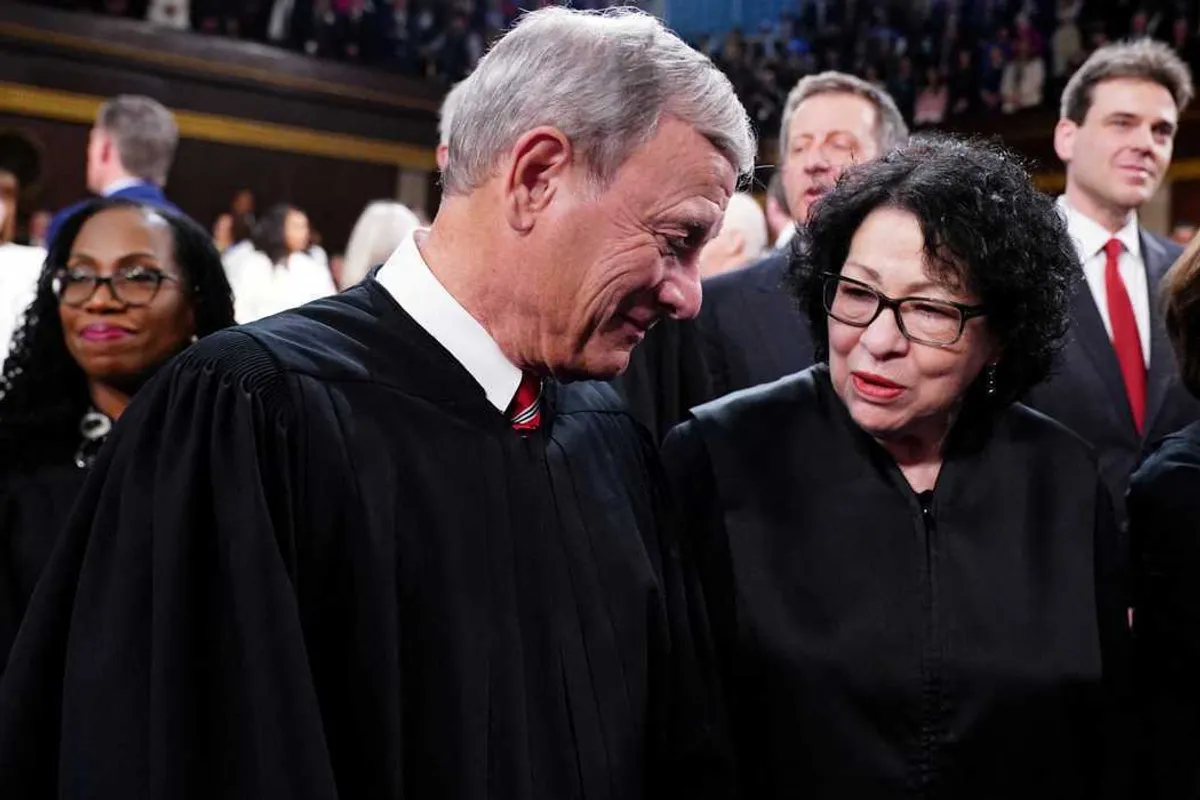
President Donald Trump's proposed White House ballroom is a centerpiece of his broader plan for extensive makeovers and renovations in and around Washington, D.C. But the president's legal opponents contend that he lacks the authority to build the ballroom without the full consent of Congress — that he cannot act unilaterally on the matter. As Wall Street Journal columnist Damion Paletta reports, the dispute has placed the U.S. Supreme Court — one-third of whose justices were appointed by Trump — in a difficult position.
The constitutional backdrop gives the standoff its weight. Congress holds the power of the purse under Article I, which bars money from being drawn from the Treasury without an appropriation, and White House work of comparable scale has historically run through lawmakers — the Truman-era reconstruction of the executive mansion, completed in 1952, was authorized and funded by Congress. The challengers' demand for Congress's full consent therefore reaches beyond a single building to the basic question of which branch controls undertakings of this kind.
"If the Supreme Court doesn't rule by the end of Friday," Paletta writes in his WSJ column, "construction officials could be forced to halt the building of President Trump's 90,000 square-foot White House ballroom. That's because a two-week reprieve issued by an appeals court expires at midnight. We are nearly in uncharted waters now, all over a new building that will have chandeliers, bulletproof glass, a military hospital and a 'drone port.'"
Disputes that reach the court at this stage typically arrive as emergency applications, handled on compressed schedules and often without full briefing or oral argument — one reason the outcome may turn on a matter of hours rather than months.
The ballroom fight, Paletta notes, "has emerged as one of the most fascinating tests of the power struggle between the executive and judicial branches this year."
"The White House is moving quickly," he observes. "The legal system can't keep up. And thus, the ballroom is nearly done despite several judges telling the White House to stop. A federal judge in April ordered the White House to stop construction of the ballroom, but an appeals court allowed the construction to continue while it considered the case. That court, earlier this month — again — ordered the construction to be halted, but — again — allowed the construction to continue for two weeks so that the White House could appeal the matter to the Supreme Court."
"All the while, construction has only picked up speed," Paletta continues. "The White House most recently said construction was 65 percent done and that a huge crew was working 20 hours a day, seven days a week on the project, which Trump is extremely involved in."
According to Paletta, the burning question now before the high court is: "What is the Supreme Court to do?"
"Tell them to stop a building that is so far along, and just leave it as is?" Paletta writes. "Knock it down? But if they allow it to be completed because so much work is under way anyway, does that incentivize this administration, and future ones, to outpace a slower moving legal system with any range of projects, both construction or policy?"
Source: Alternet
