Supreme Court Rejects Mail-In Voting Restrictions, but Legal Scholar Warns the Fight Is Not Over
Key Takeaways
- •The Supreme Court's September 14 decision in USPS v. California kept new Postal Service mail-in ballot restrictions blocked through the midterm elections.
- •The unsigned, three-sentence opinion rested entirely on procedural timing, since the rules took effect on 21, weeks before the election and days before several states were set to begin mailing ballots.
- •The Court did not address whether the Postal Service may impose such restrictions at all, meaning the dispute could return in a future election cycle without the timing pressures that shaped this case.
- •California's submission to keep the injunction in place, joined by 22 states and the District of Columbia, argued that complying with the new rules before the midterms would be impossible without disenfranchising thousands of voters.
- •Claire Finkelstein contends that Justices Thomas and Alito increasingly frame legal disputes as a contest over expanding presidential power, and she cautions that the ruling is a temporary setback for the president rather than a decisive victory for voting rights.
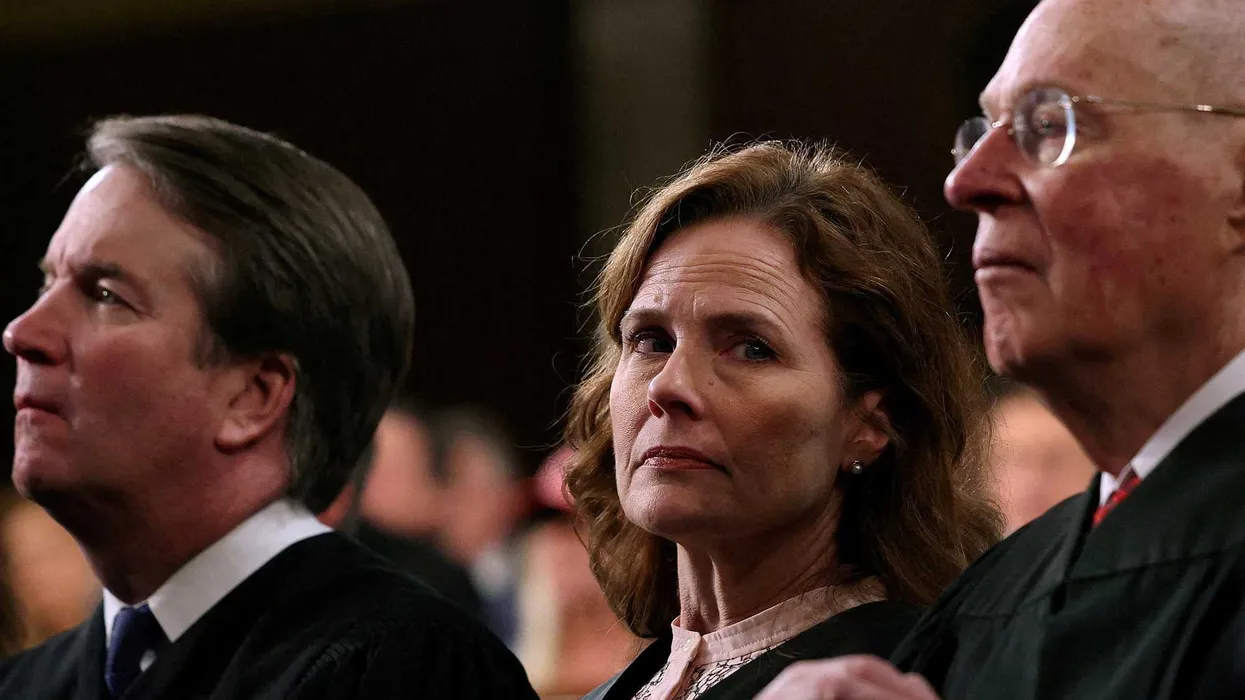
The U.S. Supreme Court on Monday, September 14, rejected President Donald Trump's push to impose new restrictions on voting by mail, as reported by NPR. The ruling drew immediate applause from Democrats, including Senate Minority Leader Chuck Schumer (D-New York). But Claire Finkelstein, a law professor at the University of Pennsylvania in Philadelphia, argues that the September 14 decision in USPS v. California leaves the most consequential questions unanswered — and that the battle over voting rights will continue.
"Last week's Supreme Court decision upholding the district court's restraining order on USPS' (the United States' Postal Service) mail-in ballot restrictions is being hailed as a victory for electoral integrity by politicians, political commentators and voting rights advocates alike," Finkelstein writes in an op-ed for The Guardian. "The senator Chuck Schumer, for example, called the decision 'one of the most important cases to protect voting rights before the Supreme Court.' But the unsigned, three-sentence opinion, with only a brief concurrence and a lengthy dissent, is no such thing. The Court based its brief opinion entirely on the timing of the rollout of the new rules, which became effective on 21 August, just weeks away from the midterm elections and only days before several states were scheduled to begin mailing out their ballots."
In other words, the court's order turned solely on procedural timing, leaving the underlying dispute over the Postal Service's authority untouched. The practical effect is that the restrictions remain blocked through the midterm elections, with several states proceeding on the mailing schedules they had already set. And because the Court said nothing about whether the Postal Service may impose such restrictions in the first place, Finkelstein argues, the same fight could return in a future election cycle without the calendar crunch that decided this one.
Finkelstein continues, "California's submission to the Court, joined by 22 states and the District of Columbia, asking the Court to leave the injunction against the rule change in place, made clear that compliance with the rules in advance of the midterms would not only be difficult — it would be impossible without disenfranchising thousands of voters. And that, of course, is the point."
According to Finkelstein, the "court fight" over voting "does not address whether USPS has a right to burden mail-in voting to this degree in the first place." The Penn law professor also observes that Justices Clarence Thomas and Samuel Alito "increasingly divide up the landscape as a struggle between presidential power on the one hand versus anything that might infringe on that power on the other."
"Whether the issue is the president's right to regulate the mail; his right to remove heads of agencies, including supposedly independent agencies; his right to claim executive privilege over communications with advisers; or even his right to commit crimes with impunity through the vehicle of his official duties, Alito and Thomas, joined frequently by other members of the Court's conservative majority, have increasingly allowed their jurisprudence to be held prisoner by the drive to expand presidential authority," Finkelstein writes. "Defenders of voting rights must not relax. While USPS v. California is a temporary political setback for the president and his fellow Republicans, it is not yet a home run for democracy."

