The 'False Mythology' That Gave the Supreme Court Its Sweeping Power
Key Takeaways
- •The U.S. Constitution establishes the Supreme Court in Article III but never explicitly grants it the power to strike laws or deliver final rulings on the Constitution's meaning.
- •Harvard law professors Nikolas Bowie and Daphna Renan argue that judicial supremacy is a social development built over roughly 100 years rather than a constitutional construct.
- •Before the 1857 Dred Scott v. Sandford decision invalidated the 37-year-old Missouri Compromise, the Supreme Court had struck down an act of Congress only once, in Marbury v. Madison in 1803.
- •The Dred Scott ruling, which denied citizenship to Black people, was expressly overturned by the 14th Amendment, which established citizenship for all people born on American soil.
- •The Supreme Court adopted its first formal code of conduct in November 2023, and lawmakers have introduced proposals addressing judicial ethics, term limits, and the size of the Court.
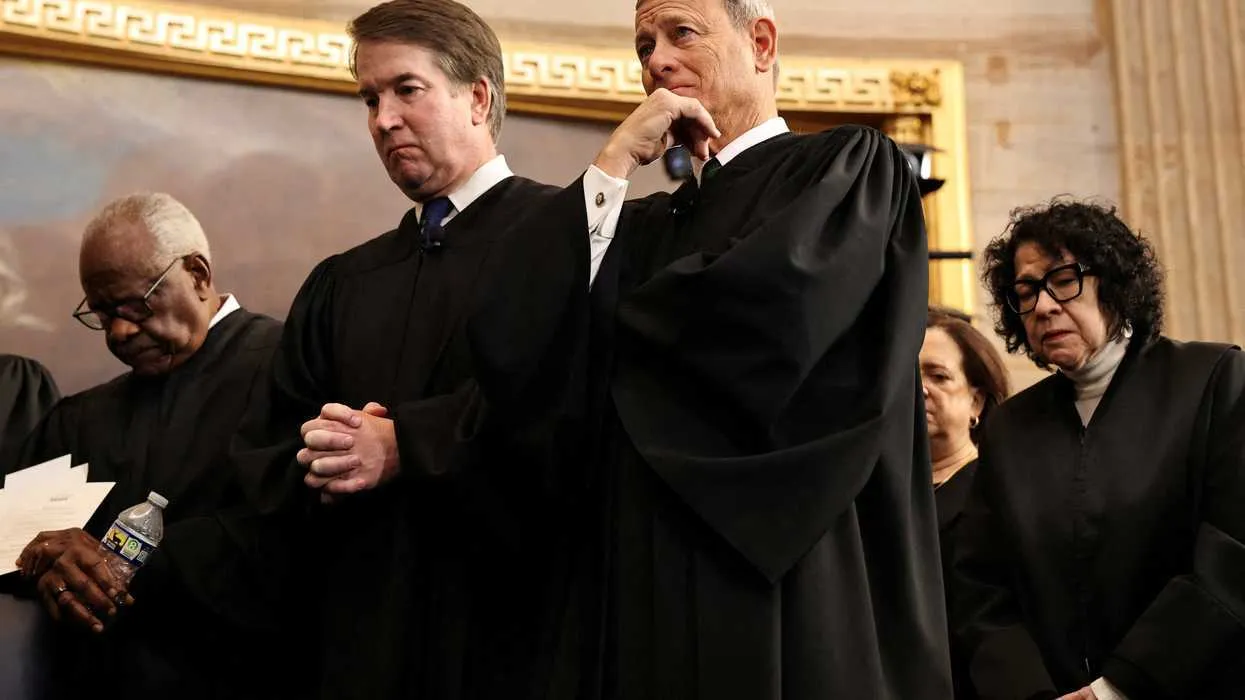
The U.S. Supreme Court is routinely described by political scholars as one of the three “co-equal branches of government” in America’s system of checks and balances. Writing in Mother Jones, journalist Pema Levy contends that the High Court’s standing rests on a “false mythology” that appears nowhere in the U.S. Constitution — one that, she argues, has allowed the Court to overreach again and again. The document does establish the Court in Article III, but it never explicitly grants it the power to strike down laws or to have the final word on the Constitution’s meaning.
“Today’s Court bolsters its authority to decide what the Constitution means for the entire country by cultivating an aura of expertise and impartiality, like oracles who hand down Constitutional truths from on high,” Levy writes. “This mythology is powered in part by a lack of transparency or accountability — mechanisms of control reserved for political actors, which they claim vociferously they are not.”
Levy is highly critical of the Roberts Court, named for Chief Justice John Roberts, the George W. Bush appointee sworn in as chief justice in 2005. She stresses, however, that the Court was overreaching long before Roberts took the bench.
“There is perhaps no Supreme Court case worse than Dred Scott v. Sandford, the 1857 decision that propelled the country toward civil war,” Levy argues. “Infamously, the Court ruled both that Black people could not be citizens and that Congress could not ban slavery in U.S. territories. The decision was expressly overturned by the 14th Amendment to the Constitution, establishing citizenship to all people born on American soil. But Dred Scott also deserves a place in history as the birth of judicial supremacy — of the Supreme Court overruling an act of Congress.”
She continues: “The Court overrules Congress so frequently today, that it’s hard to imagine that such an assertion of authority could be a scandal. But of all the shocking and intemperate parts of Dred Scott, the fact that the Court invalidated an act of Congress — the Missouri Compromise that banned slavery in certain territories — was among the most audacious.” The audacity had a historical edge: the Missouri Compromise, enacted in 1820, had stood for 37 years, and before Dred Scott the Court had struck down an act of Congress only once in its history — in Marbury v. Madison in 1803.
The foundation for Levy’s argument is Supremacy: How Rule by the Court Replaced Government by the People, a book by Harvard University law professors Nikolas Bowie and Daphna Renan. According to Levy, the book shows that the Supreme Court “has taken more power than the Framers entrusted to them.”
“Tracing the growth of the Court’s authority through the nation’s history,” Levy explains, “they describe our current system, in which the High Court can veto Congress’ will, as judicial supremacy. Rather than a constitutional construct, they show, it is a social one. Over a period of some 100 years, the American people, encouraged by leaders on both sides of the political aisle, came to believe that the Supreme Court had the final say over what the country would become. Rather than the people, through their representatives, running the country — nine unelected judges took control.”
Levy adds: “Now, the authors, it’s time to take it back … Rather than throw up their hands at the Court’s stranglehold on the country’s ability to provide health care, protect voting rights, and keep up the guardrails of democracy, they argue that the solution is remarkably simple. ‘We can rebuild a democratic government of the people in place of supreme rule by the Court’ if Americans build a movement to demand it.” The argument enters a debate already live in Washington: the Supreme Court adopted its first formal code of conduct in November 2023, and lawmakers have introduced proposals in recent Congresses touching on judicial ethics, term limits, and the size of the Court.

