Supreme Court Was Designed to Be a Political Institution, Historian Argues
Key Takeaways
- •Penn State historian Rachel Shelden, author of 'The Political Supreme Court: A Forgotten History,' contends the Supreme Court was designed to be and operated as a political institution throughout its first 100 years.
- •The expectation that justices stand above politics emerged only in the late 19th and early 20th centuries before hardening into the accepted understanding of the court.
- •Shelden noted that 19 of the court's first 51 justices had been presidential candidates, reflecting how early judges often maintained political affiliations after taking the bench.
- •Chief Justice John Marshall, who led the court from 1801 to 1835, was politically active before joining the bench and publicly defended his rulings, including through newspaper exchanges over the national bank.
- •Circuit riding, required by the Judiciary Act of 1789, obliged early justices to travel to regional courts and meet people affected by their rulings, a practice that declined as the federal judiciary expanded.
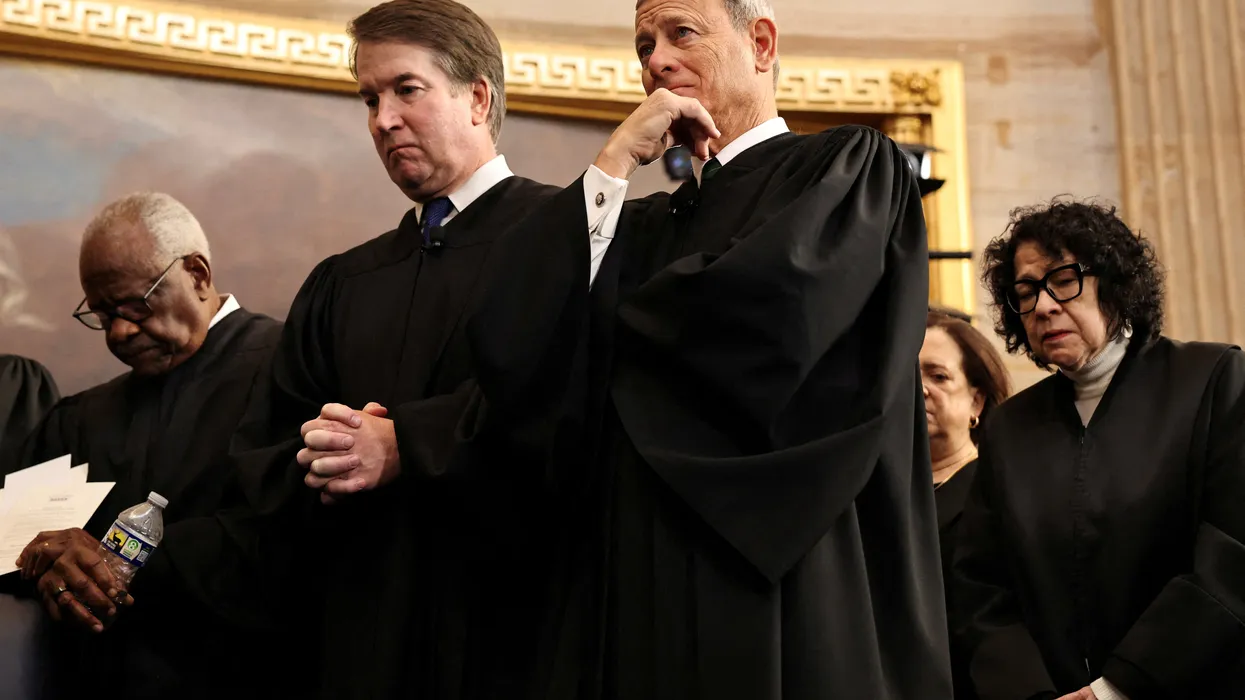
The Supreme Court's long-standing claim to stand above politics — even as it exercises sweeping authority over the meaning of the Constitution — rests on a comparatively recent vision of American government, according to a historian who says early Americans would have been entirely unsympathetic to the idea that the justices should serve as the final arbiters of constitutional interpretation.
Rachel Shelden, a historian at Penn State and the author of The Political Supreme Court: A Forgotten History, challenged the court's image as an entirely apolitical body in an interview with Legal AF, a legal affairs podcast.
"The court was designed to be a political institution, and it operated as a political institution for 100 years," Shelden said.
In her view, the notion that justices stand above politics emerged only in the late 19th and early 20th centuries, and it gradually hardened into the accepted understanding of the Supreme Court.
"But for the first 100 years, people would have been horrified by the idea that the Supreme Court got to have the ultimate authority over the Constitution," she said.
That does not mean the early court lacked the authority to decide cases or to interpret the Constitution. Rather, Shelden argued, constitutional interpretation was once embedded in a much wider political discourse — one that involved all branches of government and ordinary Americans — rather than sitting solely within the justices' scope.
Shelden also expressed skepticism that today's court can be cleanly divorced from the politics of the moment. She described the court's modern judicial identity as "a way for the court to pretend as though it is separate from politics," pointing to the current partisan divisions on the bench.
Her historical examples included Chief Justice John Marshall, who led the court from 1801 to 1835 and whose opinion in Marbury v. Madison (1803) is commonly cited as establishing the court's power of judicial review — the authority to strike down laws as inconsistent with the Constitution. Marshall was deeply active in the political arena before joining the court and, for a short time, continued serving as secretary of state after becoming chief justice. According to Shelden, Marshall also defended his judicial decisions in the public sphere, including through newspaper exchanges over the national bank — a practice that would be highly unusual for a modern justice.
"Nineteen of the first 51 justices were presidential candidates," Shelden said, noting that early judges did not necessarily abandon their political affiliations upon taking office. Those justices traveled to regional courts, presided over trials, and met directly with the people whose lives were affected by their rulings — a duty known as circuit riding, required by the Judiciary Act of 1789. That practice declined as the federal judiciary grew and justices became increasingly removed from day-to-day political life.
As she put it, "the court was political by design, but it was political in a different way from the way we think about it today."
Shelden's broader argument challenges the notion that the court's separation from politics, along with its claim to ultimate constitutional authority, were always fundamental features of the American constitutional system. She is not, however, disputing the court's right to interpret the law.

