GOP Judges' Attempts to Circumvent Supreme Court Signal Far-Right Future for US Judiciary: Analysis
Key Takeaways
- •The Supreme Court has blocked Missouri's newly drawn Republican congressional gerrymander three times in under three weeks, including an initial solo order by Justice Brett Kavanaugh.
- •After the rulings, Republican-appointed judges attempted to reinstate the maps, first through a Trump-appointed Missouri judge and later via a three-judge Republican appellate panel.
- •Millhiser argues conservative federal judges increasingly write extreme and provocative opinions to demonstrate loyalty to Trump and the MAGA movement in hopes of promotion.
- •The Fifth Circuit, whose rulings set binding precedent for federal trial courts in Texas, Louisiana, and Mississippi, is described as a source of aggressive MAGA legal theories and is frequently reversed by the Supreme Court.
- •A rumored retirement by Justice Samuel Alito could open a Supreme Court vacancy that Trump could fill through the nomination and Senate confirmation process with judges who have shown eagerness to advance a MAGA agenda.
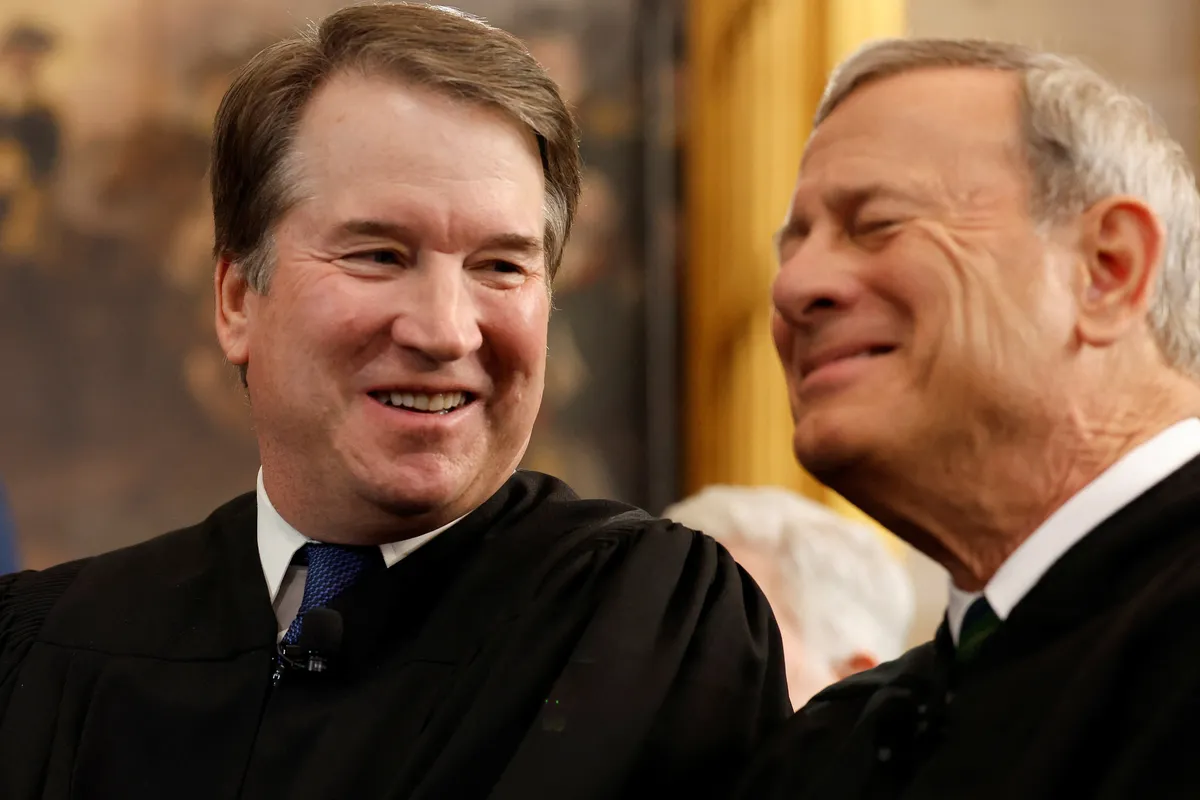
A new analysis published on Tuesday outlined what a recent Republican attempt to circumvent the courts could mean for the future of the U.S. judiciary. According to Ian Millhiser, Vox's senior Supreme Court correspondent, the conduct of Missouri judges aligned with President Donald Trump suggests that Republicans may continue to move federal courts to the far-right as conservative jurists seek promotion by pushing a MAGA-oriented agenda.
At the center of the analysis is a single legal question the Supreme Court has now answered three times in under three weeks.
"The Supreme Court ruled on Friday that Missouri may not use a newly drawn Republican gerrymander during the 2026 congressional election," Millhiser writes. "This decision should surprise no one because, about two weeks ago, the Supreme Court ruled that Missouri may not use a newly drawn Republican gerrymander during the 2026 congressional election. That second decision, moreover, followed an even earlier one by Justice Brett Kavanaugh, which that Missouri may not use a newly drawn Republican gerrymander during the 2026 congressional election. In that matter, Kavanaugh acted alone under a process that allows a single justice to dispose of a case — a process that the justices rarely invoke unless they view a case as so one-sided that there's no need to formally refer it to their colleagues. So, for those keeping track at home, that's three times that the Supreme Court needed to decide the same exact question in less than three weeks."
Millhiser attributes the unusual sequence to a handful of Republican judges who attempted to ignore the rulings. Within minutes of Kavanaugh's initial decision blocking Missouri's Republican gerrymander, a Trump-appointed judge in Missouri sought to countermand it. Then, after the full Court reaffirmed Kavanaugh's opinion, a panel of three Republican appellate judges again attempted to reinstate the new maps the Supreme Court had already twice rejected. Single-justice orders of that kind are interim measures that the full Court can revisit at any time, as it did here.
The result, according to Millhiser, is a lower federal judiciary filled with ambitious Republican judges who reach conclusions too extreme or too partisan even for the current conservative Supreme Court — and a bench stocked with potential Supreme Court nominees who have demonstrated loyalty to Trump, the MAGA movement, or the Republican Party. Federal judges hold lifetime appointments and can be removed from the bench only through impeachment, which means a lower-court ruling at odds with the Supreme Court generally stands only until a higher court steps in.
"One lower court," Millhiser writes, "the US Court of Appeals for the Fifth Circuit, now functions as a kind of think tank for MAGA legal theories that less partisan judges would scoff at in disgust. This is the same court, for example, that attempted to pull the abortion medication mifepristone from the market. It's a court that declares entire federal agencies unconstitutional. Or that orders thousands of lawfully cast ballots thrown in the trash after the Republican Party asks them to do so. The Fifth Circuit is also frequently reversed from the left by the Supreme Court."
The Fifth Circuit hears appeals from federal district courts in Texas, Louisiana, and Mississippi, so its rulings set binding precedent for trial courts across all three states.
Conservative judges have learned that promotion comes from pushing the MAGA agenda, Millhiser argues. As a result, "the lower courts are now full of judges who write extreme and often needlessly provocative opinions that seem designed to catch the eye of someone in the White House."
Should a Supreme Court vacancy open up — and it is rumored that Justice Samuel Alito may soon retire — Millhiser concludes that "Trump will have no shortage of judges who appear to have spent their judicial careers looking for opportunities to demonstrate just how eager they are to advance a MAGA agenda, even when that means moving several steps to the right of a Supreme Court dominated by conservative Republicans." Filling any such vacancy would run through the constitutional process of presidential nomination and Senate confirmation — the same route every sitting justice took to the bench.

