Supreme Court Justices Accused of 'Breaking the Law' to Serve the Billionaires Behind Their Rise
Key Takeaways
- •Legal AF podcast host Alex Aronson accused Supreme Court justices of being entangled with billionaires and delivering results for the interests that placed them on the court.
- •ProPublica's 2023 investigations into undisclosed gifts and travel intensified the judicial ethics debate, implicating Justices Clarence Thomas and Samuel Alito.
- •The Supreme Court adopted its first ethics code in November 2023, but the code contains no clear enforcement mechanism and compliance rests with each justice.
- •Senators have demanded that billionaire Paul Singer and judicial power broker Leonard Leo provide a full accounting of gifts to the justices.
- •Public confidence in the Supreme Court is near historic lows in Gallup's polling as scrutiny of judicial accountability intensifies.
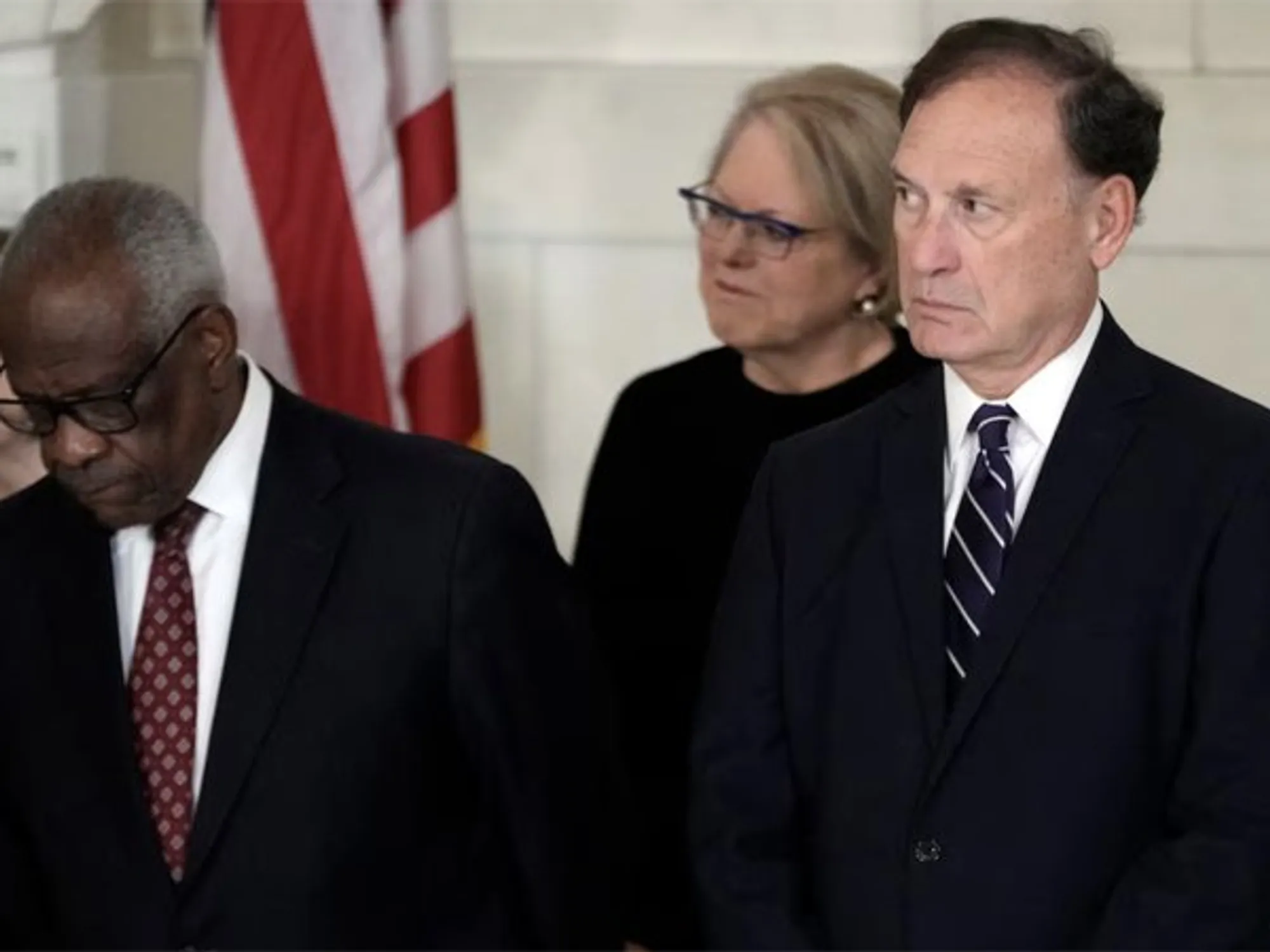
The hosts of the Legal AF podcast are raising alarms over what they describe as a corruption crisis at the Supreme Court, arguing that the justices have effectively been captured by the billionaires who financed their ascension to the bench.
On a recent episode, host Alex Aronson made the case while introducing legal scholars Nikolas Bowie and Renan — authors of the forthcoming book Supremacy. Aronson described the court as deeply conservative and compromised.
"A number of the justices have been exposed as breaking the law, entangled with billionaires, delivering results for the interests that have put them in place on this court," Aronson charged.
The accusation follows years of reporting on the justices' close ties to wealthy benefactors, much of it driven by ProPublica's 2023 investigations, which brought the issue of undisclosed gifts and travel to the center of the judicial ethics debate.
Justice Clarence Thomas has come under scrutiny for dozens of luxury trips funded by billionaire friends, and he later admitted that GOP megadonor Harlan Crow paid for a private club membership and lavish travel. Justice Samuel Alito, meanwhile, has faced ethics criticism over an undisclosed Alaska fishing trip taken on a Republican billionaire's private jet.
Lawmakers have pressed for answers, with senators demanding that billionaire Paul Singer and judicial power broker Leonard Leo provide a full accounting of gifts to the justices. Critics point out that the court adopted its own ethics code — the first in its history, announced in November 2023 — only after the revelations mounted, and that the code includes no clear mechanism for enforcement. Unlike lower federal judges, Supreme Court justices are not bound by any outside review body for ethics complaints, leaving compliance effectively to each justice's own discretion. Congressional efforts to impose enforceable ethics rules on the court have so far stalled, and the Constitution provides no straightforward mechanism, short of impeachment, for removing a sitting justice.
For Aronson and his guests, the pattern is evidence that the court is delivering outcomes for the donor class that installed it. The debate is unfolding as public confidence in the court sits near historic lows in Gallup's polling, a backdrop that has intensified scrutiny of how the justices are held accountable.
In Supremacy, Bowie and Renan argue that the greater danger lies in the sheer power the court wields, contending that a bench "entangled with billionaires" should never have been able to dominate American life in the first place. Their argument taps into a long-running academic and political argument over judicial supremacy — the idea that the court has the final say on constitutional meaning — an authority scholars have debated since at least Cooper v. Aaron in 1958.
Supreme Court Exposed Undermining Voters! by Legal AF

