Strategy Extends STRC Buyback Past $2 Billion, Adds 1,036 BTC as Bitcoin Falls Below $75,000
Key Takeaways
- •Strategy repurchased more than 1.8 million STRC preferred shares for $188.3 million between November 2 and November 8, as disclosed in a Form 8-K dated November 9, 2026.
- •Cumulative STRC buybacks have surpassed $2 billion since July 2026, about $560.3 million remains available under the program, and the shares held near their peg at $99.94 after briefly touching $100.
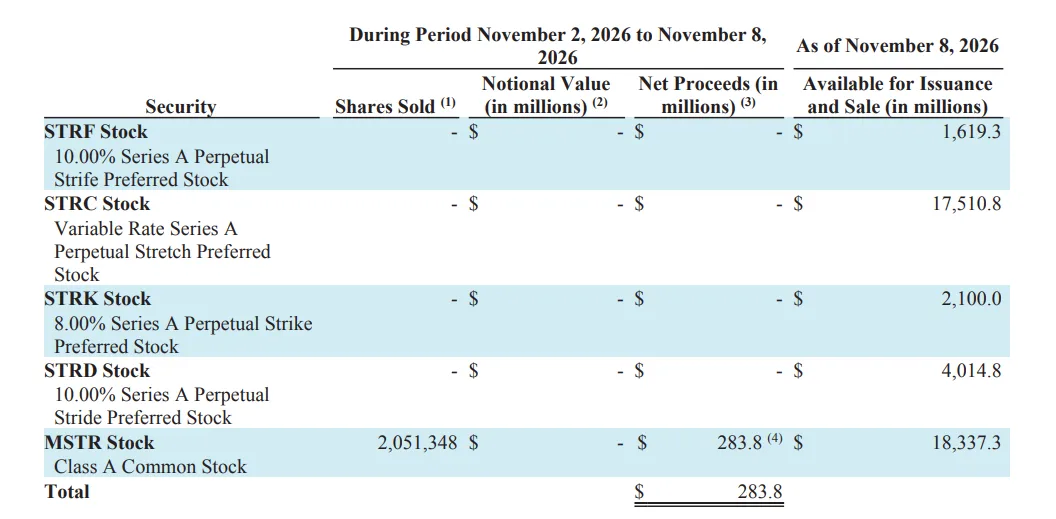
- •The company purchased 1,036 BTC for $81.9 million at an average of $79,012 per coin, financed through $283.8 million in MSTR common stock sales, with up to $18 billion still available under its ATM program.
- •Strategy's holdings reached a record 850,364 BTC, but total spending of $64.2 billion at an average price of $75,456 per coin has put the treasury in an unrealized loss position with Bitcoin below $75,000.
- •Bitcoin briefly dropped below $74,000, weekly liquidations exceeded $1 billion on multiple days, and US spot Bitcoin ETFs recorded $1.2 billion in net outflows, the highest since June.
Strategy (Nasdaq: MSTR), the bitcoin treasury company led by Michael Saylor, continued repurchasing its STRC preferred shares last week even as Bitcoin slid below key price levels and the company's own stock declined.
In a recent filing — a Form 8-K dated November 9, 2026 (PDF) — the company disclosed that it bought back more than 1.8 million STRC shares between November 2 and November 8, funding the purchases with $188.3 million from its USD Reserve.
The latest buybacks bring Strategy's cumulative STRC repurchases to more than $2 billion since July 2026, when the preferred stock crashed to around $75. The firm has since run an aggressive buyback program focused on defending the STRC peg, and the effort has so far held, with the shares trading at $99.94 after briefly rising to $100 last week. Approximately $560.3 million remains available under the STRC repurchase program. For a company that funds its Bitcoin purchases chiefly by selling its own shares, the price at which those shares and preferred instruments trade is a direct input into how much capital each new sale raises.
Strategy Adds 1,036 BTC as Bitcoin Drops Below $75,000
Strategy's accumulation was not limited to preferred shares. Over the same week, the company acquired 1,036 BTC for $81.9 million — an average of $79,012 per coin, including transaction costs. The purchase was funded with proceeds from sales of the company's common stock, MSTR.
Strategy sold $283.8 million worth of MSTR shares during the week and said it still has up to $18 billion in common stock available for issuance under its at-the-market (ATM) program. The structure — issuing common stock and using the proceeds to buy Bitcoin — is central to how Strategy finances its treasury purchases. Taken together, the remaining $18 billion of common-stock capacity and the roughly $560.3 million left in the STRC repurchase authorization outline how much declared room the company still has for both treasury purchases and peg defense.
With the latest acquisition, the company holds 850,364 BTC, its largest Bitcoin position to date and the largest Bitcoin treasury of any public company. The firm has been adding to its stash since August, when it resumed purchases after a 10-week break.
The market value of that treasury has now fallen below its cost. Strategy has spent $64.2 billion in total to acquire its Bitcoin, at an average price of $75,456 per coin. With the flagship asset trading below $75,000, the company is once again sitting on unrealized losses from its holdings — a situation it has experienced before. A move back above that $75,456 average would put the entire position back into an unrealized gain.
MSTR Down 3% Amid Bitcoin Weakness
MSTR, the common stock that fuels Strategy's Bitcoin purchases and cash reserves, fell almost 3% to $125.37 on the day.
The stock has struggled to regain momentum in recent months, declining 18% over the past 30 days and 33% over the past six months. Even so, it is down only about 3% year-to-date — a better performance than the asset it tracks. Bitcoin is down nearly 16% this year, with its recent weakness stalling the recovery.
Bitcoin briefly fell below $74,000, ending a run of seven weeks in which it held above its 50-week moving average. The asset has since recovered slightly from its daily low of $73,664, according to CoinMarketCap, but there are no clear signs of a rebound.
Selling pressure remains heavy, with liquidated positions exceeding $1 billion on multiple days over the past week. Demand from traditional investors has also softened, with US spot Bitcoin ETFs recording $1.2 billion in net outflows last week — the highest since June. ETF flows are among the most closely watched public gauges of traditional investor demand, since the funds report net creations and redemptions each trading day.
This article provides financial information, not investment advice. Stocks and cryptocurrencies carry market and liquidity risks. Readers should conduct independent research and consult qualified financial professionals before making investment decisions.
Source: The Market Periodical

