Strategy Reports Q2 2026 Net Loss Driven by Bitcoin Fair-Value Accounting, as Accumulation Accelerates
Key Takeaways
- •Strategy's Q2 2026 net loss was primarily an accounting result of marking Bitcoin holdings to fair value under ASU 2023-08 rather than a reflection of operational performance.
- •The company increased its Bitcoin holdings by 11% quarter-over-quarter, raising $8.4 billion in capital during Q2 alone, with $5.5 billion sourced through digital credit.
- •Long-term convertible debt was reduced by 18% on a net basis from $8.2 billion to $6.7 billion, while the USD reserve grew to $3.75 billion covering over 2.1 years of dividend and interest obligations.
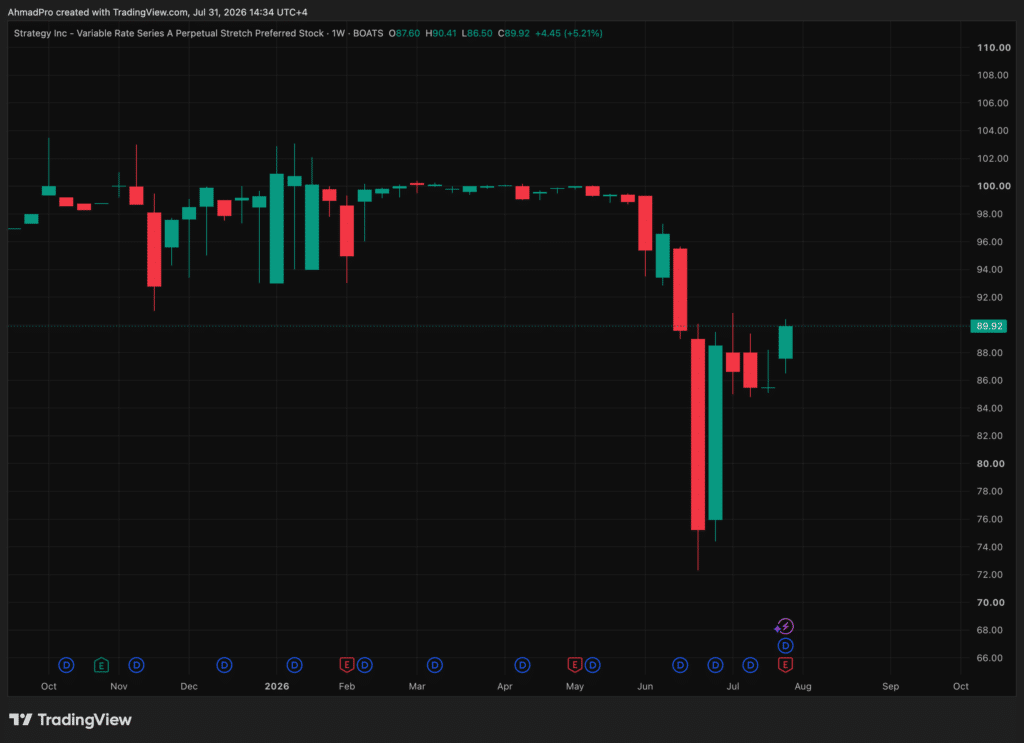
- •STRC's notional value grew from $2.8 billion to $10.5 billion over two quarters, but the instrument traded near $89.50, prompting management to launch a $1 billion buyback program to restore par value.
- •The next convertible debt put date in September 2027 represents a key milestone, with equity conversion contingent on MSTR trading above $183 at that time.
Strategy, the company formerly known as MicroStrategy, reported a net loss for Q2 2026. The headline loss is largely an accounting artifact tied to fair-value movements in its Bitcoin holdings, while the company's underlying Bitcoin accumulation strategy accelerated during the quarter. Under FASB's ASU 2023-08 fair-value accounting standard — effective for fiscal years beginning after December 2024 — companies must mark certain crypto assets to market each reporting period, meaning Bitcoin price declines flow directly to reported earnings regardless of operational performance. Strategy is the largest publicly traded corporate holder of Bitcoin, and its shares have increasingly functioned as a Bitcoin proxy for equity investors.
Balance Sheet Changes and Bitcoin Holdings
Strategy's Bitcoin holdings increased 11% quarter-over-quarter. The company reported a 25% increase in Bitcoin holdings since the beginning of 2026, having purchased 174,895 Bitcoin and sold 3,620 Bitcoin year-to-date. Bitcoin per share rose 5% quarter-over-quarter, from 201,170 satoshis to 210,824 satoshis, according to the Investing.com Canada Q2 2026 earnings call highlights.
Capital allocation during Q2 was aggressive on multiple fronts. The company raised $8.4 billion in Q2 alone — more than in any single quarter of the previous year — with $5.5 billion raised through digital credit.
Strategy announces Q2 2026 results: – Increased $BTC Holdings by 11% – Reduced Convertible Debt by 18% – Increased USD Reserve by 12% – Increased BPS by 5%
— Strategy (@Strategy) July 30, 2026
Long-term convertible debt was reduced from $8.2 billion to $6.7 billion, an 18% decrease on a net debt basis. Convertible debt — bonds that can be converted into equity at a set price — has been Strategy's primary lever for funding Bitcoin purchases without selling existing holdings. The USD reserve climbed to $3.75 billion, covering more than 2.1 years of preferred dividend and interest obligations, within the company's stated target range of 2–3 years. The company also holds approximately $18.5 billion in unrealized losses on Bitcoin, equating to a potential $5.4 billion tax benefit, according to the earnings call summary.
STRC and the Digital Credit Picture
Strategy's flagship digital credit preferred instrument, STRC, was trading near $89.50, well below its $99–$100 target range. STRC's notional value grew from $2.8 billion at the end of Q4 2025 to $10.5 billion at the end of Q2 2026. Institutional holdings of STRC grew from $1.1 billion to $3.1 billion, increasing from 22% to 29% of STRC outstanding.
Management outlined a plan to return STRC to par value, including a $1 billion buyback program — with $975 million still available — and a commitment to maintaining a strong USD reserve, with a target window ending around September 8, 2026.
Executive Chairman Michael Saylor indicated the company intends to aggressively reduce existing debt and avoid uncertainties around borrowing against Bitcoin holdings.
Key Risks for MSTR Holders
The Q2 results highlight several variables that MSTR holders may monitor in the coming quarters. Bitcoin per share, debt reduction, capital raised, and STRC dividend coverage all showed improvement during Q2, even as reported earnings reflected the impact of Bitcoin's price movements on the balance sheet.
The earnings call also flagged a potential overhang from convertible debt maturities, with the next put date in September 2027. According to the earnings call highlights, if MSTR is trading above $183 at that point, the company would equitize the converts. If not, management noted options including selling MSTR shares at a premium, selling Bitcoin, or refinancing under current convertible terms.
Management's near-term priority remains returning STRC to par value before addressing longer-dated obligations. The key variables for MSTR holders center on whether STRC stabilizes near par ahead of the September 2027 convertible put date, and whether the company's per-share Bitcoin accretion continues. Both factors are closely tied to Bitcoin's price trajectory. Strategy's recent pattern of buying into price weakness reflects management's conviction in its long-term direction.

