Strategy back in profit as Bitcoin rally pushes past $77,000
Key Takeaways
- •Strategy’s 840,447 Bitcoin holdings are now worth about $65.5 billion, putting the company more than $2 billion in profit on the position.
- •Bitcoin climbed above $77,000 and gained nearly 10% in 24 hours, reversing its recent move in the $63,000 to $65,000 range.
- •MSTR shares rose more than 11% in pre-market trading as investors treated the stock as a proxy for Bitcoin.
- •The rally followed the US Treasury’s plan to increase long-dated bond buybacks from $2 billion to $4 billion and a White House crypto meeting linked to the Clarity Act.
- •Strategy did not sell Bitcoin during the week ended August 16, marking its first pause in three weeks, and has built a $4.8 billion cash reserve.
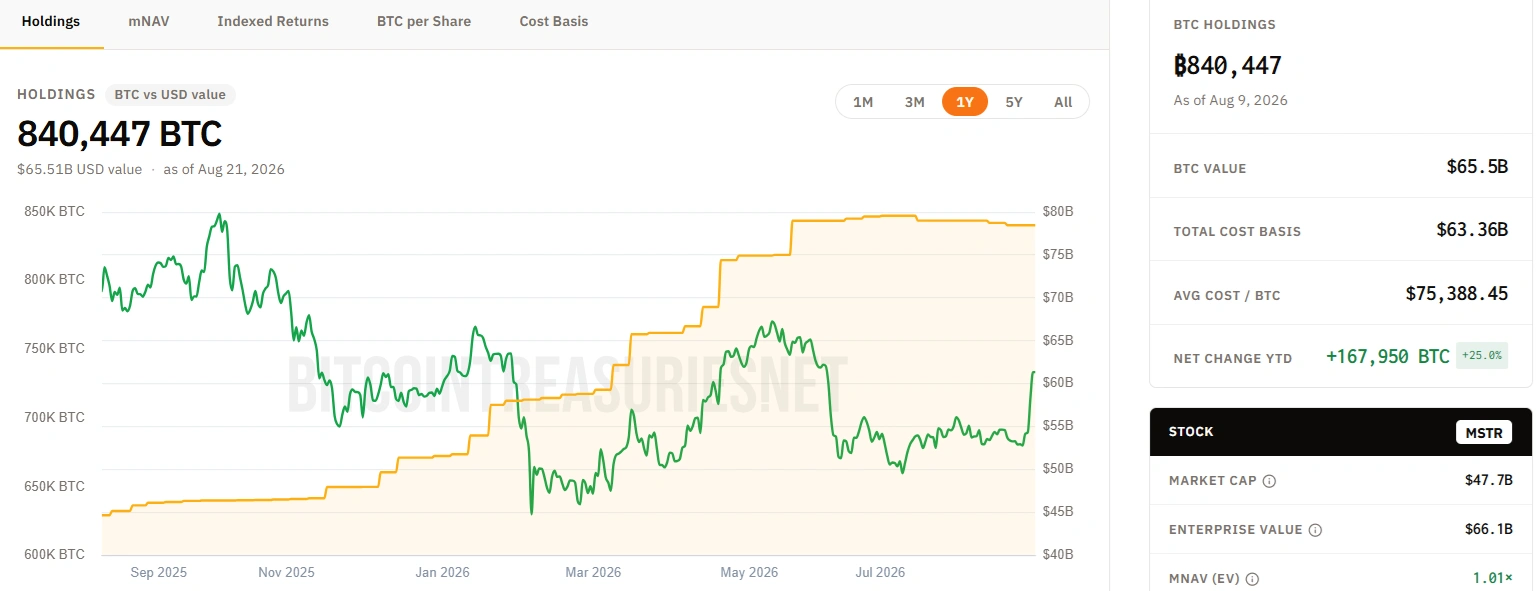
Michael Saylor's Strategy (NASDAQ: MSTR) — the software maker formerly known as MicroStrategy and the largest publicly listed corporate holder of Bitcoin — is back in profit on its Bitcoin holdings after the cryptocurrency rallied past $77,000.
The company's 840,447 BTC position, which cost $63.36 billion to build, is now valued at approximately $65.5 billion, putting Strategy more than $2 billion in the black as of this report. The firm paid an average of about $75,400 per coin to assemble the portfolio, a level Bitcoin sat below during its recent stretch in the $63,000–$65,000 range.
The rally has spilled over into the equity market. MSTR — now a Nasdaq-100 and S&P 500 constituent whose coin holdings dwarf its legacy analytics-software business — has long traded as an equity proxy for Bitcoin, and the stock gained more than 11% in pre-market trading, rising from Thursday's close of $112.339 to roughly $126 early Friday.
Two catalysts behind Bitcoin's climb
CoinMarketCap data showed Bitcoin up nearly 10% in the last 24 hours and more than 20% since it began climbing out of its $63,000–$65,000 range.
The move followed two catalysts aligning for the Bitcoin market. First, the US Treasury said it would more than double its long-dated bond buybacks, from $2 billion to $4 billion — a decision that tipped the scales toward debasement hedges such as Bitcoin as the dollar weakened. The buybacks run through the regular program Treasury uses to support liquidity in long-dated debt.
Sentiment then snowballed after President Donald Trump hosted crypto executives, digital finance stakeholders, SEC Chair Paul Atkins and CFTC Chair Mike Selig at a White House gathering tied to a push for the Clarity Act, a bill that would divide oversight of digital assets between the SEC and the CFTC.
Buyers have kept lining up since. SoSoValue counted more than $783 million in bearish positions wiped out within 24 hours, part of roughly $3 billion in total short liquidations. Short liquidations force bearish traders to buy back their positions, which can add further fuel to a rally already underway.
Strategy pauses sales and hoards cash
The rally could not have come at a better time for Strategy, after Saylor and other executives were forced to reiterate their long-term accumulation playbook amid criticism of recent selling.
The company did not sell Bitcoin during the week that ended August 16, marking the first pause in three weeks, as Cryptopolitan reported. Strategy last bought Bitcoin in June.
The scrutiny reflects Strategy's outsized role in the market it helped popularize: the company's template of funding Bitcoin purchases with successive rounds of equity, convertible debt and preferred stock has since been copied by a wave of public companies, leaving its transaction disclosures a rough gauge of corporate treasury appetite for the asset.
In the interim, the firm has defended its books through dividend payments and preferred stock buybacks while building up a $4.8 billion cash reserve.

