U.S. Strategic Petroleum Reserve Under Strain as Emergency Drawdowns Expose Aging Infrastructure
Key Takeaways
- •The SPR dropped to approximately 308 million barrels this week, its lowest level since March 1983, following cumulative withdrawals of 352 million barrels over four years.
- •More than a quarter of the reserve—estimated at 103 million barrels—is currently unavailable for drawdown due to a combination of construction and cavern outages.
- •The Department of Energy is carrying out a $1.4 billion repair plan, though the project scope was reduced to remain within budget.
- •President Trump authorized a 172-million-barrel release in March after Iran disrupted oil exports through the Strait of Hormuz, which will bring SPR levels to roughly 243 million barrels once completed.
- •Federal auditors caution that the SPR's infrastructure, comprising 60 underground salt caverns at four Gulf Coast sites, is approaching the end of its operational lifespan as emergency releases grow larger and more frequent.
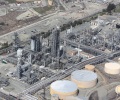
U.S. Strategic Petroleum Reserve Under Strain as Emergency Drawdowns Expose Aging Infrastructure
The U.S. Strategic Petroleum Reserve (SPR), the world's largest government-owned emergency stockpile of crude oil, is under mounting strain after massive releases tied to conflicts in the Middle East and Europe took a toll on aging infrastructure in urgent need of repair.
This week, the SPR dropped to its lowest level since March 1983. The drawdown follows the withdrawal of 352 million barrels of crude oil over four years, aimed at easing supply disruptions caused by the U.S. conflict with Iran and Russia's invasion of Ukraine.
Federal auditors warn that the reserve's capacity to respond to future emergencies is now in jeopardy. In a May report, Department of Energy officials told auditors that the sprawling network of pipelines, caverns, and storage tanks is being held together "with 'Band-Aids,' and that it is uncertain how long they will hold."
"The SPR's drawdown, distribution and fill capabilities are currently limited and are at risk going forward due to longstanding issues with aging infrastructure compounded with ongoing major construction intended to address them," the Government Accountability Office (GAO) cautioned in the same report.
Aging System Reaching End of Its Lifespan
Congress established the SPR in 1975 in response to the 1973 Arab oil embargo, creating a buffer meant to insulate the U.S. economy from sudden foreign supply shocks. As a member of the International Energy Agency, the United States is also expected to maintain strategic reserves as part of a coordinated global energy security framework. Now, auditors note, the infrastructure is approaching the end of its operational life at a moment when inventory releases are growing both larger and more frequent.
The Department of Energy is carrying out a $1.4 billion repair plan for the SPR, though the scope of the project had to be narrowed to remain within budget. Refilling the reserve has proceeded slowly, constrained by congressional appropriations and the need to coordinate purchases with market conditions — a challenge that has grown more acute as the SPR's operational limitations have become clearer.
In March, President Donald Trump ordered the release of 172 million barrels from the reserve after Iran disrupted oil exports through the Strait of Hormuz, producing the largest supply disruption on record. According to the Energy Department, government inventories declined by 3.7 million barrels last week, bringing the total to approximately 308 million barrels.
Once Trump's authorized release is fully carried out, the SPR will drop to roughly 243 million barrels, based on data from the Energy Information Administration. The emergency stockpile has an authorized storage capacity of 714 million barrels.
Significant Portion Undeployable
Federal auditors determined that more than a quarter of the SPR "was not available for drawdown due to a combination of construction outages and cavern outages." A July analysis by Rapidan Energy estimates this equates to at least 103 million barrels currently not deployable.
Despite these concerns, David Goldwyn, who served as State Department special envoy for international energy affairs under President Barack Obama, said the reserve still holds sufficient inventory to address another crisis.
"I'm not worried about the stability of the reserve or our ability to do another drawdown," Goldwyn said.
Federal law does not require a minimum operating level for the SPR, a Department of Energy spokesperson told CNBC. However, the operational floor needed "to safely manage the caverns, is around ten percent of capacity — about 70 million barrels," the spokesperson said.
How the SPR Works
The crude oil in the SPR is stored across 60 salt caverns situated thousands of feet underground at four major Gulf Coast sites. To extract the oil, water is pumped into the bottom of the caverns, displacing the oil upward to the surface, where it is then pumped through wells into pipelines.
This year's drawdown came as inventories were still slowly recovering from the release ordered by President Joe Biden, who authorized 180 million barrels in response to the war in Ukraine — the largest release in the SPR's history.
Auditors described that massive drawdown as an "unplanned stress test of the SPR's operational capabilities."
"Every time when you do a drawdown, you accelerate the degradation of the wells themselves and some of the equipment," Goldwyn said. "It's like anything else — you use it a lot, you've got to maintain it."
The Energy Department carried out Biden's release "without major equipment failures or crude oil spills," but "doing so was operationally challenging," auditors noted. The drawdown required "triaging of emergency repairs" to address leaking water pumps and pipes.
Energy officials further told auditors that the earlier release "also highlighted risks to the SPR's capability to repeat a drawdown of similar speed and scale to the 2022 drawdown if directed to do so in the near future."
Source: CNBC

