How China Became the Ultimate Swing Oil Buyer Amid the Middle East Crisis
Key Takeaways
- •China held an estimated 1.4 billion barrels in commercial and strategic oil reserves before the Iran war, exceeding the combined stockpiles of the next nine largest reserve-holding nations.
- •China cut crude imports by up to 40% in June compared to pre-war levels, removing roughly 4 million barrels per day of demand and acting as a swing buyer on the demand side of the global oil market.
- •Seaborne crude arrivals to China fell to just over 6 million barrels per day in June, the lowest monthly level since at least 2016 according to Vortexa data.
- •An IEA-coordinated release of 400 million barrels from strategic reserves helped cover approximately 1 billion barrels of crude that could not exit the Gulf during the first three months of the conflict.
- •China's crude imports rebounded by an estimated 1.5 million barrels per day in July, driven by a temporary U.S.-Iran memorandum window and accelerated purchases of Russian oil, but renewed hostilities and rising prices may curb future buying.
Five months of a mostly closed Strait of Hormuz—the chokepoint that normally carries roughly a fifth of global oil consumption—have not driven oil prices to the $150–$200 per barrel range that many analysts warned about in March. Despite the sudden removal of more than 10% of global crude supply, prices never reached record highs and have failed to hold sustainably above $100 per barrel.
Three main factors have prevented a price surge to unprecedented levels. First, governments drew on strategic reserves—including an IEA-coordinated release of 400 million barrels—to compensate for approximately 1 billion barrels of crude that failed to exit the Gulf during the first three months of the conflict. Second, Asian nations cut consumption through fuel-saving measures and reduced refinery throughput.
China's Import Slump Kept Prices in Check
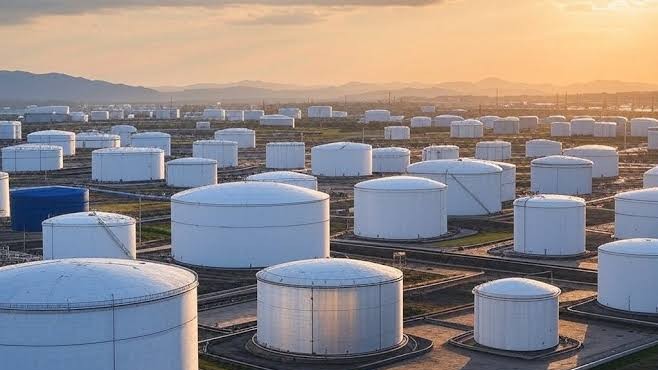
The most significant market cushion, however, came from China's crude oil import behavior. As the world's largest crude importer—typically taking in more than 11 million bpd in normal times—China had accumulated an estimated 1.4 billion barrels in commercial and strategic stockpiles before the Iran war. This substantial reserve allowed Beijing to sharply curtail imports when the Strait of Hormuz closed and prices spiked.
Acting as an opportunistic buyer, China stepped back from the spot market during the Middle East crisis. By cutting import demand, Beijing single-handedly offset a portion of the lost supply. In effect, China assumed a role long played by Saudi Arabia on the supply side—that of a swing participant able to move markets by adjusting its volumes—except now on the demand side.
The market appeared to underestimate China's capacity for flexibility—it reduced purchases by as much as 40% in June compared to pre-war levels. During the crisis, China also experienced surging electric vehicle adoption, a large-scale shift toward coal, and growing renewable energy generation. China is already the world's largest market for electric vehicles, and the accelerated shift during the crisis has further dampened oil demand growth prospects.
China's import policy over recent months—undoubtedly shaped by government authorities—helped cap international crude prices, as roughly 4 million barrels per day (bpd) of crude did not need to reach Chinese refiners during the past three months.
According to estimates from the U.S. Energy Information Administration (EIA), China held the world's largest oil inventory stockpile at 1.397 billion barrels as of the end of 2025. That figure exceeded the combined strategic inventories of the United States, Japan, OECD Europe, Saudi Arabia, South Korea, Iran, the United Arab Emirates (UAE), and India—the next largest holders of strategic oil reserves.
Because China reports oil stock data opaquely, these numbers are estimates. However, they are unlikely to be far off, given that China cut crude imports between April and June.
Imports Plunge to Decade Low
China's total crude oil imports fell to a decade low in June, capping three months of depressed import levels driven by high prices and constrained Middle East supply. Beijing was positioned to drastically reduce purchases, cutting import volumes by an estimated 4.4 million bpd compared to the 2025 average.
Crude imports declined for a fourth consecutive month in June, with seaborne crude arrivals dropping to just over 6 million bpd—the lowest monthly level since at least 2016, according to data from Vortexa.
China's imports from the Middle East slumped to just 2 million bpd, down from an already decade-low of approximately 3 million bpd in May, noted Emma Li, lead China oil market analyst at Vortexa.
While China is the world's top crude importer, it was also the importer best prepared to endure a global supply disruption. The estimated 1.4 billion barrels held in commercial and strategic reserves before the Iran war could have been even higher, as inventory levels remain a closely guarded state secret, as do China's plans for future stockpiling or drawdowns.
What Lies Ahead
Five months into the crisis, China's declining crude import demand has been the primary demand-side factor capping oil price spikes. Beijing's appetite for crude imports and the pace of its refined product exports will continue to shape oil price trends through year-end, alongside ongoing Middle East supply disruptions.
Crude imports in July rebounded from June's decade low by an estimated 1.5 million bpd. This recovery was driven by millions of barrels managing to exit the Strait of Hormuz during a three-week window under the U.S.-Iran memorandum of understanding between mid-June and early July, as well as by China's accelerated purchases of Russian oil.
After the U.S.-Iran memorandum of understanding pushed oil prices down to $70 per barrel in late June and early July—and as Middle Eastern producers lowered prices for July and August Asia loadings—China's crude imports may recover this month and next, potentially extending into parts of September, providing demand support.
However, renewed hostilities and escalating threats to tanker traffic in both the Strait of Hormuz and the Bab el-Mandeb Strait in the Red Sea could disrupt China's plans to continue increasing crude imports in the coming months.
With oil now climbing back to $90 per barrel, Chinese refiners may again reduce purchases for cargoes arriving after September.
Market participants will be closely monitoring China's crude buying activity in the weeks ahead, as Beijing has effectively become the swing demand buyer in the global oil market since the Middle East crisis began in February.
By Tsvetana Paraskova for Oilprice.com

