10 of the Weirdest Things Ever Tokenized Onchain
Key Takeaways
- •A Brazilian farmer secured a $19,600 loan by using 10 tokenized cows as collateral on the B3 stock exchange, a proof of concept that could eventually support around $80 million in livestock-backed financing.
- •Boston Consulting Group projects the tokenized real-world asset market could grow to $16 trillion by 2030 as institutions explore blockchain for faster settlement and fractional ownership.
- •Tokenization platforms have been applied to unconventional assets including whiskey barrels, racehorses, uranium, music royalties, and even patches of human skin, demonstrating the breadth of assets that can be represented onchain.
- •Jack Dorsey's first tweet was sold as an NFT for $2.9 million in 2021 but its attempted resale a year later drew a highest bid of only $6,800, reflecting a sharp NFT market correction.
- •Experts warn that blockchain tokenization can improve access and transferability but cannot by itself make an illiquid or fundamentally weak asset more valuable or a sound investment.
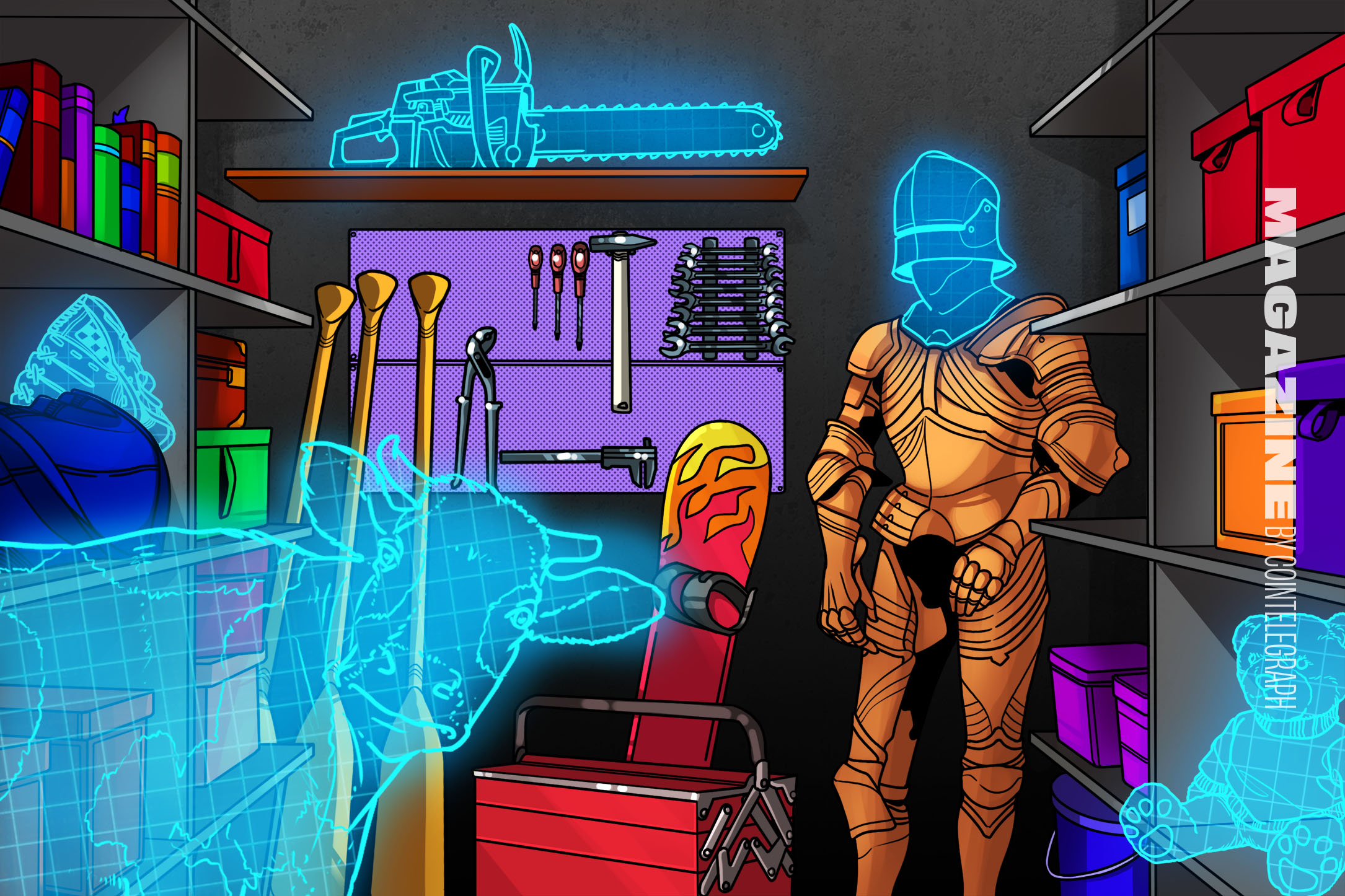
Brazil's B3 stock exchange made headlines last month when its tokenized cows went viral. A farmer in southern Brazil used 10 cows as collateral for a 100,000 Brazilian real ($19,600) loan by virtually herding them into a blockchain-based holding pen, demonstrating how farmers can leverage their livestock to access credit.
The deal is part of a broader wave of real-world asset (RWA) tokenization that has moved well beyond early crypto experiments. Boston Consulting Group has projected the tokenized asset market could reach $16 trillion by 2030, as banks, asset managers, and commodity traders explore blockchain rails for faster settlement and fractional ownership.
That raises an obvious question: if cows can be tokenized, what cannot be? From dairy cattle to a year's worth of farts, here are 10 of the strangest things to be tokenized onchain.
1. A Year's Worth of Farts
When BlackRock chief executive Larry Fink said every asset will eventually be tokenized, he probably was not thinking about flatulence. Yet that is exactly what happened.
During the pandemic, when most people were baking bread or leveling up on Duolingo, filmmaker Alex Ramírez-Mallis recorded his own farts and minted each one as a nonfungible token (NFT). The novelty factor meant that Ramírez-Mallis was able to sell each one for 0.05 ETH (about $85 at the time), proving that every asset has its price.
2. Cows
Better known as a prime source of protein in Bitcoin circles, turning 10 Brazilian cows into tokenized collateral is not the most obvious use case. The deal was structured by Brazilian investment fund Target FIDC, giving each cow a unique digital token linked to an encrypted digital identity.
The first loan may have been worth just $19,600, but it served as a proof of concept showing the potential to eventually support around $80 million in livestock-backed financing across participating farms. While it sounds bizarre at first glance, the agriculture industry generated around $4 trillion in global value added in 2023, so tokenized sheep, goats, and chickens as collateral may follow.
3. Whiskey Barrels
Whiskey barrels are a natural candidate for tokenization. Like high-end art and collectibles, Scotch whisky typically increases in value as it matures. Cask investors have traditionally faced limited exit options, sometimes holding barrels for years before finding a buyer — an illiquidity problem that onchain marketplaces aim to solve.
Several projects are experimenting with putting whisky casks onchain so investors can buy whole units or fractional ownership of tokenized whisky stored in bonded warehouses.
4. Racehorses
Racehorse ownership has long been reserved for the ultra-wealthy — those with deep enough pockets to cover hundreds of thousands of dollars in breeding, training, and upkeep. Tokenization is beginning to chip away at those barriers by dividing ownership of real thoroughbred racehorses into digital shares.
Investors can buy a stake in an animal and share in any prize money, breeding income, or future sale proceeds without purchasing an entire horse. Stablemans has launched tokenized thoroughbred racehorse ownership on Cardano and Solana, with expansion to Base, Polygon, and Arbitrum.
Chris Turner, co-founder of impact investment firm KULA, offered a word of caution for would-be investors: "Putting a collectible or luxury item on a blockchain doesn't automatically make it more liquid or valuable if the legal rights, transfer process, and market structure remain unchanged."
5. Uranium
If your mind turns to treasuries and private credit when thinking about tokenized real-world assets (RWAs), uranium may seem like a departure. But that is exactly what Tezos-backed metals.io is doing.
Tezos co-founder Arthur Breitman says blockchain technology excels at building "reliable, auditable and cost-efficient financial rails for any asset," but is particularly aligned with "technology-flavored commodities" like uranium.
Breitman says trading volume between November 2024 and July 2026 was $21.5 million over approximately 18,200 trades and around 7,400 unique wallets. He acknowledges that growth remains modest, noting that institutional players have shown interest but are "still shy about tokenized rails."
Related: RWAs become Hyperliquid's largest trading category
6. Fishy Revenue
One of the most unusual proposals tokenization platform Brickken received came from a Chilean fish-processing company that wanted to issue tokenized debt with returns tied to the value of the fish it sold.
"The token represented the lender's contractual claim, while the interest payable adjusted according to the company's verified sales performance. In effect, it was a tokenized, revenue-linked debt instrument," explains Edwin Mata, chief executive of Brickken.
Mata argues that the idea highlights an important principle: "Almost any cash flow can support a tokenized financial instrument, provided the underlying rights and data can be independently verified."
In the end, the fish never made it onchain. The underlying fish sales still relied on audits, commercial reporting, and legal agreements that could not yet be automated — proving that sometimes the biggest obstacle to tokenization is not the blockchain; it is the real world.
7. Music Royalties
Music royalties have also found their way onchain. The appeal is partly structural: streaming services pay artists fractions of a cent per play, and royalty collection typically involves multiple intermediaries that can delay payments by months.
One of the earliest high-profile examples came in 2021, when DJ and producer 3LAU gave fans 50% of the streaming rights to his single "Worst Case" through his blockchain platform Royal.
Then, in 2022, rapper Nas used Royal to sell streaming royalty rights to two of his songs, "Ultra Black" and "Rare."
While the idea of onchain royalties gained traction during the NFT boom, tokenized music royalties have yet to become a mainstream asset class.
8. Human Skin
Croatian tennis player Oleksandra Oliynykova auctioned the advertising rights to a 15-by-18-centimeter patch of skin on her right arm as an NFT in 2021. The winning bidder paid 3 Ether (around $5,400 at the time) for the right to choose which tattoo she would wear during tournaments for a year.
Athletes have long sold sponsorship space on shirts, helmets, and race cars. Oliynykova took the concept one step further.
9. A Burned Banksy
Most art collectors try to preserve masterpieces; crypto collectors set them on fire to make a point about digital ownership. In 2021, a group calling itself Burnt Banksy bought a Banksy print titled "Morons (White)" for around $95,000. They livestreamed themselves burning it and then minted the destruction as an NFT.
The idea was that while the physical artwork no longer existed, ownership would live on through the blockchain. The NFT sold for around $382,000, sparking fierce debate over whether the group had destroyed a valuable work of art or transformed it into a new one.
10. The First Tweet
Also in 2021, Twitter co-founder Jack Dorsey tokenized his first-ever tweet — "just setting up my twttr" — and sold it as an NFT to crypto entrepreneur Sina Estavi for $2.9 million, making it a symbol of the NFT boom. The original tweet remains publicly viewable on X.
One year later, Estavi tried to resell it for $48 million but only received bids worth a tiny fraction of the asking price, with the highest reported offer at just $6,800. The collapse mirrored a broader NFT market correction: by 2022, trading volumes across major marketplaces had fallen sharply from their 2021 peaks, and many headline NFT purchases lost significant value.
Whether the blockchain certificate tied to a publicly readable tweet is valuable remains an open question. As Mata says: "Tokenization can improve access, administration, settlement and transferability, but it cannot transform a poor investment into a good one."

