Hormuz Conflict Escalates, SMM Takes Hamburg, and Echoes of the Last Shipping Supercycle Resurface
Key Takeaways
- •The US struck Iranian state tankers in retaliation for attacks on commercial shipping, escalating the Strait of Hormuz conflict into a tanker-for-tanker phase.
- •An Inmarsat Maritime survey found machinery failure is the single biggest cause of maritime incidents, accounting for roughly 60% of analysed cases.
- •Q-CTRL demonstrated a quantum gravimetry navigation system in the Coral Sea, fixing a vessel's position to within about one nautical mile without GPS.
- •Can Besev of Suzun Marine Fuels is embedding seafarer welfare into bunker contracts, reserving the right to refuse ships linked to unpaid wages, forced labour, or poor conditions.
- •Capesize earnings have surpassed $50,000 a day and tanker rates remain very high, echoing patterns seen before shipping's mid-2000s supercycle.
The conflict around the Strait of Hormuz shifted into an increasingly dangerous tanker-for-tanker phase this week, as the US struck Iranian state tankers in retaliation for attacks on commercial shipping, while a laden VLCC sits abandoned and listing off Oman. The strait is one of the world's most critical chokepoints for seaborne oil, with roughly a fifth of globally traded petroleum passing through it, so any sustained disruption there has direct implications for tanker routing, insurance premiums and energy supply chains.
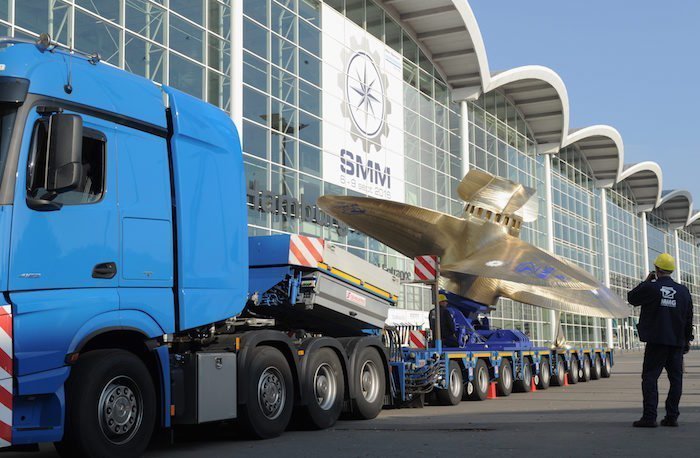
Meanwhile, SMM, Europe's largest shipping exhibition, dominated headlines, running from Tuesday through today across nine vast show halls in Hamburg. The biennial event comes at a moment when shipyards are working through order books that stretch years ahead, giving the show's shipbuilding discussions added weight. It made for a busy week for SplashTech, which has just published its first magazine, designed to become shipping's annual maritime tech bible.
Among the key SplashTech stories was a new survey from Inmarsat Maritime showing that machinery failure has become the single biggest cause of maritime incidents, accounting for around 60% of cases analysed. That finding tallies with a global fleet that has grown older in recent years as owners deferred renewals amid regulatory uncertainty over future fuels.
Another significant development was Q-CTRL's new navigation system, which uses quantum gravimetry to read tiny variations in the Earth's gravitational field and match them against known maps, allowing a vessel to fix its position without relying on GPS. In a recent Coral Sea trial, the Australian company demonstrated the technology at sea, positioning a vessel to within about one nautical mile while operating autonomously in rough conditions and without specialised stabilisation equipment. The significance lies in resilience: as GPS jamming and spoofing spread around conflict zones and strategic waterways, quantum navigation could eventually provide ships with an independent positioning system that cannot itself be jammed or spoofed.
This week's Maritime CEO interview featured Can Besev, head of Gibraltar's Suzun Marine Fuels, who is taking an unusual approach to bunker trading by putting seafarer welfare directly into commercial terms and reserving the right to refuse ships linked to unpaid wages, forced labour or poor onboard conditions — a practice he is trying to persuade others to adopt. His stance stands out in an industry where welfare considerations have rarely featured in commercial bunker negotiations, even as regulators and port states tighten scrutiny of labour conditions aboard ships.
Over at Splash Ports, the week's big interview was with Olaf Merk. More than a decade after warning that mega-ships would saddle ports with costs and fragility, Merk of the OECD's International Transport Forum argued the sector is still chasing an outdated model built for another era. His critique lands as ports worldwide continue to invest heavily in bigger cranes, deeper berths and larger terminal footprints to accommodate ever-larger vessels.
The week has also produced an unusual collection of echoes from shipping's previous supercycle. Kang Duk-soo, architect of the STX empire, is back in shipbuilding; dormant Asian capacity is returning; capesize earnings are above $50,000 a day and tanker rates remain off the charts. The last great supercycle, which peaked in the mid-2000s on Chinese demand, ended in a painful overcapacity hangover that reshaped the industry for years. Is shipping entering another genuine supercycle, or are owners once again mistaking high freight rates and geopolitical disruption for structural demand? The Splash Wrap podcast investigates.
