As US-Iran War Rages, Who's Risking the Strait of Hormuz?
Key Takeaways
- •At least 84 ships transited the Strait of Hormuz during two periods of the US-Iran conflict, compared to more than 900 vessels during the same periods in 2025.
- •The Joint Maritime Information Center rates the threat to shippers in the strait as severe, citing ongoing Iranian attacks and mines detected along prewar shipping lanes.
- •The majority of vessels transiting the strait sailed under flags different from their owners' countries, with the UAE accounting for the largest number of registered ships in the dataset.
- •Alternative pipeline routes through the UAE's ADCOP and Saudi Arabia's East-West Crude Pipeline can reroute over 4 million barrels per day, but this covers only a portion of the 15 million barrels typically passing through the strait daily.
- •Commodity analysts attribute continued transit to economic calculus, as oil priced above $80 per barrel means producers risk losing billions in revenue by halting shipments.
As US-Iran War Rages, Who's Risking the Strait of Hormuz?
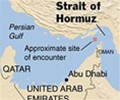
The Strait of Hormuz has become one of the world's most dangerous waterways since March, when Iran began attacking commercial vessels as a pressure tactic during ceasefire negotiations with the United States. Despite the elevated risk, and the fact that a significant share of global seaborne oil transits through the narrow choke point, shipping traffic has never fully stopped.
At its narrowest point, the strait is roughly 33 kilometers wide, with designated shipping lanes of only about three kilometers in each direction — making it one of the most physically constrained maritime passages in the world. Iran has periodically targeted commercial shipping in and around the strait as a means of political leverage, most notably during the "Tanker War" phase of the Iran-Iraq War in the 1980s, when hundreds of vessels were attacked in the Persian Gulf.
With Washington and Tehran issuing conflicting statements about whether the strait remains open, Deutsche Welle (DW) analyzed public data sources to assess how maritime traffic has shifted over the course of the conflict and to identify which operators continue to transit the strategic waterway linking the Persian Gulf to the Gulf of Oman.
Shipping Through the Strait Disrupted
As Iran's strikes and interceptions of vessels persist, mines have also been detected along the prewar shipping lanes. The Joint Maritime Information Center (JMIC), operating under the US-led Combined Maritime Forces, currently rates the threat to shippers as "severe" — its second-highest warning tier.
However, according to one of JMIC's most recent advisory notes — published after attacks resumed on July 6 and 7 — "commercial traffic through the Strait of Hormuz remained at reduced levels, with vessels transiting via both the southern Omani corridor and the northern Iranian-controlled route." JMIC added that shippers continue to exercise caution given the ongoing attacks in recent weeks.
Tracking Vessel Movements
DW's analysis, drawing on data from the open-source platform Global Fishing Watch, found that several shipping companies have continued navigating vessels through the strait throughout the war. While the platform is primarily designed to monitor fishing activity, it also captures data on all other vessels using satellite imagery and automatic identification system (AIS) signals.
Because ships can — and reportedly frequently do — disable their AIS transponders while transiting the strait, the actual number of vessels is likely higher than the data indicates.
Based on AIS signals, at least 84 ships crossed the Strait of Hormuz across two distinct periods of the conflict: from the outbreak of war on February 28 through the ceasefire announcement on April 7, and again following the resumption of attacks on July 6 and 7. This figure is consistent with US reports that it had facilitated passage for approximately 70 ships, noting that not all had active transponders.
For context, more than 900 ships transited the strait during the same periods in 2025.
Of the 84 vessels recorded, 34 moved east to west into the Persian Gulf, while 50 traveled in the opposite direction, exiting the gulf.
Flag States and Ownership
Ships transmit their flag state as part of the AIS signal, though this information is manually entered on board. In only a small number of cases examined for this report did the registered flag correspond to the actual country of the vessel's owner or ship manager — details that can still be verified through databases using a ship's international ID number and name.
Only nine Iranian-owned and two Pakistani-owned ships transited under their respective national flags. The remaining 73 vessels sailed under a flag different from that of their owner's country.
The data reveals that a diverse array of companies operating in the region continue to cross the strait.
The United Arab Emirates, which borders the strait, tops the list. The UAE's Abu Dhabi Crude Oil Pipeline (ADCOP) runs overland parallel to the waterway to the south. Thirteen cargo ships registered in the UAE transited the strait during the disruption, along with two liquefied petroleum gas (LPG) tankers and three support vessels. Most UAE-based ship owners appearing in the dataset operate fleets of just one to five vessels.
One UAE-registered vessel detected entering the Persian Gulf on July 11 is managed by Lubeck Shipping LLC, a company linked to a US-sanctioned Iranian oil tycoon. Also under US sanctions is Salina Ship Management PvT Ltd., based in India's Maharashtra state, which US officials accuse of facilitating Iran's petrol trade. The company manages one of four Indian oil and LPG tankers that Global Fishing Watch recorded entering the strait.
India, like many Asian nations, depends heavily on the Strait of Hormuz for energy imports. China, Pakistan, and Vietnam also had oil and LPG tankers in the Persian Gulf that they moved out through the strait before the April 7 ceasefire was announced.
All seven vessels owned and managed by Greek companies — Greece being the world's largest shipping power — were freighters, typically transporting unpackaged dry bulk commodities such as iron ore, coal, and grain.
The Calculus of Risk
The overriding incentive for continuing to move oil and other goods through the strait despite the threat of Iranian attacks is economic. "Simply because the reward seems higher than the risk," said Matt Smith, director of commodity research at Kpler, a Belgium-based business intelligence firm specializing in global commodity flow analysis.
"The key point is that producers of oil (or gas, aluminum, and other products) within the Strait of Hormuz essentially have only two options," economist David Wech wrote in an email. Wech tracks energy commodity flows — including crude oil and refined products — for the UK-based firm Vortexa.
"Option 1: to halt production and earn no money at all — or even incur losses due to operating expenditures," Wech wrote. "And option 2: accept the risk of transiting the strait and thereby earn 90% or more of their normal revenue. With an oil price of currently more than $80 per barrel, we're talking about billions of USD."
The economic calculus also includes surging war risk insurance premiums for vessels transiting the region, which have added substantially to shipping costs since the conflict began. For commodity exporters and shipowners operating on thin margins, these premiums further compress profitability — yet the volume of traffic through the strait underscores that even inflated costs have not been enough to halt transit.
With hostilities escalating again as of July, the Brent crude oil price is on another upward trajectory — one of the most visible global consequences of the war and the near-shutdown of the Strait of Hormuz.
Alternatives to the Strait
Before the war, approximately 25% of global seaborne oil trade passed through the Strait of Hormuz. According to the International Energy Agency (IEA), alternative routes have limited capacity to offset the loss of throughput through the strait.
Two pipelines are currently used to bypass it: the UAE's ADCOP and Saudi Arabia's East-West Crude Pipeline.
The ADCOP allows vessels to load at the northeastern port of Fujairah and transport oil out of the Persian Gulf region without entering the strait. Saudi Arabia's Abqaiq-Yanbu pipeline system, also known as the East-West Crude Pipeline or Petroline, retains some spare capacity, the IEA reported in February. Publicly available shipping data for Yanbu shows increased oil-related vessel traffic from May through June compared with previous years.
"Combined, Yanbu and Fujairah have been able to reroute over 4 million barrels a day of crude from having to pass through the Strait of Hormuz," Smith said. "This has been able to act as a release valve to keep barrels flowing to key customers in Asia — but only offsetting 4 of the total 15 million barrels per day that typically passes through the strait."
The alternative routes carry their own hazards. Reports of piracy and attacks on vessels by Yemen's Iran-backed Houthi rebels in the Bab el-Mandeb Strait — the narrow choke point between the Red Sea and the Gulf of Aden — have been increasing.
"Bab al-Mandeb has the potential to add further supply woes to a global supply picture that is already severely constrained," Smith cautioned.
The release valve for the Strait of Hormuz, in other words, could soon become a maritime choke point in its own right.
Source: Deutsche Welle

